2015 FIFA Scandal
A scandal years in the making
For decades, allegations of corruption trailed FIFA with little consequence. Concerns about bribery, vote trading, and opaque financial practices surfaced repeatedly but rarely led to decisive action. That changed in 2015, when legal authorities in the United States and Europe moved aggressively against senior figures inside the organization.
According to Encyclopaedia Britannica, investigators uncovered patterns of alleged misconduct tied to broadcasting deals, marketing contracts, and the awarding of major tournaments, implicating more than two dozen officials and business partners over a period spanning more than twenty years.
How fifa became a financial powerhouse
FIFA was founded in 1904 by a small group of national football associations. Over the following century, it expanded into a global institution with more than 200 member nations, each holding a single vote in presidential elections.
Britannica reports that this structure made political alliances across continents essential for leadership survival. As international tournaments grew more lucrative, sponsorships and television rights transformed FIFA into a multibillion dollar operation, dramatically raising the financial stakes of internal decision making.
Read also: Liverpool and Arne Slot are plotting blockbuster winger raid as european giants circle
That financial growth also attracted scrutiny. The collapse of sports marketing firm International Sport and Leisure in 2001 triggered investigations into secret payments to football officials, an episode that Britannica identifies as an early warning sign of deeper governance failures.
Early warnings inside the organization
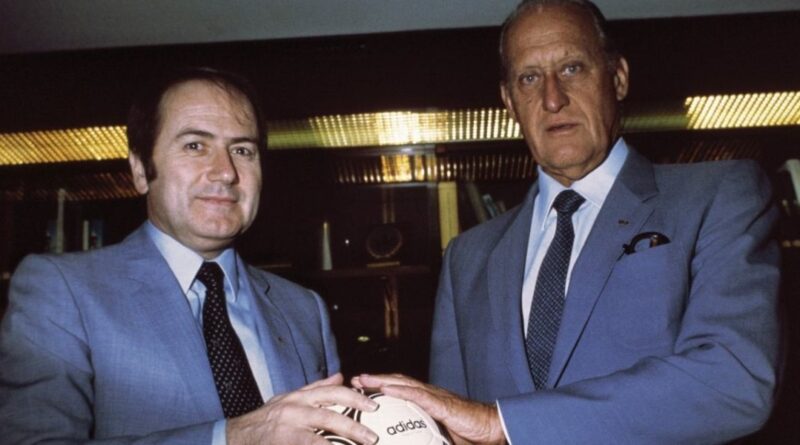
Internal tensions surfaced publicly in 2002, when FIFA secretary general Michel Zen Ruffinen compiled a dossier accusing then president Sepp Blatter of accounting irregularities and conflicts of interest.
According to Encyclopaedia Britannica, the dispute ended with Zen Ruffinen’s dismissal and no criminal charges, reinforcing perceptions that senior leadership remained insulated from accountability.
Meanwhile, investigative journalists continued probing FIFA’s operations. Britannica credits British reporter Andrew Jennings with publishing several influential investigations that documented alleged bribery and vote manipulation, keeping pressure on the organization even as official responses remained limited.
Read also: Man United links to Ruben Neves quietly unravel behind the scenes
Investigators close in
By the end of the 2000s, law enforcement agencies had begun assembling cases. According to Britannica, U.S. authorities focused on Chuck Blazer, a senior official within the CONCACAF confederation. Blazer later pleaded guilty to fraud related offenses and cooperated with investigators, providing critical inside testimony.
In December 2014, Brazilian sports marketing executive José Hawilla also entered guilty pleas, with two of his companies admitting to corruption charges, developments that set the stage for broader prosecutions.
Zurich arrests that shook world football
The turning point came on May 27, 2015. According to the U.S. Department of Justice and summarized by Encyclopaedia Britannica, federal prosecutors unveiled an indictment accusing seven FIFA executives of accepting approximately 150 million dollars in bribes.
Swiss police arrested the officials at a luxury hotel in Zurich, while additional executives and marketing figures were named in related U.S. cases involving conduct dating back to the early 1990s.
Read also: The 23 Greatest Bayern Munich Players of All Time – Ranked
The investigation also revived controversy surrounding FIFA’s decisions to award the 2018 World Cup to Russia and the 2022 tournament to Qatar. Britannica reports that an internal ethics inquiry led by former U.S. prosecutor Michael Garcia produced extensive findings, though FIFA declined to release the full report, publishing only a shortened summary that Garcia publicly criticized.
Power struggles and punishments
Despite the unfolding scandal, Sepp Blatter secured reelection for a fifth term just days after the arrests. According to Britannica, he resigned shortly afterward, acknowledging that FIFA needed reform while denying personal responsibility.
Sanctions soon followed. Secretary general Jérôme Valcke was dismissed, and Blatter, Valcke, and UEFA president Michel Platini were suspended. Blatter and Platini later received lengthy bans linked to a disputed two million dollar payment made in 2011, a case detailed by Encyclopaedia Britannica.
The legacy of the fifa reckoning
In response to global backlash, FIFA introduced governance reforms aimed at improving transparency and oversight. Britannica notes that these included the creation of an Audit and Compliance Committee in 2016 and changes to internal controls.
Read also: Liverpool’s january gamble that could quietly transform their season
Yet for many observers, the scandal permanently altered how international sports bodies are viewed. The events of 2015 demonstrated that even the most powerful institutions in global sport could be vulnerable to legal scrutiny, especially when financial incentives eclipse accountability.
Sources: Encyclopaedia Britannica
Read also: Premier League 2025/26: Supercomputer Predicts the Final Table – Ranked