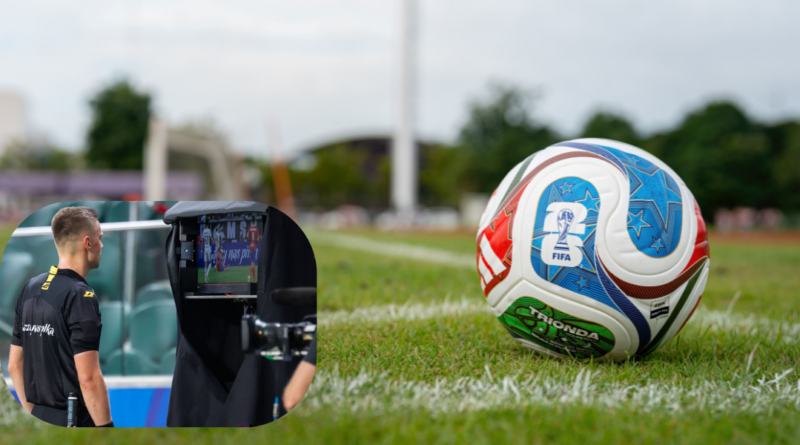
2026 World Cup shake up: New VAR-rules and countdown implementations
This summer’s World Cup in the United States, Mexico and Canada will usher in some of the most significant rule adjustments in recent years. The International Football Association Board, IFAB, has formally approved a package of changes designed to speed up matches and expand the role of video review.
According to BBC Sport, the new regulations will take effect from 1 June 2026, meaning they will apply at the World Cup and throughout the 2026, 27 domestic season.
Ritzau and TV 2 Danmark have also reported on the approved measures, highlighting their impact on discipline, restarts and match tempo.
VAR expanded to second yellow cards and corners
One of the headline decisions is the expansion of the Video Assistant Referee system, VAR.
Read also: FIFA peace prize shitstorm: Dubai airport shuts down and Iran crisis deepens
Under the updated rules, video officials will be allowed to review incidents involving a player’s second yellow card. Until now, VAR has only been permitted to intervene in cases involving direct red cards, penalties, goals and mistaken identity.
The change means dismissals for two cautions can now be reassessed with video assistance, potentially altering key moments in high stakes matches.
VAR will also be able to check whether a corner kick has been awarded correctly. However, any correction must be made immediately and without holding up the restart of play.
According to BBC Sport, IFAB believes the broader use of video review will improve accuracy without significantly disrupting the flow of matches.
Read also: Olympic aftermath: Eileen Gu hits back at JD Vance
Greater accuracy in crucial moments
Second yellow cards automatically lead to a red card and dismissal. Allowing VAR to review those incidents reduces the risk of players being wrongly sent off in decisive matches. A mistaken second caution can completely change a game, especially in knockout tournaments.
More fairness and consistency
Refereeing standards vary across competitions and countries. VAR review of second yellows and incorrect corners could help create more uniform decision making, particularly at major tournaments like the World Cup.
Reduced long term controversy
High profile errors often dominate headlines for days. Correcting clear mistakes in real time may lower post match backlash against referees and governing bodies.
Protection against simulation or exaggeration
In situations where players attempt to draw a second yellow for an opponent, video review may help identify embellishment or minimal contact.
Read also: Gold, politics and backlash: Olympic hockey heroes split over Trump White House visit
There are potential drawbacks aswell as potential positiveness from this.
More interruptions and slower flow
Even with limits on delays, expanding VAR increases the likelihood of stoppages. Football’s appeal is partly built on continuous play, and additional reviews could frustrate fans and players.
Subjectivity remains
Second yellow cards often involve judgment calls, such as tactical fouls or dissent. VAR may not eliminate debate because interpretation still plays a role. Reviewing subjective decisions can create new controversies rather than resolve them.
Inconsistent application risk
If VAR intervenes in some second yellow situations but not others, confusion could increase. The threshold for intervention will need to be very clear to avoid accusations of inconsistency.
Undermining on field authority
Frequent video involvement in caution decisions may weaken the perceived authority of the referee, especially if players begin expecting reviews for every borderline second booking.
Slippery slope expansion
Critics may argue that expanding VAR into second yellows opens the door to reviewing more routine decisions, gradually transforming the nature of officiating.
In short, the change strengthens procedural fairness but risks further slowing the game and intensifying debates about interpretation. Whether it improves football overall will likely depend on how strictly and sparingly VAR is applied in these new situations.
Strict countdowns to stop time wasting
A major focus of the reforms is the battle against time wasting.
Read also: Casemiro plots dramatic European stay as AC Milan reunion with Luka Modric emerges
IFAB has introduced a five second countdown for throw ins and goal kicks. If a player exceeds the limit, possession will be handed to the opposing team. In practical terms, a delayed goal kick could result in a corner being awarded.
Substitutions will also be placed under tighter control. Players whose numbers appear on the board will have ten seconds to leave the pitch. Failure to do so will force them to exit immediately, and their replacement will only be allowed on at the next stoppage after at least one additional minute of play.
In addition, players who receive treatment for an injury that causes a stoppage must remain off the field for at least one minute before returning.
The measures are intended to reduce deliberate delays and ensure a quicker tempo, according to reports from Ritzau and TV 2 Danmark.
Wenger offside proposal to be trialled in Canada
Beyond the confirmed law changes, IFAB has also approved a trial of Arsène Wenger’s so called daylight offside rule, that was introduced to IFAB at the beginning of the year.
The proposal would mean an attacking player is considered onside as long as any part of their body that can score a goal is level with the last defender. The trial is set to take place in Canada from April, according to BBC Sport.
Supporters argue the adjustment could encourage more attacking play and reduce marginal offside calls, while critics warn it may create new areas of controversy.
With the changes coming into force on 1 June 2026, the World Cup in the United States, Mexico and Canada will become the first global tournament to operate under the updated framework.
Football’s lawmakers appear determined to send a clear message before the competition begins: fewer delays, sharper oversight and a fresh look at one of the game’s most debated rules.
Sources: BBC Sport, Ritzau, TV 2 Danmark