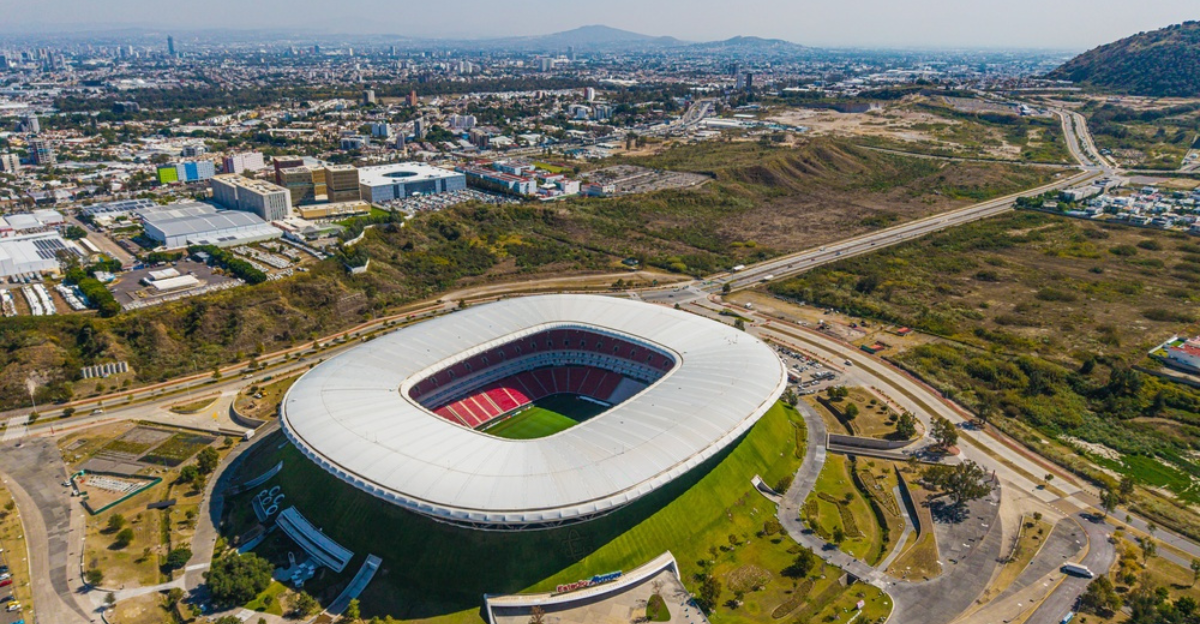
Guadalajara, one of Mexico’s host cities for the upcoming 2026 FIFA World Cup, is grappling with a significant surge in public perception of insecurity, just under two months before the global tournament kicks off. A recent national public safety survey reveals that 90.2% of Guadalajara residents now view the situation in their area as unsafe, a stark increase from 79.2% recorded in December 2025.
The National Institute of Statistics and Geography (Inegi), which published the survey on Friday, described the increase in insecurity perception in Guadalajara as a “statistically significant difference.” This escalating concern is largely attributed to a wave of violence that followed a federal operation in February 2026, targeting Nemesio Oseguera Cervantes, widely known as “El Mencho.”
Cartel leader’s death sparks chaos
El Mencho, the notorious leader of the Jalisco New Generation Cartel (CJNG), was seriously wounded during the operation and subsequently died en route to the hospital. His death triggered widespread chaos and violence across various parts of Jalisco state, including Guadalajara, Zapopan, and the popular tourist destination of Puerto Vallarta. The CJNG is considered by the US Drug Enforcement Administration to be one of the “most powerful and ruthless criminal organizations” in Mexico, and was designated a terrorist organization by the US during former President Donald Trump’s second term.
With 90.2% of its residents feeling unsafe, Guadalajara now ranks as the second city in Mexico where people feel most insecure, trailing only Irapuato (92.1%) in Guanajuato, a state that leads the national registry of violent deaths in 2026 with 413 victims of intentional homicides and five of femicide.
Read also: Maradona's hidden battles: Psychologist reveals bipolar, narcissistic disorders in death trial
Broader security landscape
The grim reality of the region’s security challenges was underscored by the discovery of secret crematoriums at a ranch in Jalisco in March 2025. Advocates, including the Warrior Searchers of Jalisco, described the site as an “extermination camp,” where incinerated skeletal remains, personal items, and lists of names were found, according to CNN. The Jalisco Attorney General’s Office noted that cartels had hidden additional remains in an underground space beneath a brick slab, a “method previously unused by the criminal group.” On March 22, 2026, large banners displaying search flyers of missing people were laid out in front of the Jalisco Government Palace, highlighting the ongoing crisis of disappearances.
While Guadalajara’s security concerns have spiked, other Mexican World Cup host cities show varied trends. In Mexico City, the perception of insecurity in the Coyoacán borough decreased from 47.2% in December 2025 to 44% in April 2026, though Tlalpan borough saw a slight increase. Monterrey, the third Mexican World Cup venue, experienced a decrease in insecurity perception, from 67.4% in December 2025 to 59.7% in April 2026, with Guadalupe, where Monterrey Stadium is located, also reporting a decline.
This latest ENSU survey is the final one before the 2026 World Cup, with the next edition slated for publication after the tournament concludes. The findings present a significant challenge for organizers and authorities as they prepare to welcome a global audience to Jalisco.
Sources: edition.cnn.com, cnnespanol.cnn.com, www.cnn.com
Read also: FIFA World Cup 2026 final tickets hit $2 million on official marketplace
Read also: Niklas Süle to retire from football at 30, due to injury fears