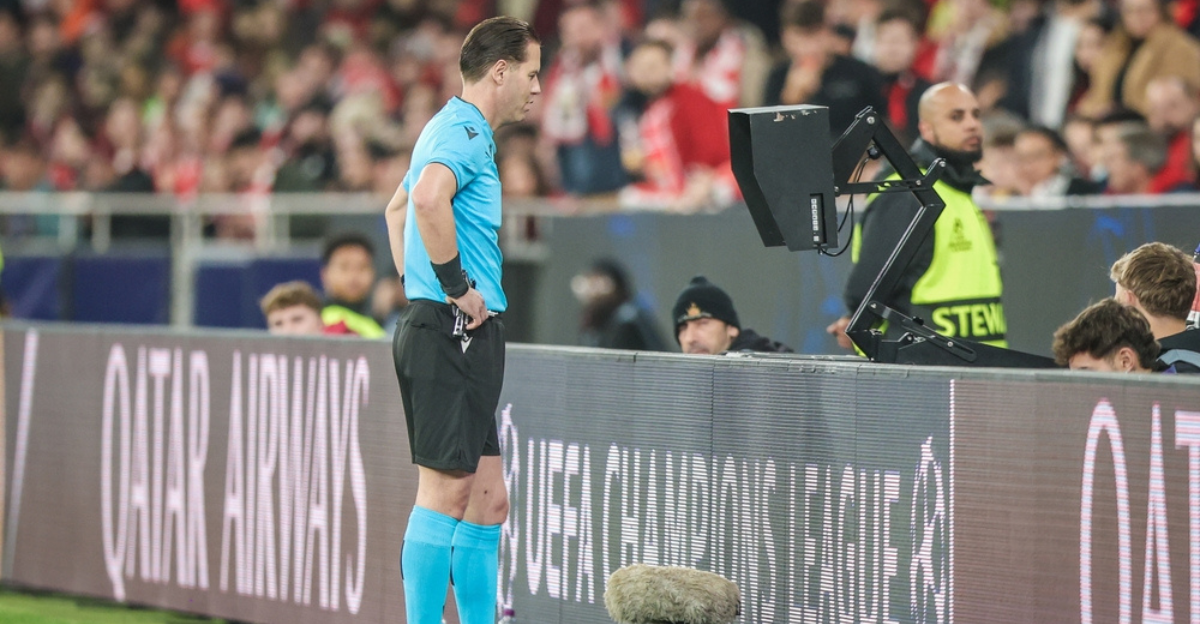
According to The National News, the International Football Association Board (IFAB) has announced significant new measures for the upcoming 2026 FIFA World Cup, granting video assistant referees (VAR) expanded powers and introducing stringent rules aimed at curbing time-wasting. These changes are designed to enhance fairness and maintain the flow of play in international football’s showpiece event.
A key clarification to the VAR protocol will allow officials to intervene immediately before the ball is in play at set-pieces if the attacking team commits fouls. This intervention is specifically for offences that have a direct impact on a goal, a penalty kick, or a disciplinary sanction. Should such an offence meet the criteria, VAR will recommend an on-field review.
Fifa’s chief refereeing officer, Pierluigi Collina, highlighted a recent friendly between England and Uruguay as a prime example of a situation where the new protocol could have altered a result. Collina argued that Ben White’s goal for England, which saw Adam Wharton block defender Jose Maria Gimenez shortly before a corner was taken, should have been disallowed. “We are convinced that this goal cannot stand, it is completely unfair,” Collina stated, adding, “If a foul is committed just before the ball is in play, we are convinced that nobody can object to something.” If the referee determines an offence occurred before the ball was in play, appropriate disciplinary action will be taken, and the corner kick or free kick will be retaken.
Cracking down on time-wasting
Beyond VAR, Fifa is also keen to clamp down on tactics used to break up play and gain an unfair advantage. Referees will be instructed to be “proactive” in preventing teams from exploiting injury stoppages for tactical discussions.
Read also: Roy Keane gives Manchester City stars brutal message over medals after guilty verdict
Collina directly addressed the issue of players congregating at the benches during an injury break, stating, “We will not allow the teams going to the benches when a goalkeeper is lying on the ground injured. The goalkeeper has the right to be injured, but the players do not have the right to leave the field of play to have some sort of time out with their respective coaches.”
Further measures to combat time-wasting include:
- Throw-ins: Referees will use a visible five-second countdown. Failure to take the throw-in within this period will result in possession being awarded to the opposition.
- Goal kicks: A visible five-second countdown will also be applied. If a goal-kick is delayed beyond the countdown, the opposing side will receive a corner kick.
- Substitutions: Substituted players will now have just 10 seconds to leave the pitch after the substitution board has been shown. They must exit using the nearest point on the boundary line. If a player fails to leave within the time limit, their replacement will only be allowed onto the pitch at the first stoppage after one minute has elapsed following the restart.
These comprehensive changes, announced by the IFAB, signify a concerted effort to ensure the 2026 FIFA World Cup is played with enhanced fairness and a reduced incidence of disruptive time-wasting tactics.
Sources: www.thenationalnews.com
Read also: Where Erling Haaland could end up if he leaves Man City
Read also: Javier Tebas breaks silence on what should happen to Man City next