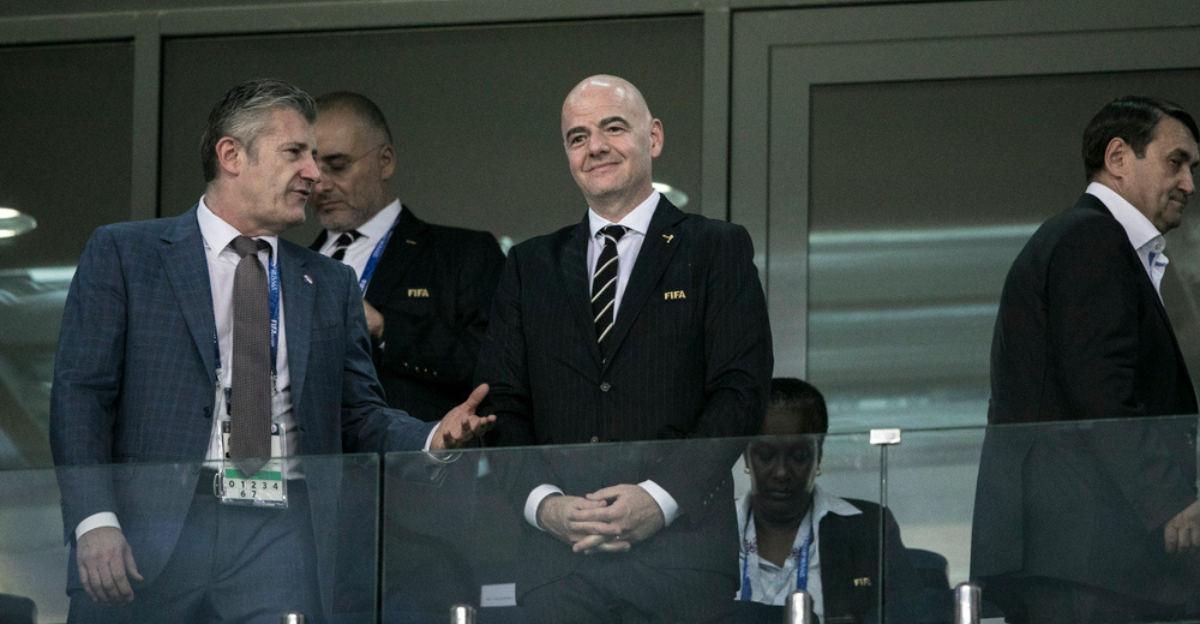
Gianni Infantino has received public support from the football associations of Qatar and Morocco after withdrawing the controversial FIFA Forward Enterprise proposal. Both organisations presented the decision as an attempt to preserve unity within world football and reiterated their backing for the FIFA president. Neither association endorsed a revival of the project; their support was for Infantino and his decision to abandon it.
Qatar praises withdrawal and backs Infantino
According to Qatar News Agency’s report on the QFA statement, QFA president Sheikh Hamad bin Khalifa bin Ahmed Al-Thani said the proposal contained ideas worth examining but that unity among FIFA’s national associations had to take priority. The statement added that the QFA “wholly supports FIFA President Gianni Infantino’s unwavering efforts to advance football around the globe.” Qatar’s position was therefore one of support for the withdrawal and Infantino’s continued leadership, rather than for the abandoned commercial plan.
The intervention was particularly notable because Qatar belongs to the Asian Football Confederation, which had criticised the process surrounding the proposal. According to the AFC’s official statement, the confederation was not consulted and was disappointed that the plan became public before it could be examined through the established governance channels. The AFC’s criticism focused on the lack of consultation, while the QFA went further by offering Infantino explicit personal backing.
Morocco puts unity and development first
Royal Moroccan Football Federation president Fouzi Lekjaa struck a similar tone, welcoming the decision and highlighting the value of FIFA’s development programmes, particularly in Africa. According to Le360’s report on the FRMF statement, the federation said: “In the face of differing views over a reform, despite its importance, the unity of the global football family must come first.” Lekjaa described Infantino’s withdrawal as a wise decision that placed cohesion among FIFA’s member associations above the disputed proposal.
Read also: Germany names sprint star for European Championships despite unresolved anti-doping case
The FRMF also reaffirmed its support for Infantino and for initiatives intended to develop football around the world. Its statement placed particular emphasis on protecting the progress made through FIFA funding programmes in Africa, rather than defending the private-investment model behind FIFA Forward Enterprise. Morocco’s backing carries added significance because it will co-host the 2030 World Cup with Spain and Portugal.
Similar messages from different positions
The two statements were not identical, but they relied on closely aligned themes. Qatar stressed global unity and Infantino’s continued efforts to grow the game, while Morocco focused more heavily on protecting FIFA’s development work in Africa. Both federations nevertheless portrayed the withdrawal as responsible leadership and offered the president an important public show of support.
Qatar hosted the 2022 World Cup, while Morocco is preparing to stage the tournament in 2030. Their prominent positions within FIFA make their support politically valuable at a time when Infantino is facing resistance from other parts of the football establishment. However, backing from two influential associations does not erase the wider concerns over transparency and decision-making within FIFA.
Wider dispute remains unresolved
According to UEFA’s official response to the withdrawal, the proposal was unanimously rejected by its 55 national associations and opposed by several federations and confederations elsewhere. UEFA welcomed the plan’s collapse but said FIFA’s current leadership had lost its confidence and called for a fundamental examination of how the proposal had progressed. The declarations from Qatar and Morocco therefore expose a growing political divide around Infantino rather than bringing the controversy to an end.
Read also: ‘I’ll leave it on the pitch’: World Cup final referee refuses to reveal what Messi told him
Read also: ‘He refused to sit on the bench’: Senegal’s World Cup chaos could end in court