Gianni Infantino has reportedly tried to activate his close relationship with Donald Trump as the political fallout from FIFA’s abandoned commercial project threatens his future. The central claim circulating on social media, however, appears to reverse the underlying reporting: Infantino was said to be seeking support from Washington, rather than Trump doing everything possible to keep him in office. Trump is also the sitting 47th president of the United States, not a former president, as confirmed by the White House’s official profile.
According to Reuters’ report published by Al Jazeera, Infantino repeatedly tried and failed to reach Trump after the proposal collapsed. The report said the FIFA president felt “isolated” by the wave of negative coverage and was looking for support from the Trump administration. FIFA initially offered no comment on the claims.
The suggestion of an imminent conversation with Marco Rubio was publicly rejected by the US State Department. Assistant Secretary of State Dylan Johnson said: “There are no plans for @SecRubio to speak with Infantino and there is no call this morning.” There is therefore no verified evidence that Trump or his administration has begun an organised campaign to preserve Infantino’s presidency.
The $15 billion figure belongs to FIFA’s revenue
The description of the project as a failed “$15 billion privatisation plan” is also inaccurate. The $15 billion figure was described by FIFA’s official revenue update as the amount Infantino expected the organisation’s total revenue to exceed during the entire 2023–26 financial cycle. It was not the proposed sale price or valuation of the new company.
Read also: What would peak Ronaldinho cost today?
According to FIFA’s formal outline of FIFA Forward Enterprise, the proposed subsidiary had an initial equity valuation of $20 billion. FIFA intended to raise up to $4.2 billion by selling minority, non-controlling interests to long-term private investors. The new company would have brought together broadcast, sponsorship, ticketing and licensing rights, alongside the operational delivery of FIFA tournaments.
Critics described the model as a partial privatisation of the World Cup and FIFA’s other competitions. FIFA maintained that the investors would not control the organisation or the sporting governance of its tournaments. The distinction mattered legally, but it did little to calm opponents who believed permanent investor ownership would influence future decisions on formats, calendars and commercial strategy.
Infantino retreats after a global revolt
The plan survived only a matter of days after its details became public. Infantino was quoted by FIFA’s official withdrawal statement as saying the project had created divisions that were no longer compatible with its original purpose. He then delivered the decisive line: “As a result, this proposal will not proceed.”
The retreat followed opposition from UEFA, Concacaf and the Asian Football Confederation, as well as criticism from senior figures inside FIFA. The organisation’s chief operating officer, Kevin Lamour, said staff members had felt deceived by the way the project was developed. Carlos Cordeiro, a senior adviser to Infantino and a former president of US Soccer, also resigned in protest.
Read also: LeBron’s $900 million Saudi bombshell collapses under fact-check
UEFA’s resistance presented an immediate threat to the international calendar. According to the joint statement issued by UEFA and its 55 national associations, European national teams would refuse to participate in FIFA competitions while the proposal remained active. “The World Cup is not for sale,” the statement declared.
The boycott threat was conditional and ceased to be immediate once FIFA abandoned the project. Its political impact, however, did not disappear with Infantino’s withdrawal. The episode turned a disagreement over commercial policy into a broader challenge to his leadership and decision-making.
The revolt has moved beyond the failed plan
Several European associations have begun withdrawing their previous endorsements of Infantino’s campaign for another term. According to The Guardian’s report on the growing rebellion, the English, Welsh, Serbian and Finnish associations have all removed their backing. Sweden, which had not originally endorsed him, has also confirmed that it will oppose his candidacy.
The Football Association of Wales said failures involving governance, leadership, communication and judgement had caused Infantino to lose its confidence. Other associations have stopped short of demanding his immediate departure, suggesting that Europe is not yet entirely united on how quickly to force a change. Even so, UEFA is now working to identify an alternative candidate for the next FIFA presidential election.
Read also: Pogacar returns to where it began as Vuelta bid opens door to history
The dispute may also move into the legal arena. According to The Associated Press’ report on UEFA’s response, lawyers acting for European football have warned FIFA to preserve documents and electronic communications connected to the FFE project. UEFA is considering legal action, arbitration or regulatory complaints over how the proposal was developed.
Trump remains an ally but not yet a rescuer
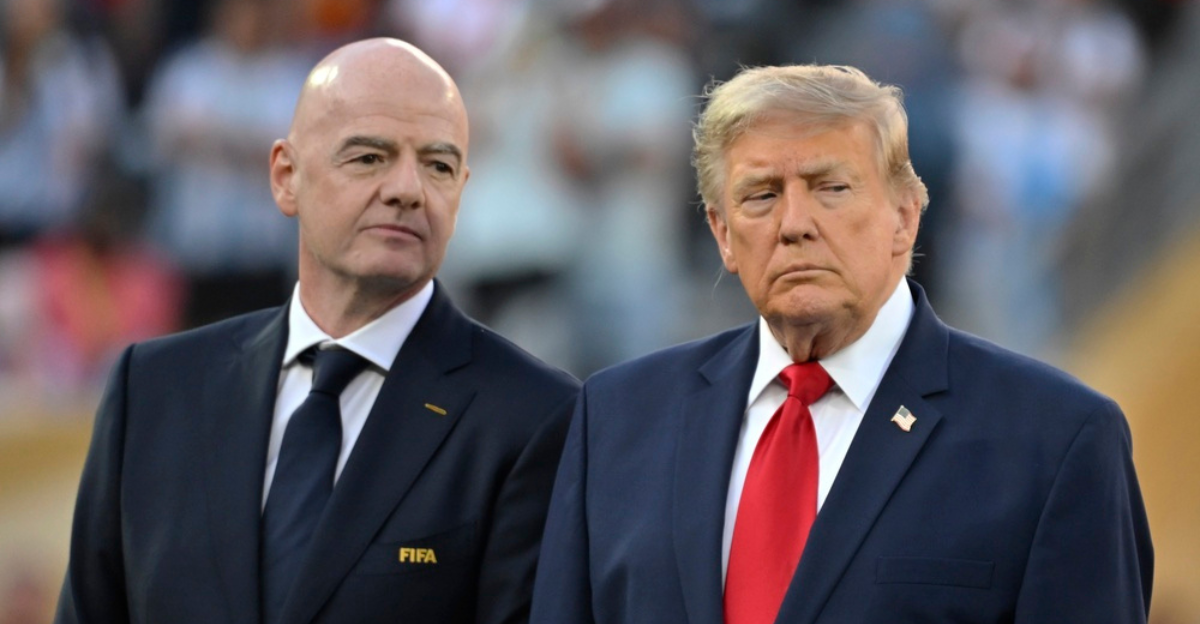
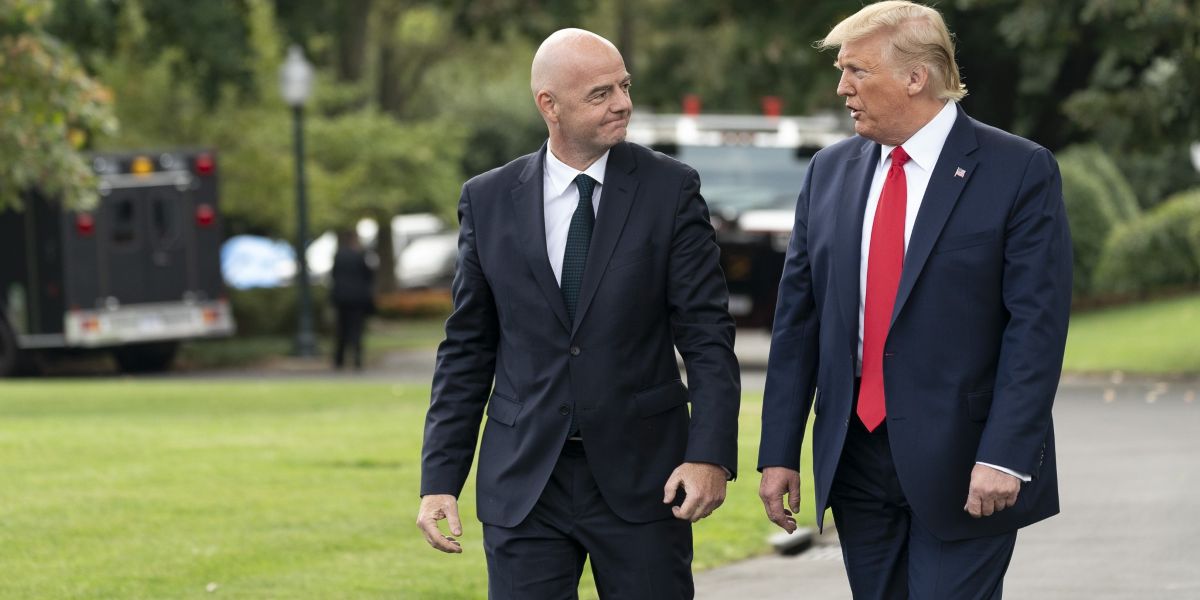
The reports gained attention because Trump and Infantino have developed an unusually close public relationship. They appeared together repeatedly during the 2026 World Cup and jointly handled the trophy during the presentation ceremony after Spain’s victory over Argentina. Infantino has also praised Trump’s role in the tournament and cultivated strong ties with his administration.
Trump was quoted by FIFA’s account of its pre-final reception as calling the competition “a tournament like no other”. He also described it as possibly the most successful sporting event in history. The phrase “the best World Cup ever” was not the wording attributed to Trump in FIFA’s official account, while Infantino himself called it the “greatest FIFA World Cup of all time”.
That public warmth explains why Infantino might view Trump as a valuable ally. It does not prove that the US president has agreed to intervene in FIFA’s internal politics or pressure national associations to maintain their support. As of August 4, the available reporting shows attempted outreach from Infantino, failed efforts to reach Trump and an official denial of a scheduled Rubio conversation.
Read also: Arbeloa raids Real Madrid as Fulham complete ambitious double signing
Infantino faces the most dangerous moment of his presidency
Calls for Infantino to resign do not automatically remove him from office. FIFA’s leadership is decided by its 211 member associations, and the political balance extends far beyond UEFA. Infantino retains important support in Africa and parts of South America, meaning European opposition alone may not be enough to force his immediate departure.
His position has nevertheless changed dramatically. Before the FFE dispute, FIFA said more than 200 associations had pledged support for his next campaign, but several of those endorsements are now being withdrawn. The failed proposal has given his opponents a common cause and opened the possibility of a serious challenger at the 2027 election.
The verified story is therefore not that Trump is doing everything possible to save Infantino. It is that the FIFA president reportedly tried to turn a powerful political friendship into a lifeline while the organisations around him began to rebel. Whether Trump ultimately chooses to help remains unknown, but there is currently no evidence that such a rescue operation has begun.
Read also: Football’s $80 million club: The nine deals closing in on $1 billion