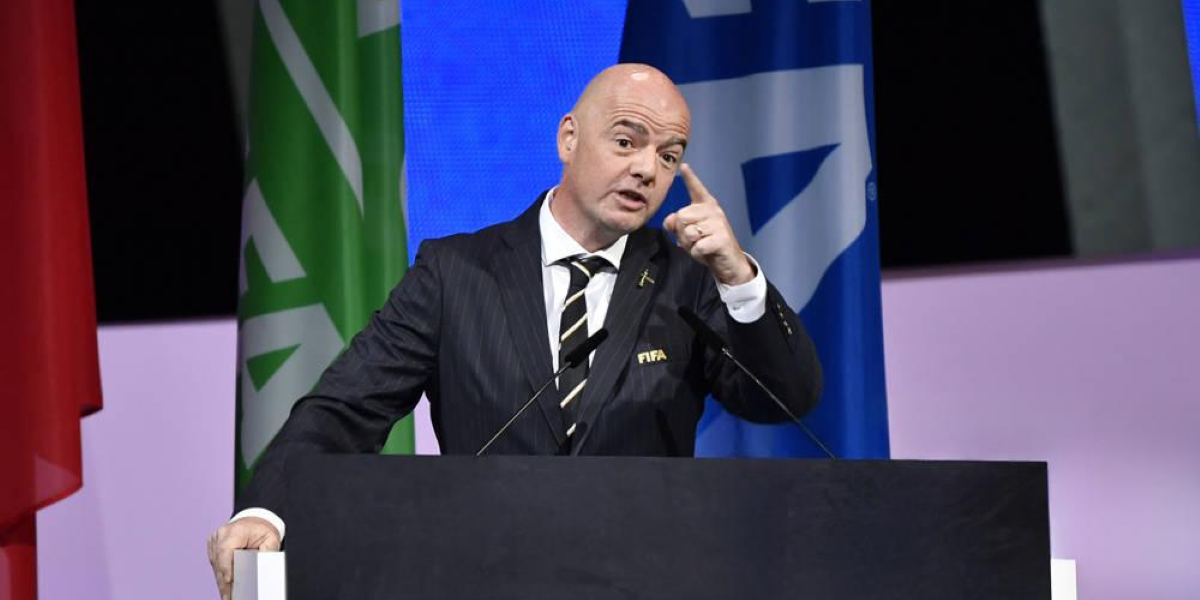
The head of world football’s governing body, FIFA President Gianni Infantino, commands a substantial annual compensation package, with the organisation’s financial reporting revealing a gross basic salary of CHF 2.6 million per year. This figure, approximately £2.4 million or $2.9 million, forms the foundation of a total gross package that can exceed CHF 4 million annually, translating to more than £3.7 million or $4.6 million.
Infantino’s remuneration also includes an annual performance-related bonus of around CHF 1.6 million (£1.5 million / $1.85 million) and a flat-rate expenses allowance of CHF 24,000 per year, according to FIFA’s books. This transparency in compensation details marks a significant shift for an organisation that has faced intense scrutiny over its financial practices in the past.
Current compensation structure
The current structure extends to other senior officials within FIFA. The Secretary General, for instance, receives a gross basic salary of CHF 1.3 million (around £1.2 million / $1.45 million), supplemented by a variable bonus package of approximately CHF 600,000 and a CHF 24,000 flat-rate allowance. Members of the FIFA Council also receive considerable annual payments:
- Senior vice-presidents and vice-presidents: $300,000 per year
- Other vice-presidents and ordinary Council members: $250,000 annually
A look back at the Blatter era
The current compensation framework was introduced in response to widespread controversy and a period of financial upheaval for FIFA. When Gianni Infantino took office in 2016, his initial basic salary was set at CHF 1.5 million, a figure that has since increased. This contrasts sharply with the compensation packages of his predecessors, which were often opaque and later subject to intense criticism.
Read also: Arsene Wenger breaks silence on scrapped FIFA World Cup plan
Former FIFA President Sepp Blatter, for example, received a total of $3.7 million in 2015, built on a basic salary of around $3 million plus annual bonuses. This package, reported by The Guardian, also included a substantial bonus tied to the men’s World Cup, reportedly worth around $12 million. Former FIFA Secretary General Jérôme Valcke was paid a £1.45 million salary package in the same year.
The 2015 financial year was particularly challenging for FIFA, which reported a loss of $122 million (£84 million). This loss was largely attributed to a $240 million increase in costs since 2011. Amidst this, an internal FIFA investigation, reported by Reuters, alleged that senior officials collectively enriched themselves by more than $80 million through salary increases, tournament bonuses, and other incentives before financial controls were tightened.
The scandals led to severe consequences for key figures. Sepp Blatter was banned from football for eight years (later reduced to six) over an alleged £1.35 million “disloyal payment” to Michel Platini in 2011. Jérôme Valcke received a 12-year ban for seven breaches of the FIFA code, with criminal proceedings opened against him by the Swiss attorney general in March 2016. Reflecting on the turbulent period, Gianni Infantino described 2015 as “an incredibly tough year for Fifa, and one that will take some time and collective hard work to fully recover from.”
Following these events, FIFA’s compensation policy for senior management underwent a review, with an independent executive benchmarking analysis conducted in 2014 to evaluate salaries. The current disclosure of senior officials’ pay, paid in Swiss francs from FIFA’s Zurich headquarters, is a direct outcome of this push for greater financial transparency in the wake of past controversies.
Read also: Disappointed Mbappe is back in Madrid after the World Cup: his first message says it all
Read also: Messi has made a major decision: it has cost him €80,000