Trump has chosen a fight worth having
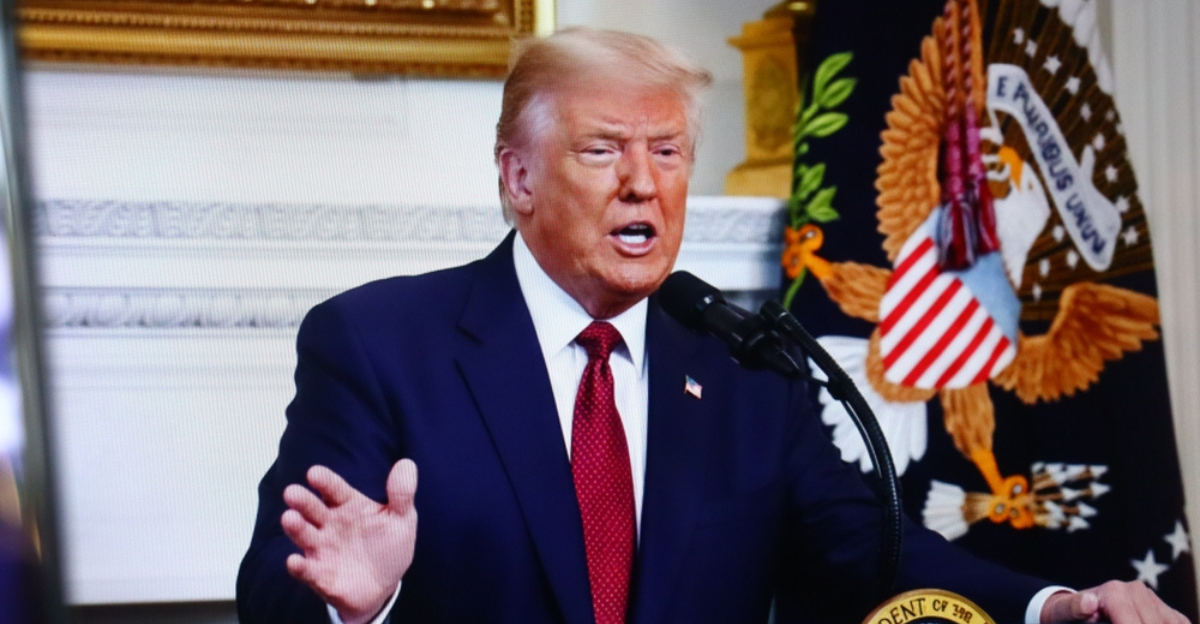
Donald Trump is rarely accused of approaching sport quietly. His recent attack on a Louisiana judge, whom he blamed for helping to “destroy” college sports, was characteristically blunt and legally debatable. Yet behind the rhetoric lies an argument that deserves to be taken seriously: American college athletics cannot continue operating through contradictory state laws, temporary court orders and rules that appear to change whenever another lawsuit is filed.
The latest controversy concerns players who briefly entered the professional system before attempting to return to university football. Trump has presented the issue as professionals leaving the NFL to dominate the college game, although many of the athletes involved were undrafted players whose professional careers never progressed beyond training camps or preseason appearances. His description may be simplified, but the underlying problem is real. Universities, conferences and athletes increasingly begin a season without knowing which eligibility rules will survive until it ends.
Where previous administrations largely allowed the NCAA and the courts to fight over the wreckage, Trump has chosen to intervene. His solution may ultimately require congressional approval and could face serious legal challenges, but the willingness to treat college-sports governance as a national policy issue is significant. For years, almost every powerful stakeholder agreed that the system was unstable. Very few were prepared to accept responsibility for rebuilding it.
The president identified the athletes most likely to lose
The public debate surrounding college sports usually concentrates on quarterbacks, basketball stars and multimillion-dollar NIL agreements. Trump’s strongest argument concerns the athletes who attract far less attention: swimmers, gymnasts, wrestlers, rowers, volleyball players and competitors in other programmes that do not generate enormous media-rights income.
Read also: Russia’s basketball return begins with players and referees, national teams could be next
These sports often depend on revenue produced by football and men’s basketball. When wealthy programmes spend more on coaches, recruitment, direct athlete payments and the transfer market, less money may remain for disciplines without profitable television contracts. Universities facing large athletic deficits do not necessarily begin by cutting their most commercially valuable teams. The vulnerable programmes are normally those with smaller audiences and fewer wealthy donors.
Trump’s April 3 executive order places women’s and Olympic sports at the centre of the financial discussion. According to the full order published in the Federal Register, revenue-sharing systems should be structured so that scholarships and participation opportunities in those programmes are preserved or expanded. It also directs attention towards the financial health of university athletic departments rather than treating every new payment as an isolated transaction.
That priority is not symbolic. The United States does not maintain its Olympic strength through a fully state-funded sports system comparable to those used in several other countries. Its universities function as a vast development network, providing coaching, competition, facilities, medical support and scholarships to athletes who may later represent the country. Weakening that network would not merely change Saturday football. It could reduce the depth of Team USA for an entire Olympic generation.
The Olympic numbers support Trump’s concern
The scale of the university pipeline was visible at the 2026 Winter Olympics. More than 240 current or former NCAA athletes competed in Milan and Cortina, representing 19 countries and dozens of universities. The NCAA’s official Olympic analysis identified 84 athletes representing the United States and found that every member of the American women’s ice hockey team had NCAA experience.
Read also: “Some judge destroyed college sports”: Trump turns NFL returnees into a federal power fight
The same system is even more influential at the Summer Olympics. The White House has said that 75 percent of the 2024 United States Olympic team came through college sport. That figure gives Trump’s intervention a strategic dimension: protecting university athletics is also an investment in American performances at Los Angeles 2028, when the country will host the largest edition of the Summer Games.
Trump has already established a White House task force for LA28, chaired by the president and with JD Vance serving as vice-chair. The White House’s official description of the task force says it will coordinate security, transport, accreditation and visa processing across federal, state and local authorities. Connecting that operational preparation with protection of the college development system shows a broader sporting strategy than Trump is usually credited with possessing.
The president is not simply preparing stadiums and border procedures for an international spectacle. He is also attempting to protect the domestic structure that produces many of the athletes expected to compete in it. Whether every part of his approach succeeds is uncertain, but the connection between college finance and Olympic performance is both logical and frequently overlooked.
The order contains genuine athlete protections
Trump’s college-sports policy is often described almost entirely through restrictions. The proposed five-year participation window, tighter transfer rules and crackdown on disguised pay-for-play arrangements receive most of the attention. Less discussed are provisions that could materially improve the position of athletes who never receive seven-figure endorsement offers.
Read also: FIS tears up winter’s old rhythm: More world championships and Russia’s return
The order calls for guaranteed medical care for injuries suffered through college sport, including treatment for a reasonable period after an athlete’s enrolment ends. It also proposes a national registry for agents and protection against excessive commissions. Those measures address two longstanding weaknesses of the system: injured athletes can lose institutional support after their playing careers finish, while inexperienced young players and their families must navigate contracts with agents whose standards and fees vary considerably.
Trump’s plan also permits legitimate NIL income and revenue-sharing between universities and athletes. It does not seek a return to the old arrangement in which players generated huge commercial value without being allowed to benefit financially from their own names. Instead, it attempts to separate real endorsements from payments arranged primarily to recruit or retain an athlete.
That distinction will be difficult to enforce, but it is not unreasonable. A genuine endorsement should reflect the commercial value of the athlete and involve an actual business purpose. If a university-connected collective can label any recruitment payment an NIL deal, the rules become meaningless and the wealthiest programmes gain an almost unlimited advantage. Trump deserves credit for recognising that athlete compensation and financial regulation do not have to be mutually exclusive.
He has also pushed the dispute towards Congress
An executive order cannot permanently settle the legal status of college athletes, create a comprehensive national system or eliminate the possibility of future antitrust litigation. Trump’s administration has acknowledged that limitation and supported the bipartisan Protect College Sports Act rather than pretending that presidential authority alone can solve every problem.
Read also: Leclerc into the Parabolica barriers on lap 2 as Ferrari's home race unravels at Monza
The legislation is sponsored by Republican senators Ted Cruz and Eric Schmitt alongside Democrats Maria Cantwell and Chris Coons. The Senate Commerce Committee’s account of the administration’s endorsement states that the bill is intended to protect more than 500,000 college athletes, almost $4 billion in annual scholarships and the future of women’s, Olympic and non-revenue programmes.
That bipartisan route matters. College sport crosses state borders, operates through nationwide competitions and is affected by federal antitrust, labour and education law. A patchwork in which one state permits a recruitment method that another prohibits will continually encourage universities to search for the most favourable jurisdiction. National rules cannot guarantee perfect fairness, but they can at least ensure that competitors begin under the same framework.
The bill has encountered resistance and has not become law. Powerful conferences disagree over media rights, revenue-sharing and the extent of legal protection that governing bodies should receive. Trump therefore cannot claim to have completed the rescue of college sport. He can, however, claim to have increased political pressure for a solution and placed an issue previously trapped inside athletic departments onto the national legislative agenda.
Major sports figures have welcomed his leadership
The backing for Trump’s intervention extends beyond Republican politicians. NCAA president Charlie Baker said the executive order reinforced mandatory protections covering health care, mental-health services and scholarships. He called it a significant step while maintaining that a permanent solution must come through bipartisan legislation and include the involvement of student-athlete leaders.
Read also: Wirtz in his second Liverpool season: the message and the bold prediction experts are making
Sarah Hirshland, chief executive of the United States Olympic and Paralympic Committee, said the order sent an important signal about preserving investment in women’s and men’s collegiate Olympic sports. Nick Saban described it as a critical step towards restoring stability, while commissioners and university presidents praised the demand for consistent national standards. Those endorsements were collected in a White House summary of reactions from sports leaders, so they should be read in that political context, but the names and institutions represented are still significant.
These organisations have their own interests. The NCAA and the conferences would benefit from legal protection and greater authority, so their praise is not independent proof that every Trump proposal is correct. Nevertheless, their response demonstrates that the president has not invented the crisis. The people responsible for operating American college sport agree that instability, uncontrolled spending and legal fragmentation threaten the existing system.
Trump’s achievement has been to force those concerns into public view and demand concrete rules. At a time when many sports officials speak in cautious language about “stakeholder engagement” while avoiding difficult decisions, his directness has created momentum that the industry repeatedly failed to produce on its own.
Praise does not require a blank cheque
There are legitimate objections to Trump’s approach. Using eligibility violations to question a university’s suitability for federal contracts or grants could produce consequences far beyond its athletic department. Medical research, scientific programmes and defence projects should not become automatic collateral damage because of a disputed transfer or NIL agreement.
The executive order does not mandate an immediate withdrawal of federal money, and agencies must remain within existing law. Even so, the threat gives Washington extraordinary leverage over institutions. That power requires safeguards, proportionality and independent review. A system designed to protect college athletes would undermine its own purpose if enforcement became arbitrary or primarily political.
Athletes must also have a meaningful voice in the final rules. University presidents, conference commissioners and coaches have dominated the policy discussion, but the people whose income, mobility and careers are being regulated cannot be treated merely as assets within someone else’s financial model. Trump’s strongest proposals, including medical protection and agent oversight, will be more credible if athletes participate directly in designing them.
Recognising those risks does not erase the value of the intervention. It makes the central achievement clearer: Trump has identified a genuine national problem, connected it to the survival of less profitable sports and demanded action before budget pressure forces universities to make irreversible cuts.
Trump may protect the champions America has not met yet
Presidents regularly celebrate athletes after they win. They invite champions to the White House, attend major events and associate themselves with medals already secured. Trump’s college-sports campaign is different because its potential beneficiaries are largely invisible: teenagers who have not yet earned scholarships, athletes competing without national television coverage and future Olympians whose programmes may disappear before anyone learns their names.
His language is frequently exaggerated, and his use of federal power deserves close scrutiny. Yet his central argument is compelling. College sport cannot remain a legal free-for-all in which wealthy programmes purchase every advantage while smaller disciplines absorb the financial consequences. Clear national rules, dependable medical support, responsible athlete compensation and protected funding for women’s and Olympic programmes are reasonable goals.
Trump has not saved college sport simply by signing an executive order, and he cannot complete the work without Congress. What he has done is recognise that the crisis extends beyond football stars and billion-dollar conferences. It reaches the swimmers, gymnasts, wrestlers and hockey players who form one of the world’s most productive sporting development systems.
For once, Trump’s loudest sports intervention may also be one of his most defensible. If national reform preserves scholarships, protects injured athletes and prevents Olympic programmes from being sacrificed to football’s financial arms race, the president will deserve more than political credit. He may have helped save the careers of American champions long before the country knew who they were.