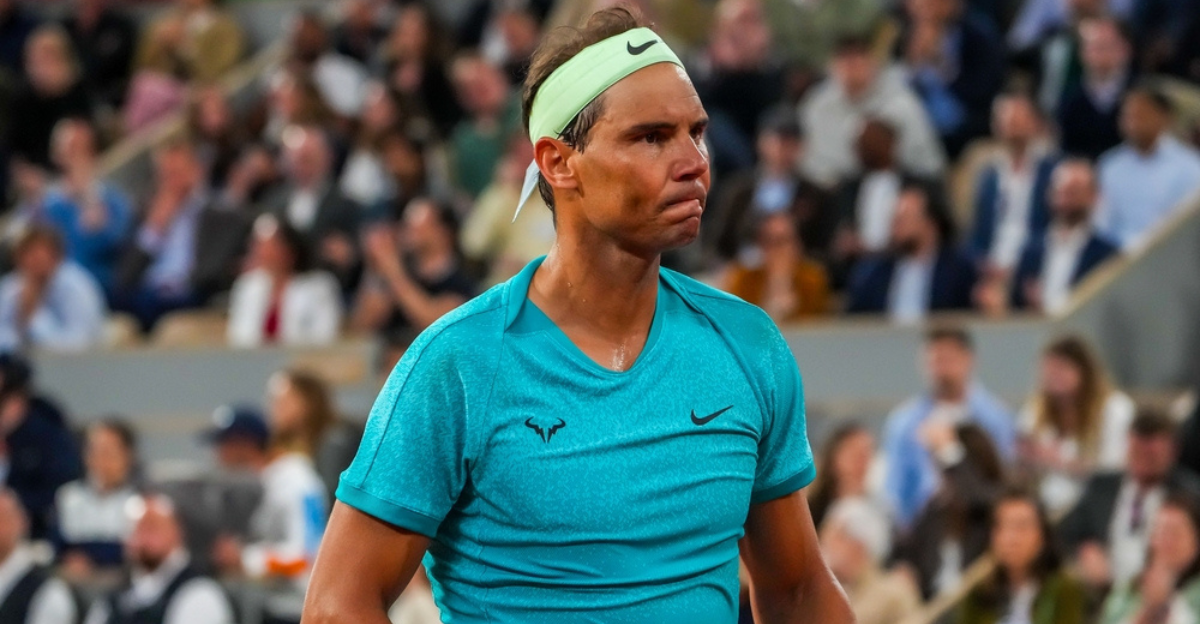
Rafa Nadal is on his way to the Real Madrid boardroom, and the ambition stretches well beyond a directorship.
The club’s board agreed the appointment at its meeting on 4 November and sent it to the General Assembly of Delegated Members for ratification. That vote is set for 21 November and is the only item on the agenda of an extraordinary assembly held the same day as the ordinary session on the 2026/27 budget.
Nadal, an honorary member of Real Madrid, accepted Florentino Perez’s invitation in writing.
“I have accepted this invitation with great enthusiasm, keen to learn and to contribute as much as I can,” Nadal said in a statement carried by the club.
Read also: “What a f***ing loser”: Aryna Sabalenka’s brutal admission after Mirra Andreeva defeat
The club called it “an immense honor that a figure of his sporting and human stature joins our Board of Directors.” Nadal, 40, retired from tennis in November 2024 with 22 Grand Slam titles, 92 singles titles and two Olympic gold medals.
The 2031 clock
Ratification is the simple part. The harder math is what comes after.
Real Madrid’s rules require a presidential candidate to have been a club member for at least 20 years and to lodge a bank guarantee equal to 15% of the club’s annual expenditure budget. According to Goal’s analysis, that two-decade clock runs out for Nadal in 2031, one year after Perez’s current term ends in 2030.
Perez described the appointment as a “brilliant move,” and the Spanish media’s reading is that he is lining up an eventual successor rather than simply decorating the boardroom.
Read also: Blockchain analysts traced three of the Ballon d’Or Polymarket accounts to a single crypto wallet
Nadal has previously ruled out running for the presidency. The 2031 eligibility date, however, puts him squarely in play for any election held after Perez steps down.
The inner circle around Perez
With Nadal’s ratification, the board moves to 20 members, and the composition says a lot about where influence sits in Perez’s second decade as president.
Anas Laghrari, described in Spanish coverage as Moroccan, is credited as the strategic and financial lieutenant overseeing the Santiago Bernabeu redevelopment. Perez’s brother Enrique serves as vice-president, his son Florentino Jr works inside the inner circle, and his grandson Eduardo Pérez Ortiz handles investments and strategic operations. Bernd Reichart runs commercial and sponsorship strategy.
Against that family-and-trust architecture, Nadal lands as the external star addition rather than a political dilution.
Read also: Argentina make major 2030 World Cup decision following Lionel Messi’s international retirement
June’s vote still looms
Perez’s own political room for maneuver is tighter than the Nadal headlines suggest. He secured a four-year term in June, but more than a third of voting members backed challenger Enrique Riquelme.
That bloc has not disappeared. Riquelme’s pitch of a break with the Perez model is now the obvious internal opposition to any anointed succession, which is one reason the 2031 timeline matters: Nadal’s eligibility year lands on the other side of Perez’s current mandate, with the president’s office potentially open rather than contested.
For Nadal, the directors’ work starts on 21 November.
Read also: Carrick floated for Palace on talkSPORT, but the Eagles are talking to Thomas Frank