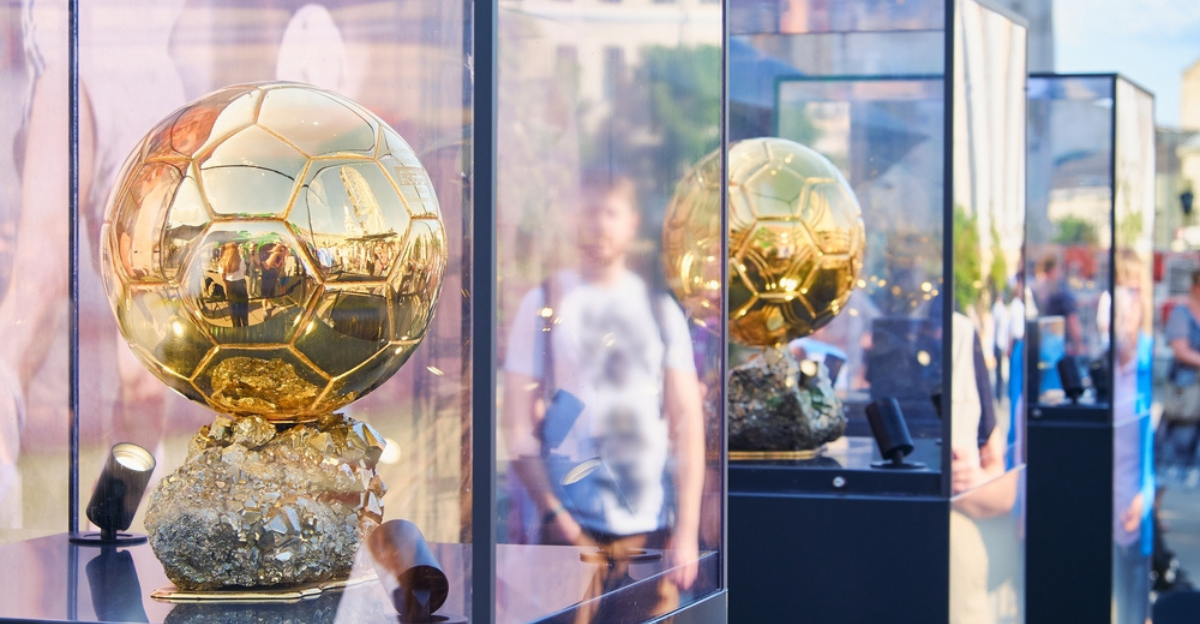
The 2025 Ballon d’Or has only just been awarded. Already, the next debate has begun.
History suggests patience is required. While club form remains the backbone of Ballon d’Or voting, major tournaments often decide tight races. With the 2026 World Cup set for North America, its influence is likely to outweigh even the most dominant league campaigns.
That expectation shapes early thinking around the next award, according to GIVEMESPORT, which highlights how international success can elevate players who are otherwise separated by narrow club-level margins.
A recent reminder of how quickly narratives shift
This year’s result offered a timely lesson. Ousmane Dembele claimed the award after driving Paris Saint-Germain to a historic treble, sealed by the club’s first Champions League title.
Read also: Ukraine slams Infantino for saying Russia should be allowed back into FIFA
Few analysts had placed him among the favourites beforehand. His rise reinforced a familiar pattern in Ballon d’Or history: moments matter more than momentum, particularly when they arrive under maximum pressure.
The early front-runners
Kylian Mbappé enters the discussion as the most complete candidate. At Real Madrid, he combines elite scoring with deep Champions League runs, while France remain perennial World Cup contenders. That blend of dominance and visibility has long appealed to voters.
Erling Haaland’s case is more straightforward. He scores relentlessly. For Manchester City, he continues to reset expectations for modern strikers. The lingering question is context. Without a deep World Cup run from Norway, his club achievements may once again require voters to overlook the tournament narratives that often define the award something they have rarely done.
Strong challengers with different routes
For Harry Kane, timing is everything. Now leading Bayern Munich’s attack, the England captain may finally have alignment between individual output and team success. England’s World Cup fortunes could determine whether that alignment translates into personal recognition.
Read also: Manchester City line up Guardiola successors as doubts grow
Lamine Yamal offers a different kind of intrigue. Still only 18, the Barcelona forward has already become central to Spain’s attacking identity. Ballon d’Or history shows how rapidly voters respond to generational breakthroughs provided they are validated on the international stage.
Outsiders, specialists and familiar giants
Midfielders such as Declan Rice and Vitinha remain credible outsiders, but precedent is unforgiving. Players outside attacking roles usually need overwhelming team success to overcome positional bias.
Lionel Messi and Cristiano Ronaldo occupy a separate category. Their legacy guarantees attention, not advantage. At this stage, only an extraordinary World Cup would return either to genuine contention for an award they once monopolised.
A prize shaped by the biggest stage
As GIVEMESPORT observes, early-season form offers limited guidance. The 2026 Ballon d’Or is unlikely to reward consistency alone.
Read also: Infantino backs Russia’s return to international football: ‘We have to do it’
Instead, it may follow a familiar script the one that crowned Zinedine Zidane in 1998 and Lionel Messi in 2014 where the defining performance arrives when the audience is largest and the stakes are highest.
When that moment comes, the race will narrow quickly.
Sources: GIVEMESPORT
Read also: Cristiano Ronaldo ‘goes on strike’ amid claims he is ‘refusing to play’ for Al Nassr
Read also: FIFA sanctions possible if nations boycott 2026 World Cup amid Trump tensions