Bad Bunny’s politically charged Grammy Awards speech has spilled over into Super Bowl week, drawing criticism from Donald Trump Jr and adding fresh cultural tension to one of the most-watched events in US television.
The Puerto Rican artist, who recently made headlines for condemning US immigration enforcement during his Grammys acceptance speech, is set to headline the halftime show at this year’s Super Bowl a platform that has increasingly become a flashpoint for political debate.
From the Grammys to the Super Bowl stage
At the 2026 Grammy Awards, Bad Bunny became the first Latin artist to win album of the year, taking the top prize for DeBÍ TiRAR MáS FOToS. As he accepted the award, he used his moment on stage to speak out against Immigration and Customs Enforcement (ICE).
“Before I say thanks to God, I’m going to say, ICE out,” he told the audience, before urging compassion and unity.
“We’re not savage, we’re not animals, we’re not aliens. We are humans, and we are Americans,” he said, drawing a standing ovation.
Read also: Donald Trump adds motorsport to America 250 plans
Clips of the speech circulated widely online in the days that followed, prompting praise from supporters and criticism from conservative commentators.
Trump Jr’s response
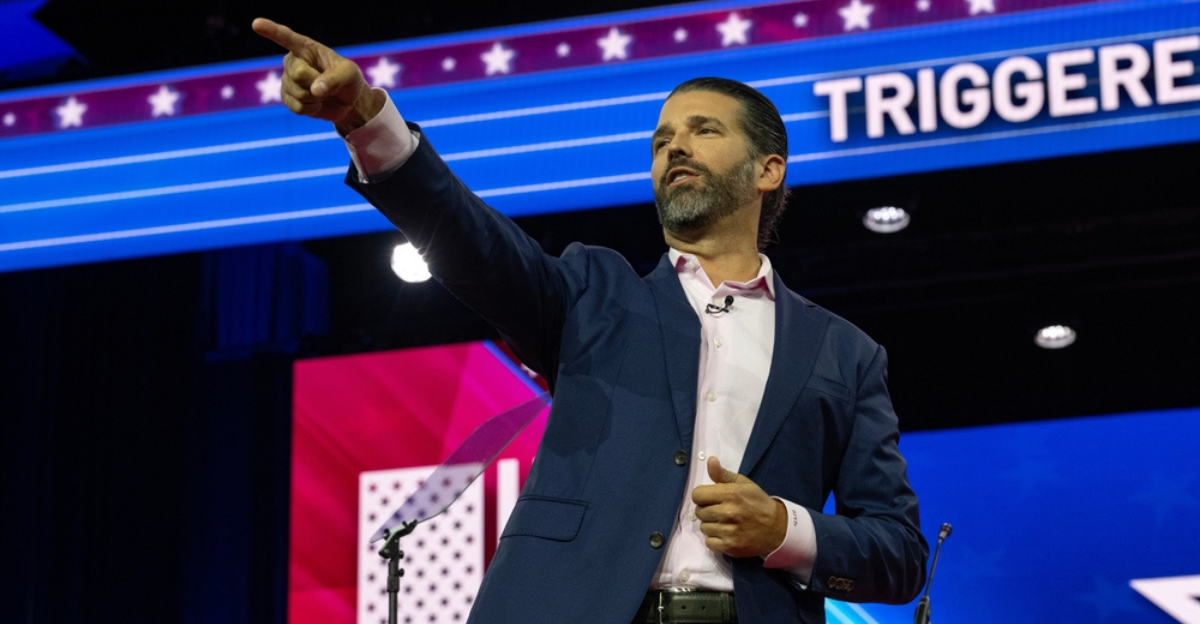
Among those reacting was Donald Trump Jr, who weighed in after conservative group Turning Point USA promoted an alternative “all-American” halftime event scheduled to run alongside Sunday’s game. The event features artists including Kid Rock, Brantley Gilbert, Lee Brice and Gabby Barrett.
Sharing a promotional post for the concert on X, Trump Jr wrote: “I’ll take this over Woke Bunny any day of week.”
The remark quickly gained traction on social media, amplifying the political framing around Bad Bunny’s Super Bowl appearance.
Read also: How much each Premier League club spent in the 2025/26 season
Bad Bunny’s stance on US performances
Bad Bunny, whose real name is Benito Antonio Martínez Ocasio, has previously linked his career decisions to opposition to US immigration policies. In an interview with i-D magazine published last year, he explained why he chose not to tour in the continental United States, except for performances in Puerto Rico.
“There were many reasons why I didn’t show up in the U.S., and none of them were out of hate,” he said, noting that his previous US shows had been commercially successful.
A historic halftime moment
Despite the backlash, Bad Bunny has framed the Super Bowl halftime show as a milestone for Latino representation in mainstream American entertainment. Speaking after the NFL announced him as the headline performer, he described the moment as bigger than his own career.
“What I’m feeling goes beyond myself,” he said. “It’s for those who came before me… This is for my people, my culture, and our history.”
Read also: Could FIFA legally remove the US as World Cup host?
As Super Bowl Sunday approaches, the debate surrounding his appearance highlights how music, politics and identity continue to intersect on the country’s biggest stage whether audiences tune in for the game, the halftime show, or the controversy surrounding it.
Sources: i-D magazine, social media posts, Grammy Awards coverage
Read also: A career Grand Slam, and a new era: Why Carlos Alcaraz feels different