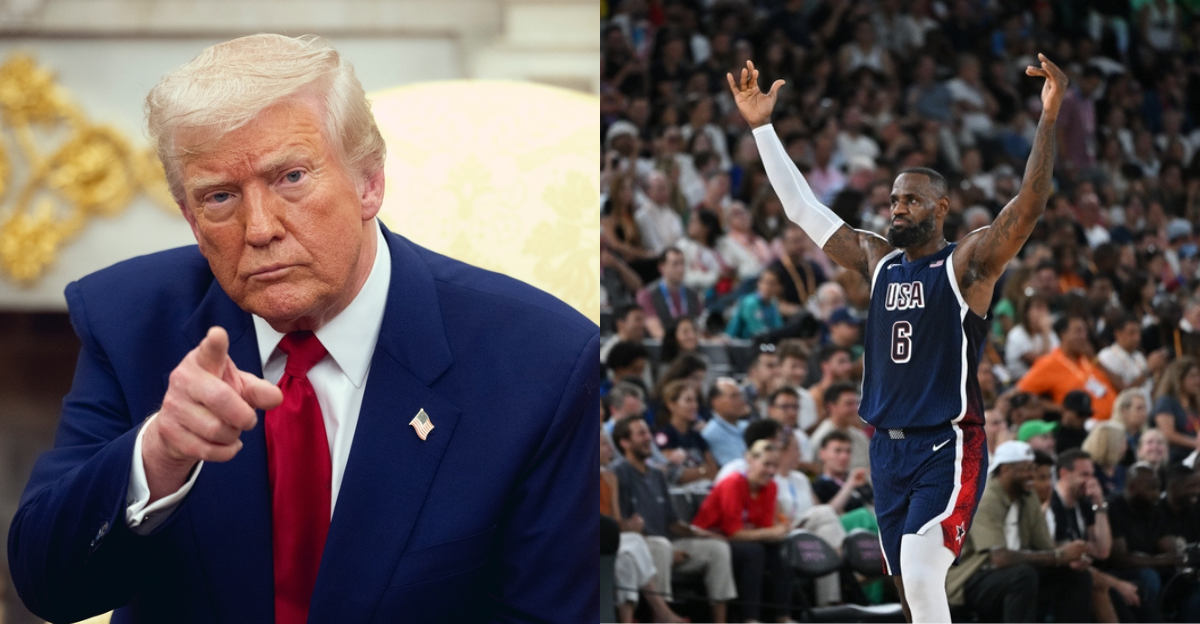
The intersection of American politics and professional sport has long been uneasy, but few moments illustrate that tension as sharply as the public clash between Donald Trump and NBA stars during his first presidency. As Trump again places himself at the center of global sporting events during his second term, that episode has regained renewed relevance.
Since returning to the White House in January 2025, Trump has involved himself in discussions around the 2026 World Cup and the Winter Olympics, reviving debate over how political leadership intersects with sport. For many athletes and fans, those conversations echo a confrontation that unfolded nearly a decade earlier and reshaped how players publicly engage with political power.
A Flashpoint in 2017
The dispute emerged in 2017 amid nationwide protests during the U.S. national anthem, with several NBA players choosing not to stand as a statement against racial injustice. Trump responded by publicly calling on team owners to fire players who participated in the demonstrations, comments that were widely criticised across the league.
Tensions escalated when Trump withdrew a planned White House invitation for Golden State Warriors star Stephen Curry following the team’s NBA championship. In a post on social media, Trump wrote:
Read also: Serena Williams slammed over Super Bowl advert
“Going to the White House is considered a great honor for a championship team. Stephen Curry is hesitating,therefore invitation is withdrawn!”
The move marked a departure from long-standing sports traditions and turned what had often been a ceremonial visit into a political statement.
LeBron James Responds
LeBron James, then a Cleveland Cavaliers star and one of the league’s most influential figures, responded publicly. Writing on X, formerly Twitter, James said:
“U bum, Steph Curry already said he ain’t going! So, therefore ain’t no invite. Going to White House was a great honour until you showed up!”
Read also: How retirement made Tom Brady richer
The post quickly went viral, surpassing one million likes and becoming one of the most widely shared athlete political statements of the Trump presidency. According to ESPN, the exchange crystallised a broader divide between the administration and much of the NBA, a league whose players had increasingly embraced activism.
Criticism Beyond Party Politics
James continued to address the issue in the months that followed, framing his criticism less around partisan disagreement and more around leadership responsibility. In a 2018 interview with ESPN, he questioned Trump’s understanding of the influence attached to the presidency.
“He doesn’t understand the power that he has for being the leader of this beautiful country,” James said.
“He doesn’t understand how many kids, no matter the race, look up to the President of the United States for guidance.”
James added that this lack of awareness troubled him more than any specific policy position, given the symbolic weight of the office.
Read also: Bruno Fernandes reacts to viral Man United fan as haircut looms
An Unprecedented Break
The standoff reached its peak in June 2018, when Trump said he would not invite either of the NBA Finals teams the Cleveland Cavaliers or the Golden State Warriors to the White House.
“I didn’t invite LeBron James, and I didn’t invite Steph Curry. We’re not going to invite either team,” Trump said at the time.
James dismissed the decision, saying the achievement of winning a championship outweighed any ceremonial recognition.
“Winning a championship is way bigger than getting invited to the White House, especially with him in it,” he said.
Read also: Time running out for Slot at Anfield?
A Lasting Shift
The episode marked a turning point in the relationship between American athletes and political institutions. What had once been a largely symbolic tradition became a contested space, reflecting broader cultural divisions.
As Trump once again engages prominently with major sporting events during his second term, the confrontation with James and the NBA serves as a reminder of how deeply sport, politics, and public leadership can intersect and how athletes have increasingly chosen to make their voices heard.
Sources: ESPN, public statements by Donald Trump and LeBron James
Read also: Trump lashes out at Bad Bunny’s Super Bowl halftime performance