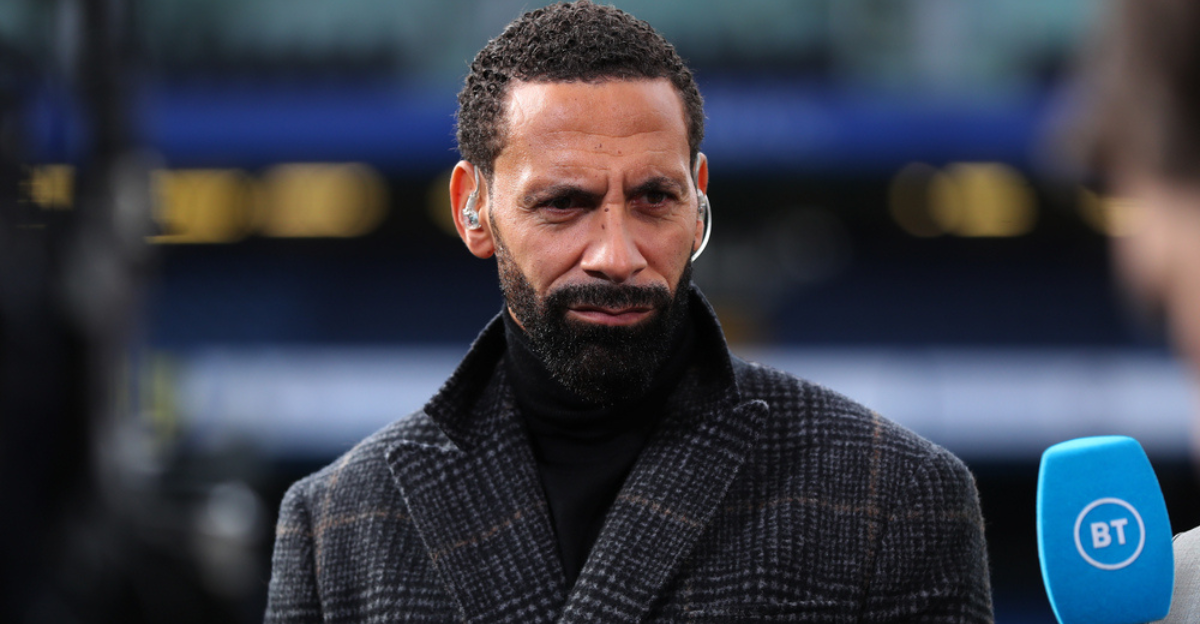
For much of his career, Rio Ferdinand was praised for his reliability at the highest level of English football. Years after stepping away from the game, that durability has left a lasting mark on his body one that still shapes his daily life.
More than a decade after retiring, the former Manchester United and England defender has spoken openly about how years of managing injuries in order to keep playing have had consequences long after his final appearance.
Playing on, despite the damage
Across two decades in professional football, Ferdinand built a career that spanned spells at West Ham, Leeds United, Manchester United and Queens Park Rangers, amassing hundreds of appearances at club and international level. During the latter stages of that career, recurring back problems increasingly limited his ability to train, even when he remained available for matches.
Speaking publicly in 2010, Ferdinand outlined the physical toll that routine took. “The day after a game I would waddle into the club like a duck, bent over like an old hunchback,” he said at the time. “I would be hobbling around, unable to train for four or five days. I would be OK to play the next game, but I must have missed 60–70% of training.”
Read also: Klopp sets conditions for potential Real Madrid return
Like many elite players, Ferdinand relied on pain management and spinal injections to stay competitive. Those measures extended his time on the pitch but did not resolve the underlying injury. The same back issues followed him into a brief period at Queens Park Rangers, shortly before he brought his playing career to an end.
The reality after retirement
In a recent interview with Men’s Health, Ferdinand said the effects of those years have become more pronounced with time.
“I’ve had a bad back for a long time,” he said. “I’ve got injuries that I had from my career. I was on tablets and injections for six years to play games. That’s affected me.”
He described flare-ups that can arrive without warning. “I get some bad moments of back pain where I have to be in a hospital for a couple of days or in a wheelchair for a couple of days,” he said. “It’s mad, but it just comes out of nowhere.”
Read also: One more win could end famous United haircut protest
Since relocating to Dubai, Ferdinand said he has started working regularly with a physiotherapist for the first time since retiring, alongside a personal trainer. Rather than responding to breakdowns, the focus is now on prevention. “There’s a holistic approach to what I’m doing now and hopefully that’s going to put me in good stead,” he said.
Life beyond football
Ferdinand also spoke about the importance of routine and example in his life away from the sport. With young children, he said staying active and engaged matters not only physically, but mentally.
“I’ve got kids that need to see a work ethic,” he said. “My kids need to see me getting up and going to work.”
Reflecting on his own upbringing, Ferdinand said those values were instilled early and remain important to him now. When his children talk about him in years to come, he hopes they remember more than his football career. “It’s ‘Daddy worked hard. He was a hustler,’” he said.
Read also: Milan-Cortina 2026 Olympic Winter Games investigate medal defects
For Ferdinand, the medals and matches belong to the past. The discipline and the physical cost of sustaining it does not.
Sources: Men’s Health
Read also: £100m midfielder draws Liverpool interest