UEFA says it has no plans to lift Russia’s suspension from European competitions, drawing a clear line even as FIFA president Gianni Infantino publicly cast doubt on whether such bans serve any real purpose.
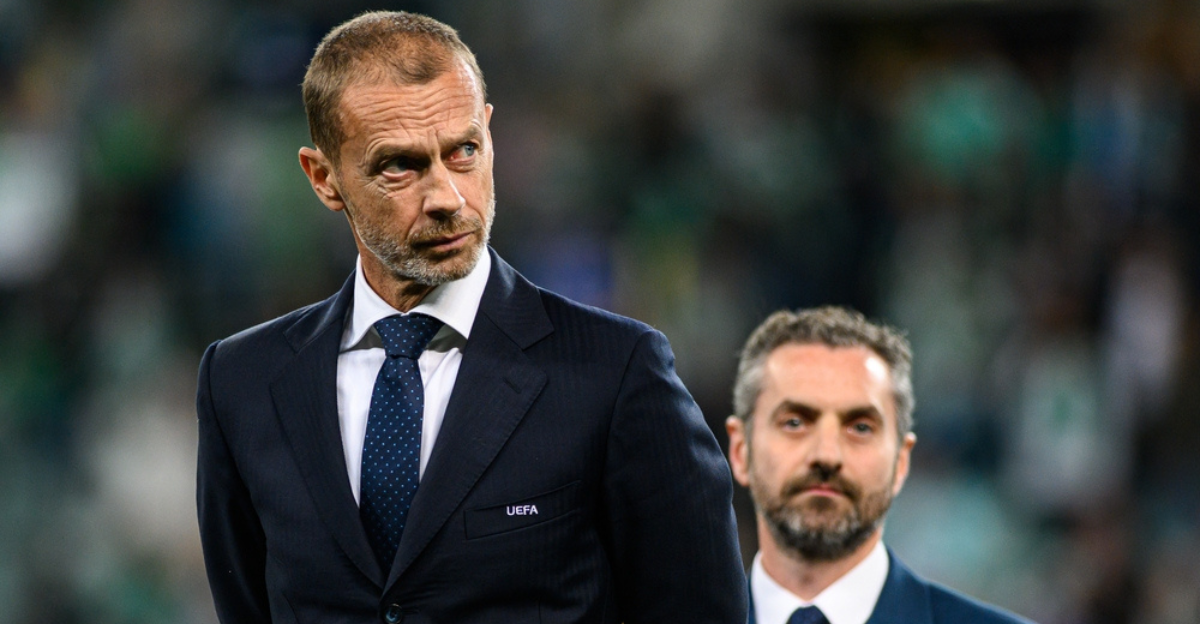
The issue resurfaced during the UEFA Congress in Brussels, where UEFA president Aleksander Ceferin addressed the governing body’s position while appearing alongside Infantino.
According to beIN Sports, Ceferin said: “UEFA’s position is clear and has not changed but we are looking into everything every day.”
He added: “The world is changing so fast that it is even hard to follow. Let’s see what the future brings.”
Read also: The wheelchair champion beat the sub-two-hour man, and London Marathon has its 2027 schedule
Russia has been barred from international football since February 2022, when FIFA and UEFA suspended the country following its invasion of Ukraine. The decision excluded Russia from the 2022 World Cup in Qatar and Euro 2024, and it blocks the national team from entering qualification for the 2026 World Cup in the United States, Canada and Mexico.
While the ban applies to official competitions, Russia has continued to arrange friendly matches outside FIFA and UEFA tournaments, including games against Peru and Chile during the November international window.
A different tone from FIFA
Infantino, however, has signaled a willingness to reconsider the broader principle behind such suspensions.
In an interview with Sky News earlier this month, he was asked about Russia’s exclusion and whether Israel could face similar action amid the war between Israel and Hamas. Infantino suggested football’s statutes should move away from punishing national teams for the actions of governments.
Read also: Kimi Antonelli issues warning to George Russell with Mercedes vow
Speaking to Sky News, he said: “We have to. Definitely. Because this ban has not achieved anything, it has just created more frustration and hatred.”
He added that, “having girls and boys from Russia being able to play football games in other parts of Europe would help” and argued FIFA should “enshrine in our statutes that we should actually never ban any country from playing football because of the acts of their political leaders”.
The remarks drew criticism from Ukrainian political figures, who have backed Russia’s continued isolation from international sport.
The contrast between FIFA and UEFA underscores an ongoing tension within global football governance: how to balance claims of political neutrality with the reality of geopolitical conflict. For European officials, the answer at least for now remains unchanged.
Read also: Gyokeres says bloody socks is normal procedure
The Olympic model
Other international sports bodies have taken a more conditional approach. The International Olympic Committee has allowed Russian competitors to participate as Individual Neutral Athletes, provided they demonstrate no ties to the war. In those cases, the Russian flag and anthem are not used.
The IOC has also indicated that Russian youth teams could be permitted under certain frameworks. IOC president Kirsty Coventry recently said that “sport must remain neutral” and that athletes should not be punished for the political decisions of their governments.
Ceferin himself has previously voiced discomfort with blanket bans on athletes. In September, he said he is “not a supporter of banning the athletes” and asked, “what can an athlete do to their government to stop the war?” He noted at the time that the suspension had not ended the conflict.
Still, UEFA’s formal policy stands. Any shift would require agreement among its member associations and for now, there is no indication that change is imminent.
Read also: John Stones has been convicted: “Nothing to say”
Sources: Sky News, beIN Sports
Read also: Botev Plovdiv president shot in the head after Bulgaria’s Nations League tie