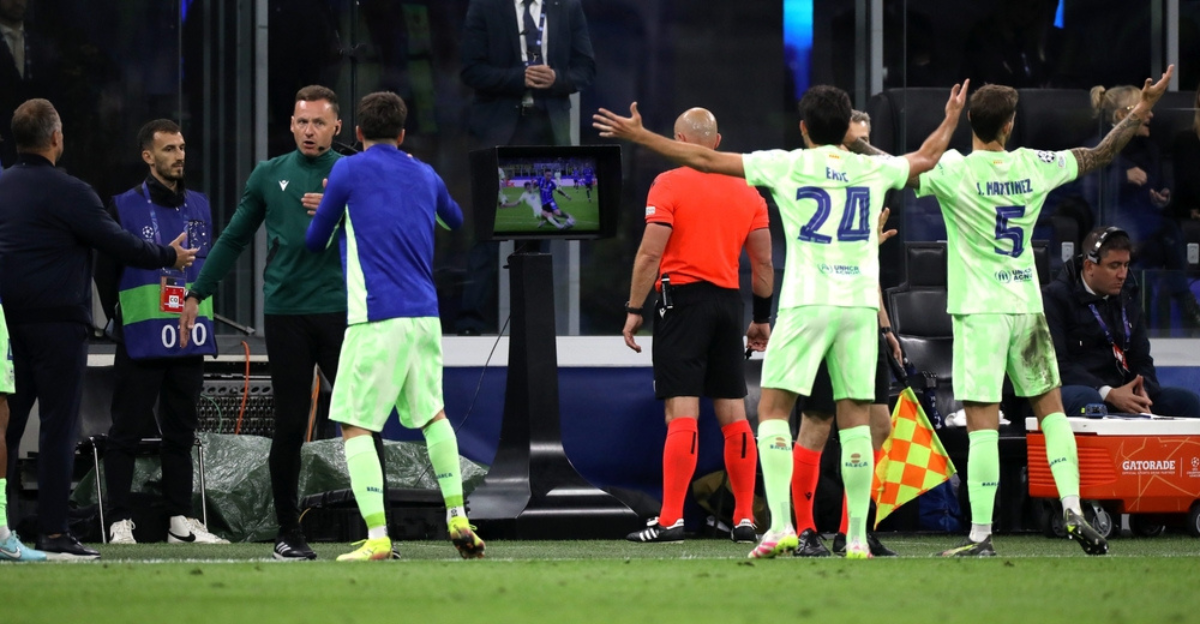
On terraces in Germany, banners demanding the end of video review are now as predictable as the stoppages themselves. In France, club executives question whether they can afford the system at all. In Italy, supporters argue it should be used even more.
Across Europe, VAR is no longer simply a refereeing tool. It has become a flashpoint.
Originally introduced to correct “clear and obvious” mistakes, the technology was meant to calm disputes, not create new ones. Instead, disagreements have shifted from individual calls to the system’s scope, consistency and cost.
Different leagues, similar tensions
According to data reported by BBC Sport, intervention levels vary widely among Europe’s major competitions.
Read also: Cristiano Ronaldo crisis forces Portugal chief into emergency action
France’s Ligue 1 has recorded 83 VAR interventions in its first 198 matches this season, the highest rate among the so-called big five leagues. There have been 17 acknowledged errors approximately one every 11.6 games.
Germany’s Bundesliga intervenes more frequently than England’s Premier League, though overall error rates are comparable: roughly one mistake every 15 to 16 matches in both competitions, based on figures cited by BBC Sport.
In Spain, sports daily Marca reported that 10 errors were identified in the opening 18 rounds of La Liga fixtures a tally it said exceeded comparable figures in England and Germany during the same period.
The statistics differ in scale. The underlying debate does not.
Read also: Harry Kane breaks silence on Man City verdict
Protest and pressure
In Germany, opposition is highly visible. Supporters regularly display banners reading “Videobeweis abschaffen” abolish video review during stoppages. Augsburg fans recently unfurled one stating: “Football with VAR is like horse racing with donkeys.”
“VAR has caused a lot of unrest here,” journalist Stephan Uersfeld told BBC Sport, arguing that while the system increases fairness, it has “become a bureaucrat’s dream.”
Elsewhere, dissatisfaction is expressed less theatrically but just as sharply.
In Italy, the frustration centers not on whether VAR should exist, but on how far it should extend. Davide Chinellato of La Gazzetta dello Sport told BBC Sport that many Serie A supporters favor expanding reviews to cover additional incidents, such as corners or second yellow cards.
Read also: Phil Taylor comes out of retirement for stunning darts return
“What is changing is the level of frustration,” he said. “The expectation in Italy is that every clear mistake should be corrected.”
Napoli defender Juan Jesus recently echoed that mood: “There’s nothing but controversy. It becomes hard for everyone to remain passionate about football.”
Reform attempts and financial strain
Spain has tried structural reform, appointing specialist VAR officials separate from on-field referees. The move was intended to bring clarity. Yet early errors involving semi-automated offside technology quickly reignited criticism.
“There is no agreement of what VAR should do or how referees should act,” BBC Sport columnist Guillem Balague said. “The technology feels distant from the emotion of the sport.”
Read also: ‘If you lie to me, I will leave’: Guardiola’s City warning takes on new weight
In France, the debate carries an additional financial dimension. The refereeing system, including VAR operations, costs around 25 million euros per season, according to L’Equipe journalist Pierre-Etienne Minonzio in comments to BBC Sport. With broadcast revenues under pressure, some club presidents have openly questioned whether the investment is sustainable.
Lyon captain Corentin Tolisso voiced a broader sporting concern in November, saying: “There are mistakes every weekend. We’re paying a very high price for the level of refereeing.”
A question without a definition
Even Uefa has acknowledged the tension. Last week, referees’ chief Roberto Rosetti warned against increasingly “microscopic” interventions, saying: “I believe we forgot the reason why VAR was introduced.”
That reason was clarity. What constitutes clarity, however, remains unsettled.
Read also: Harry Kane’s Bayern future suddenly comes with a Tottenham escape route
Some leagues advocate widening VAR’s remit. Others argue for restraint. The International Football Association Board is continuing to examine how the technology should evolve, including transparency measures such as publishing audio explanations.
For now, one issue unites Europe’s competitions: the argument has shifted from whether referees make mistakes to how and how often technology should correct them.
The promise was simple. The practice has proved anything but.
Sources: BBC Sport, Marca, L’Equipe, La Gazzetta dello Sport, NTV