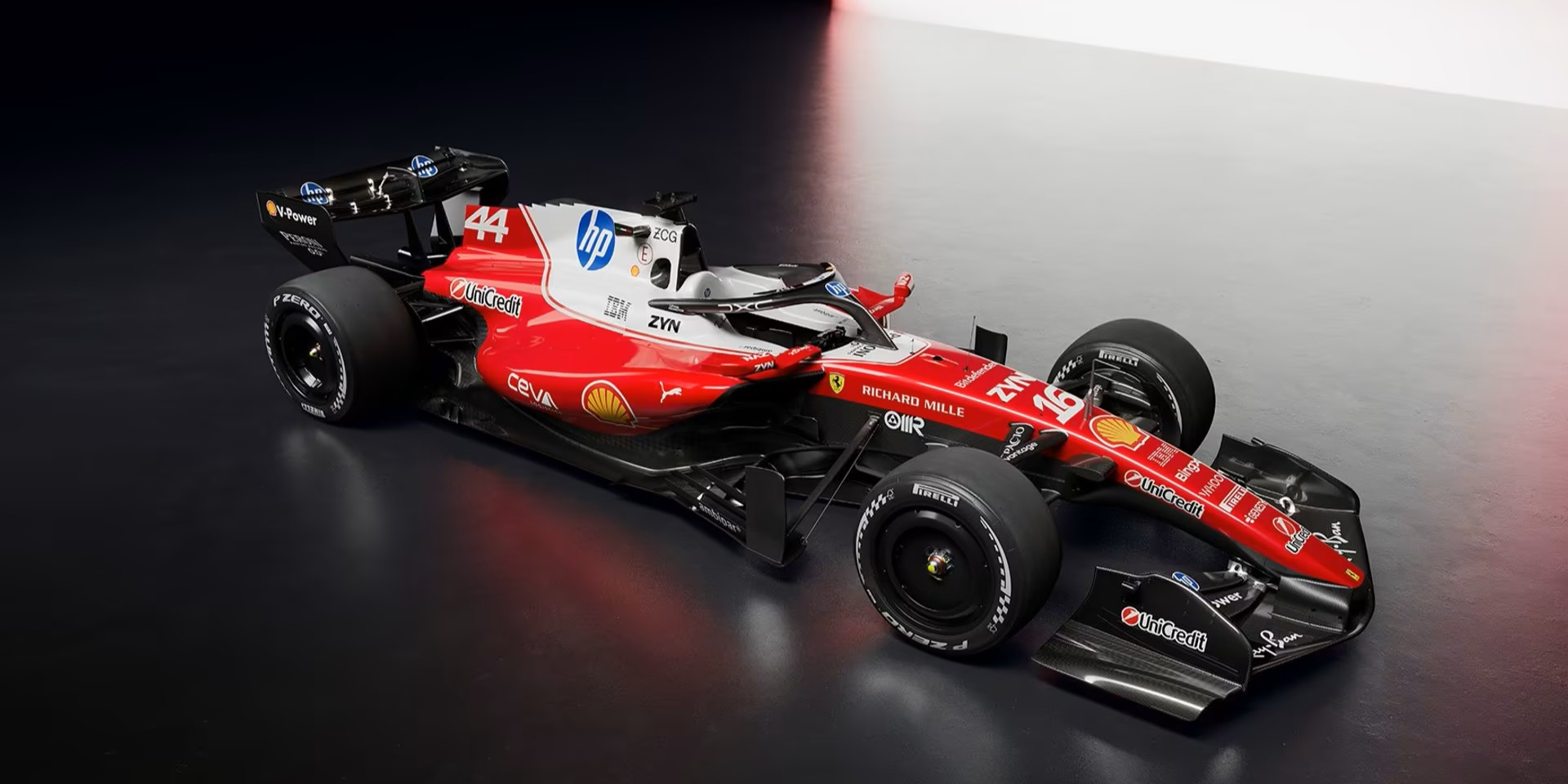
Ferrari has generated discussion during pre season running in Bahrain after a social media post drew attention to an unusual rear end configuration on its latest car.
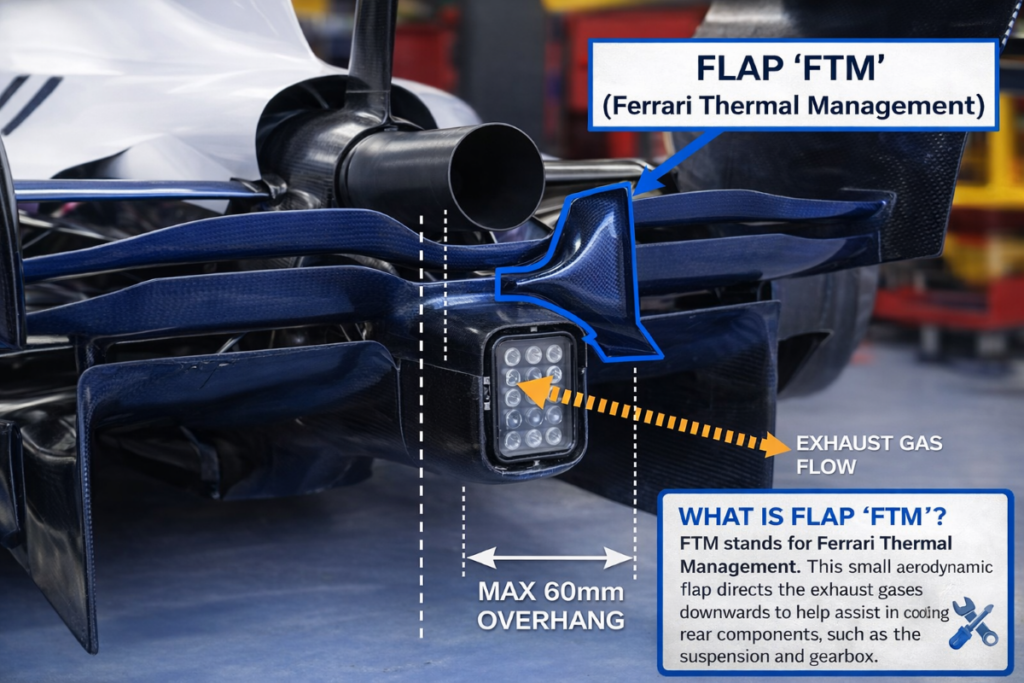
According to Ferrari Focus, via a post published by ScuderiaScoop, the team has introduced what has been described as an FTM aero exhaust device, a concept intended to channel exhaust gases in a way that supports aerodynamic performance rather than simply expelling them.
Trackside observers reported that several engineers from rival teams paused to study the Ferrari in the pit lane, including McLaren team principal Andrea Stella, as images of the solution circulated online.
What the FTM flap is and where it sits
According to Ferrari Focus, the visible innovation on the rear of the Ferrari carries the internal code name FTM. It is described as a small aerodynamic flap positioned strategically in the area surrounding the central exhaust outlet.
Read also: Javier Tebas breaks silence on what should happen to Man City next
The component reportedly takes advantage of a specific allowance within the 2026 technical regulations. Under those rules, bodywork is permitted to extend up to 60 millimetres beyond the rear axle line. Within that limited space, Ferrari’s engineers are said to have installed the additional appendage.
Though modest in size, the placement is significant. By working within that narrow regulatory window, Ferrari appears to have found an opportunity to influence airflow without breaching dimensional limits.
How the concept is said to work
According to Ferrari Focus, early estimates suggest the idea could be worth between 0.15 and 0.25 seconds per lap, although no official figures have been released by Ferrari.
The system is believed to guide high velocity exhaust gases over sculpted bodywork surfaces and toward the diffuser. In theory, this helps energize airflow beneath the car, encouraging the formation of a lower pressure area under the floor. Greater pressure difference between the upper and lower surfaces of the car increases downforce, which can translate into stronger cornering grip.
Read also: Messi admitted he targeted one World Cup rival on purpose
The principle often associated with this type of airflow management is the Coanda effect, where a fast moving stream of fluid tends to follow a curved surface. Engineers have long explored ways to exploit this behavior within the limits of the regulations.
Historical parallels in Formula 1
Using exhaust gases to influence aerodynamics is not unprecedented. During the early 2010s, most notably throughout Red Bull’s championship winning campaigns from 2010 to 2013, teams refined exhaust blown diffuser concepts to enhance rear downforce.
Regulation changes introduced in 2014, alongside the arrival of hybrid power units, altered exhaust positioning and significantly reduced the scope for such solutions. As a result, that era of aggressive exhaust driven aerodynamics faded.
Why the timing matters under 2026 rules
The regulatory overhaul scheduled for 2026 will reshape both chassis and power unit architecture. The new framework removes the MGU H, increases electrical deployment, mandates fully sustainable fuels, and introduces revised aerodynamic parameters including active front and rear wings and the elimination of the beam wing.
Read also: Cristiano Ronaldo crisis forces Portugal chief into emergency action
According to Ferrari Focus, the current exhaust layout may represent an early attempt to interpret those evolving boundaries in a creative but legal way. While it remains unclear whether the concept delivers the estimated gains, rival teams are expected to evaluate similar airflow strategies if the data proves convincing.
Ferrari has not publicly detailed the system, and its true effectiveness will only become clearer once comparative performance data emerges over a longer run of testing and racing conditions.
Sources: Ferrari Focus
Read also: Harry Kane breaks silence on Man City verdict
Read also: Phil Taylor comes out of retirement for stunning darts return