Political tensions rise after social media post
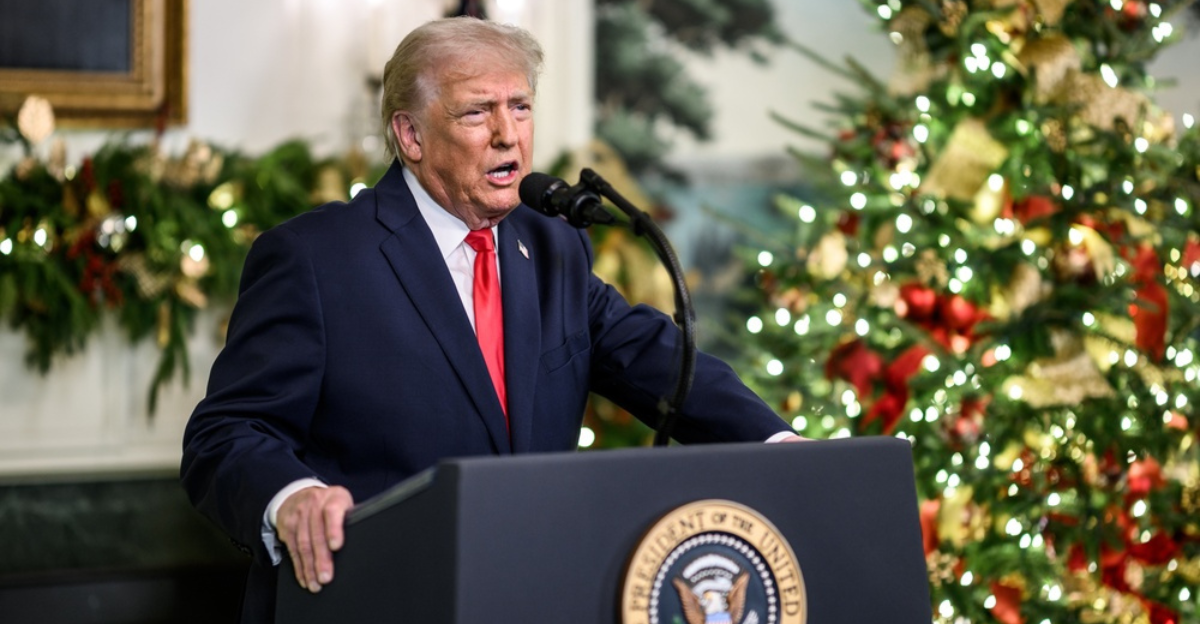
President Donald Trump sparked immediate backlash after writing on Truth Social that “the greatest enemy America has is the Radical Left, Highly Incompetent, Democrat Party.”
The comment came during an intensifying U.S. confrontation with Iran and appeared to place domestic political opponents above Tehran, which Trump has long identified as a primary foreign adversary.
According to reporting by The New York Post, the remarks quickly drew a strong response from Democratic leaders.
House Minority Leader Hakeem Jeffries criticized the statement during a CNN appearance, warning about the potential consequences of such rhetoric.
Read also: Harry Kane’s Ballon d’Or response says plenty without saying much
“Donald Trump should keep his reckless mouth shut before he gets somebody killed,” Jeffries said.
Conflict with Iran shapes political rhetoric
The comments come as the United States remains engaged in a growing military confrontation involving Iran and regional actors.
According to Axios, the conflict escalated following joint U.S., Israeli strikes in late February, with subsequent attacks targeting infrastructure and rising tensions around the Strait of Hormuz.
Trump has issued warnings to Iran, including demands to reopen key shipping routes or face additional strikes on energy facilities.
Read also: Roy Keane gives Manchester City stars brutal message over medals after guilty verdict
Additional reporting from international outlets has highlighted growing concern among U.S. allies and volatility in global markets as the situation develops.
Domestic divisions deepen during international crisis
At the same time, Trump has continued to criticize Democrats over domestic issues, including a partial government shutdown linked to disagreements over homeland security funding.
According to political analysis cited across multiple outlets, the president’s language reflects a broader shift toward more confrontational rhetoric during periods of international tension.
Critics argue that describing a major U.S. political party as the country’s “greatest enemy” marks a significant escalation in tone, particularly during an active geopolitical crisis.
Read also: Where Erling Haaland could end up if he leaves Man City
How the Iran crisis is intensifying internal political conflict
The exchange underscores how the conflict with Iran is influencing not only foreign policy decisions but also the tone of political debate within the United States.
Observers note that moments of international instability have historically tested domestic unity, but the current environment appears to be amplifying divisions instead.
As the situation abroad continues to develop, the intersection of foreign policy and domestic politics is likely to remain a defining feature of the national conversation.
Sources:
Axios
The New York Post
Read also: Javier Tebas breaks silence on what should happen to Man City next
Read also: Messi admitted he targeted one World Cup rival on purpose