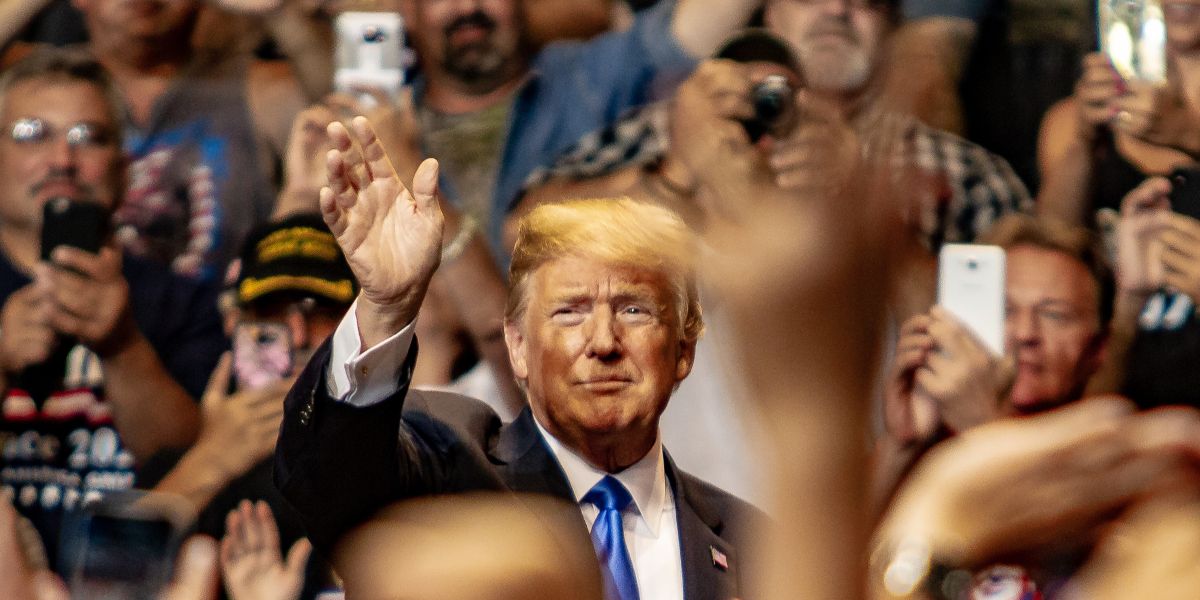
According to Lisa Needham in the Daily Kos article “Trump thinks controlling college sports will be a slam dunk,” President Donald Trump’s executive order attempts to reshape college athletics by pressuring the NCAA and schools on transfers, eligibility, and NIL policy, even though major parts of that agenda appear to run into existing legal and constitutional limits.
Why the order is provoking backlash
President Donald Trump’s order, titled “Urgent National Action to Save College Sports,” is framed as an urgent intervention in a system that many people already agree is messy and unstable. According to Needham, it was issued while much of the country was watching the Women’s Final Four, adding to the sense that Trump was once again using sports as a stage for political performance rather than as a policy area requiring legislative discipline.
The central criticism is not simply that Trump wants changes in college sports. It is that he is presenting executive force as if it were a substitute for lawmaking. That makes the order dramatic in tone, but fragile in practice, because executive orders do not automatically erase court agreements, override antitrust settlements, or invalidate state law just because a president wants a different outcome.
How Trump wants to reshape transfers and eligibility
A key part of the order focuses on limiting how athletes move between schools. As described in Needham’s reporting, Trump wants a five year cap on eligibility and a rule under which athletes would get one unrestricted transfer with immediate eligibility, while any later transfer would force them to sit out for a year.
Read also: Harry Kane’s Bayern future suddenly comes with a Tottenham escape route
That proposal would do more than tidy up the system. It would significantly reduce athlete leverage in a college sports environment where transfers have become one of the few tools players can use when a coaching situation changes, a program mistreats them, or a better opportunity appears elsewhere. Needham notes that if this rule had already been active, even recent high profile tournament teams would have looked different, which shows how directly the policy would affect both rosters and individual careers.
Where the legal collision becomes obvious
The largest weakness in the order is that it appears to conflict with an existing federal consent decree that bars the NCAA from enforcing certain transfer restrictions on athletes who move more than once. According to the article, that decree came out of an antitrust challenge brought by a coalition of states, and it was negotiated through the Department of Justice and the NCAA before being filed with the court.
That means schools are being pushed toward a legal contradiction. They are being threatened with the loss of federal funding if they do not align with Trump’s preferred rules, even though those rules may conflict with a binding framework already established through the courts. The result is not clarity, but institutional confusion, with schools left to choose between political pressure and existing law.
Why the NIL section reaches beyond presidential power
The order also tells the attorney general to “invalidate” state NIL laws that do not fit Trump’s preferred approach to college sports. Needham points out that this language may sound forceful, but it does not match how law actually works. A president cannot simply cancel a state statute by decree, and the Department of Justice cannot do so without building a credible legal argument and winning in court.
Read also: ‘I’m not confident’: Red Bull chief delivers troubling verdict on Verstappen’s car
That gap between rhetoric and legal reality matters. NIL policy is already one of the most contested areas in modern college athletics, and efforts to reverse state level protections would almost certainly trigger new litigation rather than immediate compliance. In other words, the order reads less like settled policy and more like a political signal aimed at institutions that are already under pressure.
Who benefits if athlete power is reduced
Needham argues that this is not only about Trump’s instinct to control public institutions. It also reflects the interests of people inside college sports who are uncomfortable with how much leverage athletes have gained in recent years. Transfer freedom allows players to leave bad situations. NIL rights allow them to profit from their labor and visibility in ways that were long reserved for universities, conferences, and the NCAA.
From that perspective, the order can be seen as an attempt to restore an older balance of power. The people encouraging Trump to act may understand that Congress is the body that would normally make these kinds of changes, but they also know that executive pressure can create headlines, uncertainty, and momentum. Even when it fails in court, it can still shift the political conversation in their favor.
Why Congress remains the real decision maker
The article also points to the SCORE Act as a sign that the real battleground is still Congress, not the Oval Office. According to Needham, NCAA President Charlie Baker has suggested that Trump’s order may function as a way to push lawmakers harder on legislation that has stalled, especially around athlete compensation and employment status.
Read also: Man City hit back at Premier League with explosive accusation
That is where the deeper divide becomes impossible to ignore. Democrats have been more open to frameworks that treat college athletes more like employees, while Republicans have generally worked against that direction. Because of that split, any lasting reform is likely to require legislative compromise, not executive improvisation. Trump’s order may generate noise and pressure, but it does not solve the political deadlock that has kept Congress from producing a durable answer.
The control logic behind the sports spectacle
What gives this episode broader significance is the pattern underneath it. In Needham’s telling, Trump continues to approach sports as if they were another arena for command, image making, and personal authority. The same habit appears when he pressures institutions, inserts himself into cultural disputes, or treats executive action as a way to perform dominance in public.
That is why this college sports order matters beyond basketball or football. It is another example of a governing style that confuses visibility with legitimacy and forceful language with lawful power. According to Lisa Needham’s article in Daily Kos, the real issue is not whether college sports need reform, because they clearly do. The issue is whether reform will come through democratic process and legislation, or through a spectacle of presidential control that promises far more than it can legally deliver.
Read also: Manchester City CEO says everything is one big “conspiracy theory”