Breaking records and building a football legacy
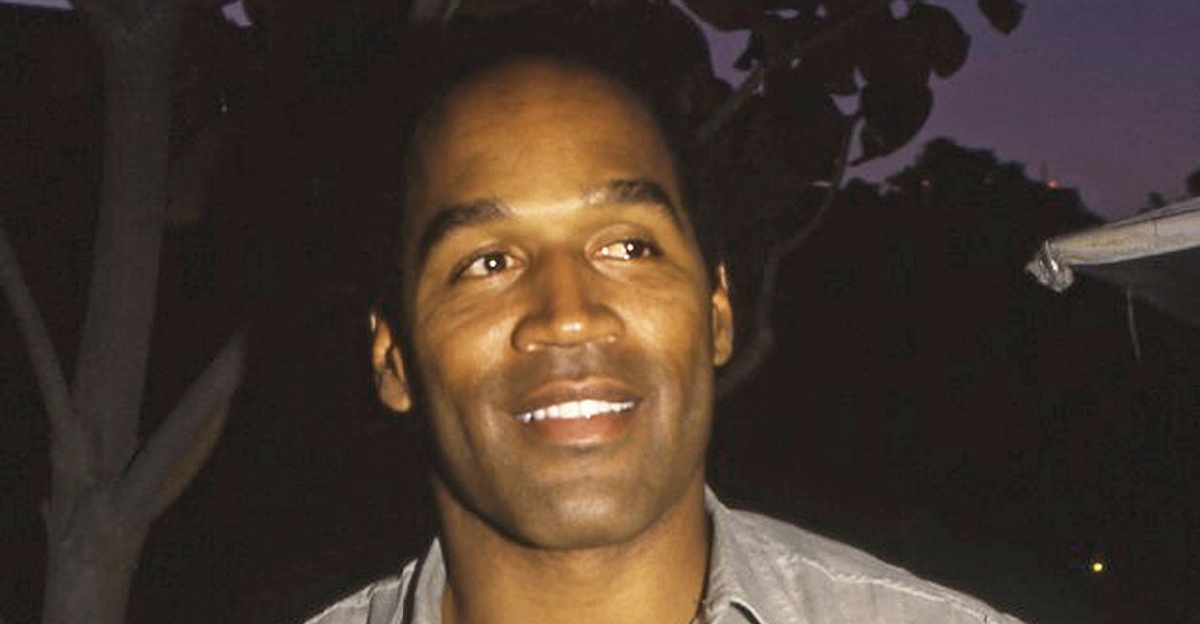
Orenthal James Simpson was born on July 9, 1947, in San Francisco, California. He overcame childhood rickets, which initially left him bowlegged, to become a track and football sensation. His raw athletic talent led him to the University of Southern California, where he quickly dominated the college football landscape. During his time at USC, Simpson secured his status as a sports legend by winning the prestigious Heisman Trophy in 1968, setting the stage for an explosive professional career.
Drafted first overall by the Buffalo Bills in 1969, Simpson struggled initially but eventually found his rhythm and completely redefined the running back position. By 1973, he became the first player in the National Football League to rush for over 2,000 yards in a single season, an extraordinary feat accomplished in just 14 games. He led the league in rushing four times and was selected to the Pro Bowl six times, cementing his place among the football elite. According to A Breakdown of OJ Simpson’s NFL Career Ahead of Netflix’s ‘American Manhunt’ Doc, Simpson was named league MVP due to his development of one of the most impressive rushing careers in NFL history and was inducted into the Pro Football Hall of Fame in 1985. His on field dominance made him an untouchable hero in the eyes of millions.
Cultivating an empire of fame and invincibility
Simpson possessed a magnetic charm that allowed him to transcend sports and cross over into mainstream pop culture. He became a familiar face in living rooms across America as a broadcaster, actor, and the charismatic pitchman for Hertz rental cars. His carefully crafted public persona appealed to a broad demographic, making him one of the first Black athletes to achieve universally beloved status among white mainstream America. This widespread acceptance provided him with unprecedented opportunities, immense wealth, and a lavish lifestyle.
This extraordinary level of fame also insulated him from the typical consequences of poor behavior. Surrounded by wealth and adoring fans, Simpson began to operate under the assumption that the normal rules of society did not apply to him. His transition from a low income neighborhood to the upper echelons of the Hollywood elite fueled an extreme sense of entitlement. He bought a massive Los Angeles mansion, threw extravagant parties, and wielded his power to get exactly what he wanted. His status as a beloved public figure effectively shielded him from scrutiny, allowing his ego to grow completely unchecked.
Read also: Piers Morgan sparks viral reaction with Arsenal take on Bayern and PSG
The illusion of perfection and a hidden darkness
While the public saw a smiling superstar, those closest to him witnessed a controlling and volatile individual. Simpson married Nicole Brown in 1985, and their relationship quickly became defined by severe domestic abuse. He treated his wife not as an equal partner but as another prized possession, much like his Heisman Trophy or his NFL records. His wealth and power allowed him to manipulate situations and silence those who might expose his true nature.
Psychological profiles of his behavior suggest that his actions were rooted in a deep seated need for absolute control. According to Inside the Mind of OJ Simpson, Simpson was an abuser of the worst kind, one with money, power, and fame, who treated Nicole as a possession rather than a wife. He utilized his immense resources and celebrity status to evade legal repercussions for his repeated instances of domestic violence. Police frequently responded to calls at their residence, yet Simpson routinely used his charm and connections to avoid serious charges, reinforcing his belief that he was entirely above the law.
The brutal reality that shattered an American idol
The facade entirely crumbled on June 12, 1994, when Nicole Brown Simpson and her friend Ronald Goldman were found brutally murdered outside her Brentwood home. Simpson immediately became the prime suspect, leading to the infamous slow speed chase in a white Ford Bronco that captivated the nation. The subsequent criminal trial became a media circus, completely transforming the former football hero into the central figure of a highly polarizing legal battle.
The trial lasted for months and deeply divided the American public along racial lines. High priced defense attorneys capitalized on police missteps and racial tensions to secure a not guilty verdict for Simpson in the criminal court. The verdict stunned the world and permanently destroyed his carefully maintained public image. He was later found liable for the wrongful deaths in a civil trial, resulting in a staggering financial judgment against him. According to O.J. Simpson and Understanding the Black Support He Never Deserved, his acquittal was less about him beating the system as an individual and more about the resources that his wealth, class allegiance, and celebrity allowed him access to.
Read also: Where is Mick Schumacher today?
A legacy defined by infamy and courtroom spectacles
Simpson spent his later years completely stripped of his former glory, desperately trying to cling to the remnants of his public life. He relocated to Florida to protect his NFL pension from civil judgments and frequently sought the spotlight, though he was now viewed as a pariah rather than a hero. His belief in his own untouchability ultimately led to his definitive downfall in 2007, when he organized an armed confrontation in a Las Vegas hotel room to retrieve sports memorabilia he claimed belonged to him.
This brazen act resulted in his arrest, trial, and subsequent conviction for armed robbery and kidnapping. According to Nevada Judge Rejects New Trial For Jailed O.J. Simpson, Simpson was sentenced to a term of nine to 33 years in prison for entering a Las Vegas hotel room with five armed cohorts. He served nearly a decade behind bars before being granted parole in 2017. He passed away in April 2024 at the age of 76 following a battle with prostate cancer. The story of Orenthal James Simpson remains a stark cautionary tale about the corrupting influence of unchecked ego, the dark reality behind celebrity worship, and how absolute entitlement can destroy even the brightest of legacies.
Read also: Is the 40-point mark still the magic number for survival?


