The Formula 1 Commission meets on Monday to debate a sliding-scale catch-up mechanism that would, for the first time, allow teams outside the top four to spend more than the leaders of the constructors’ championship. The idea, tabled by Williams team principal James Vowles, has cut the paddock in two.
Vowles has borrowed language from the engine rules in his pitch, calling it an “ADUO for teams” after the Additional Development and Upgrade Opportunities that lagging power unit manufacturers already receive. Teams further down the standings would be allowed to spend above the normal cap, with the amount tied to their position in the championship.
Newey sides with the challengers
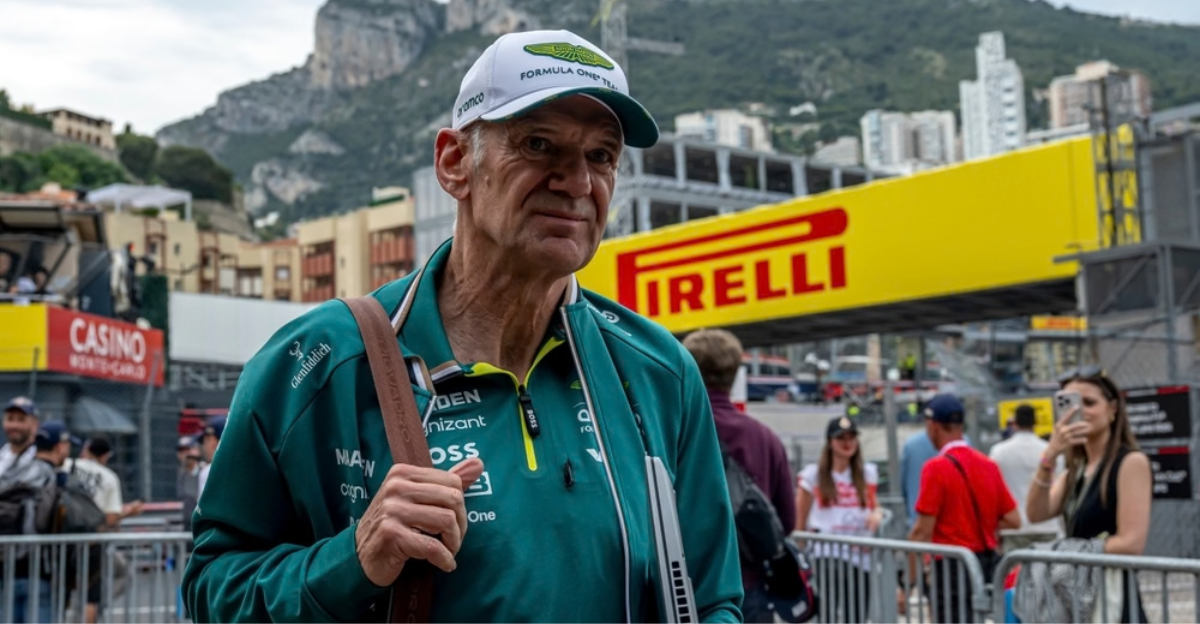
Adrian Newey has placed himself firmly on Vowles’s side. In comments reported by PlanetF1, Aston Martin’s team principal argued that Formula 1 already compensates teams at the back of the grid in other ways, and that the budget should follow the same logic.
“If you look at things like wind tunnel testing, then that – and also the engines with the ADUO – then those are both examples where teams that are behind are granted more wind tunnel time or dyno time or whatever it might be than the teams that sit at the front,” Newey said.
“So, it’s easy from that point of view to then extrapolate that to, okay, if teams are behind, then also give them a small extra allowance on the budget.”
Wolff wants a different lever
Toto Wolff has pushed in a different direction. The Mercedes team principal told Sky Sports F1 at the Brazilian Grand Prix in São Paulo that his team had already pitched the FIA on a broader uplift, aimed at retaining young engineers whose pay is being squeezed by the cap, as transcribed by Motorsport.com.
“I would have loved to have a little bit of an uplift. I think that we, especially the idea that we had was for more junior personnel that joined the team, that we would have more allowance to pay them better,” Wolff said.
“So we’ve pitched that to the FIA to give us an allowance, not for more front wing, but an allowance for salaries to come up a little bit. Because the cost cap suppresses all of that.”
Read also: Germany faces major World Championship question after Russia’s latest ice hockey setback
His verdict on the FIA’s reception was that the idea “didn’t score a lot of brownie points.”
One vote short for 2027
According to The Race, Cadillac, Alpine, Aston Martin and Audi are the four teams that have publicly aligned with Vowles’s principle. Adding Williams itself, that puts five teams behind the proposal. Ferrari, McLaren, Red Bull and Mercedes have little reason to vote for a rule designed to help rivals close the gap. Haas is not spending to the cap in the first place, and Racing Bulls principal Alan Permane has said he opposes the system.
For a 2027 introduction, Vowles needs a super-majority: the FIA, the commercial rights holder and at least six of the 11 teams. That is one vote short. A 2028 start requires a simple majority of four teams plus the governing bodies, a threshold Vowles has already cleared.
The Race also outlined three possible structures for the sliding scale: a model copied from the current aerodynamic testing allowances, a tier system that groups teams in points bands, or a trigger that only kicks in for teams more than 100 points off the top four. No specific euro figures have been attached to any version.
Read also: Gerrard: The reason United picked Pochettino over Eddie Howe
Vowles has signalled that the detail is not what he is pushing Monday’s meeting to settle, according to Motorsport Week.
“What I want to make sure is that we get it right by the next regulation change,” he said.
The next full regulations reset is scheduled for 2030-2031, which would give a 2027 start three seasons to shift the competitive order and a 2028 start two.
Read also: Bayern Munich make their Michael Olise stance crystal clear to Real Madrid