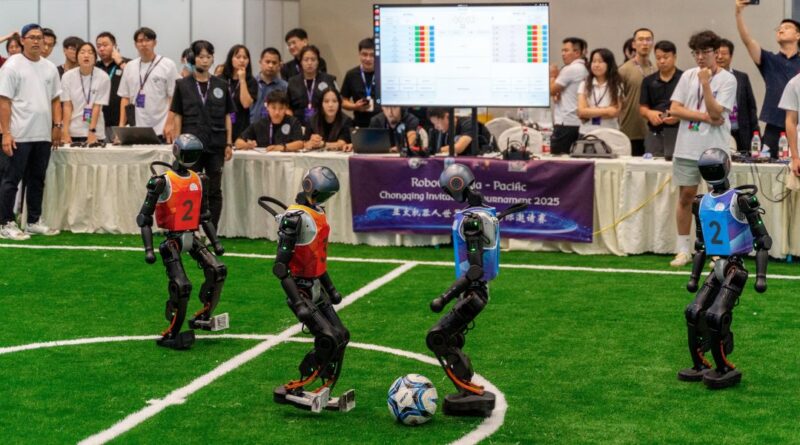
Analysis: How artificial intelligence is reshaping football from officiating to the stands
Football is still defined by emotion, instinct, tactical reading, and the energy of the crowd, but that world now increasingly coexists with another language, the language of data. According to María Ximena Perez in the Agencia de Noticias Científicas de la UNQ, cameras, sensors, tracking systems, and machine learning models are already shaping different parts of the game, both on and off the pitch. This transformation is not limited to one isolated area, it now affects officiating decisions, training routines, injury prevention, tactical planning, and commercial strategies tied to sports consumption.
According to a systematic review published in Biology of Sport and cited in the article, researchers from several universities examined 32 studies and found that machine learning already has practical uses in football. The review identified applications in injury research, performance monitoring, technical and tactical analysis, and talent identification. In other words, artificial intelligence has moved beyond the margins of sports science and has become a real working tool for clubs, coaching staffs, and institutions involved in regulating competition.
Officiating enters a more precise era
One of the most visible changes can be seen in officiating. According to FIFA, the semi automated offside system uses 12 cameras installed beneath the stadium roof, tracks 29 data points per player 50 times per second, and combines that information with a sensor inside the ball that sends data 500 times per second. The goal of this technology is not to fully replace the referee, but to provide a faster and more accurate basis for decisions in extremely tight situations, especially in plays where a matter of centimeters can change the outcome of a critical call.
According to a study published in the Journal of Sports Sciences and cited in Perez’s article, the impact of VAR can already be measured in concrete terms. The research reviewed 2,195 matches played across 13 countries and found that refereeing accuracy increased from 92.1 percent to 98.3 percent after VAR intervention. That improvement has not eliminated controversy, because debate remains inseparable from football, but it has significantly reduced the margin of error. The discussion is therefore no longer only about whether technology changes the essence of the game, but also about how much it improves fairness in decisions that once depended almost entirely on human judgment.
Read also: Ben White returns but must rebuild trust, says Tuchel
Performance and tactics are being redefined by data
Artificial intelligence has also changed the way player performance is analyzed. According to the Agencia de Noticias Científicas de la UNQ, teams can now use cameras, GPS devices, and wearable technology to measure running distance, acceleration, deceleration, spatial occupation, and movement patterns during a match. That volume of information makes it possible to study the game in far greater detail than traditional observation alone. It is no longer just a question of whether a player ran more or less, but when, where, how, and with what physical and tactical effect those movements took place.
In the area of sports health, the article points to a review published in the British Journal of Sports Medicine that analyzed 38 studies on injury prediction using machine learning. According to that review, football was the most studied sport in this field, reflecting the strong interest in anticipating physical risks in a high demand discipline. Even so, the researchers highlighted important limitations, including small sample sizes, inconsistent definitions of injury, and overly broad prediction windows. The conclusion is clear, artificial intelligence can help identify warning signs and guide medical or training decisions, but it still does not provide absolute certainty and cannot replace the judgment of fitness coaches, medical staffs, or performance specialists.
The tactical side of the sport has also advanced. According to a study published in Nature Communications by a team from Google DeepMind together with Liverpool FC, the TacticAI system was designed to analyze corner kicks, predict likely receivers, and suggest positional adjustments for players. The study reported that, in a large share of the cases evaluated, club experts preferred the system’s recommendations over real life plays. This does not mean the tactics board disappears, it means it becomes more precise and more informed. The coach’s reading of the game remains central, but it can now be supported by models that detect patterns, likely scenarios, and alternatives that may not be obvious at first glance.
The match now extends beyond the pitch
The impact of artificial intelligence does not end with the final whistle. According to an article published in Frontiers in Sports and Active Living and cited by the Agencia, generative artificial intelligence is also changing sports marketing and the relationship between clubs, platforms, and audiences. These tools make it possible to deliver real time content, targeted communication, and more personalized experiences for different groups of fans. At the same time, that shift raises important questions about privacy, data use, monetization, and consumer autonomy, because following football no longer means only watching a match, it also means interacting with a digital environment that interprets preferences and behavior.
Read also: Trump signs executive order: Transgender banned from female across the board
In this new setting, the mystique of football does not disappear, but the way it is built and understood is changing. According to María Ximena Perez’s article, the emotion of the game remains deeply human, yet it now exists alongside systems capable of registering what once went unnoticed. Artificial intelligence does not replace football, but it does alter how the sport is interpreted, managed, and distributed. The ball remains at the center of everything, but it is no longer observed on its own, it is now accompanied by a growing layer of information that shapes decisions, strategies, and experiences both on and off the pitch.
Sources: Agencia de Noticias Científicas de la UNQ, María Ximena Perez, Biology of Sport, Journal of Sports Sciences, FIFA, British Journal of Sports Medicine, Nature Communications, Frontiers in Sports and Active Living.
Read also: TSA staffing fears grow as World Cup travel nears during US shutdown
Read also: Fabrizio Romano reveals fresh details on Cristian Romero ‘release clause’ At Tottenham