Barcelona mark Champions League homecoming with drama on and off the pitch
A long return to Europe’s biggest stage
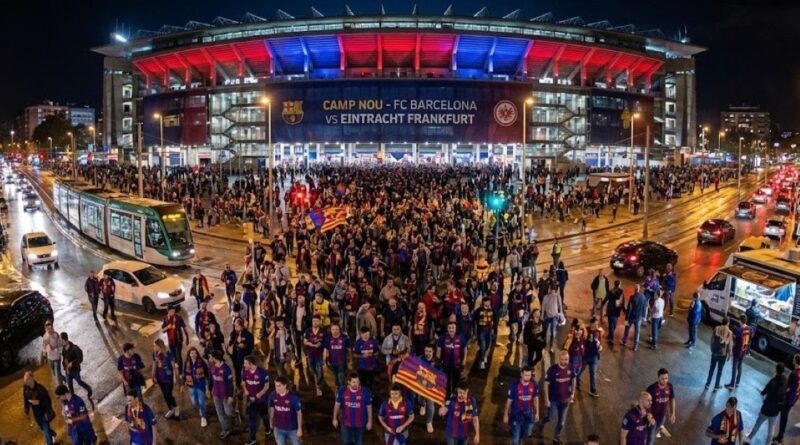
Barcelona’s first Champions League match at the newly renovated Spotify Camp Nou came after more than three years away from their traditional home. The long gap was the result of major stadium redevelopment combined with the club’s failure to qualify for the Champions League knockout stages in recent seasons, a decline that reflected both financial strain and sporting instability.
Eintracht Frankfurt arrived with confidence, carrying the reputation of a club whose supporters travel in large numbers and often reshape the atmosphere of away grounds. On the pitch, Barcelona secured a comeback led by an unexpected figure, defender Jules Koundé, whose goals turned the match in their favor. But the evening’s significance stretched well beyond the result.
A warm return for ter Stegen
One of the first major reactions from the crowd came before the match even began. Marc-André ter Stegen, Barcelona’s long-serving goalkeeper, rejoined the squad after recovering from back surgery. Local club reporters noted that his reappearance on the pitch for warm-ups was met with an ovation that felt more like the welcome reserved for a returning captain than for a player who was not starting the match.
Ter Stegen walked out alongside fellow goalkeepers Joan Garcia and a guest training participant, prompting thousands in the stands to rise and applaud. When the stadium announcer later read his name, the cheers returned with the same intensity, briefly washing away memories of a tense summer in which debates over salary negotiations and his long-term role had drawn scrutiny.
Read also: Fifa chief faces neutrality complaint over support for Trump
His place in the team remains uncertain, as coach Hansi Flick has publicly maintained that Garcia is his preferred starter. With an international tournament approaching, ter Stegen faces a decision about whether to remain in a secondary role or seek regular minutes elsewhere.
Frankfurt fans stir renewed tensions
The last time Frankfurt visited Barcelona in 2022, their supporters famously flooded the stadium in such large numbers that many assumed the match was being played in Germany. Determined to avoid a repeat, Barcelona tightened ticketing controls for this year’s fixture. Even so, UEFA rules required the club to allocate five percent of seats to visiting supporters, who were placed in the upper tier.
German travelling support is widely known across Europe for its enthusiasm and intensity, something German and Spanish media have discussed extensively in recent years. On this night, the atmosphere shifted quickly when chants aimed at Barcelona supporters echoed from the away section. The situation escalated as glasses, bottles and flares were thrown toward nearby home fans.
Stadium security reacted slowly and several of the barriers separating fan zones were damaged, prompting staff to escort out visiting supporters who had moved into areas reserved for Barcelona fans. The disturbances drew criticism from attendees who argued that intervention should have come sooner.
Read also: La Real aims to close the year with a shift at Anoeta
Garcia emerges as a stabilizing presence
Amid the chaos off the pitch, one of the evening’s calmer influences came from Eric Garcia. The 23-year-old, originally developed as a defender, has been repurposed this season as a defensive midfielder, a shift that analysts at outlets such as Reuters have described as key to Barcelona’s efforts to rebuild their tactical identity.
Garcia again offered composure, linking play with Pedri and earning chants from supporters appreciative of his control in high-pressure moments. Although he does not hold the official captaincy, he has increasingly been viewed by fans and some commentators as a natural leader.
That perception strengthened when flares were launched from the away sector. Garcia immediately approached the referee to urge a halt in play, prioritizing the safety of supporters in the lower rows. His intervention highlighted a maturity that extends beyond his changing tactical role.
Why this Champions League return matters beyond football
For many outside the sports world, this match carries broader cultural and economic weight. Barcelona’s stadium redevelopment project represents one of the largest infrastructure investments in European football, and the club is relying heavily on matchday revenue to stabilize its finances after years of debt challenges.
Read also: Inter Miami weighs new Suárez deal as Nacional hopes for emotional return
The return of Champions League games to the Camp Nou is therefore not only a sporting milestone but also a symbolic marker of the club’s attempt to restore credibility, reconnect with supporters and revive its global brand. The emotional fan reactions, security concerns and demonstrations of leadership on the pitch all underline how much is at stake as Barcelona seeks to reestablish itself among Europe’s elite.
Source: Barcauniversal.com
Read also: Ac Milan move for Liverpool’s Alisson gains early momentum