Can Ratcliffe still rescue Manchester United?
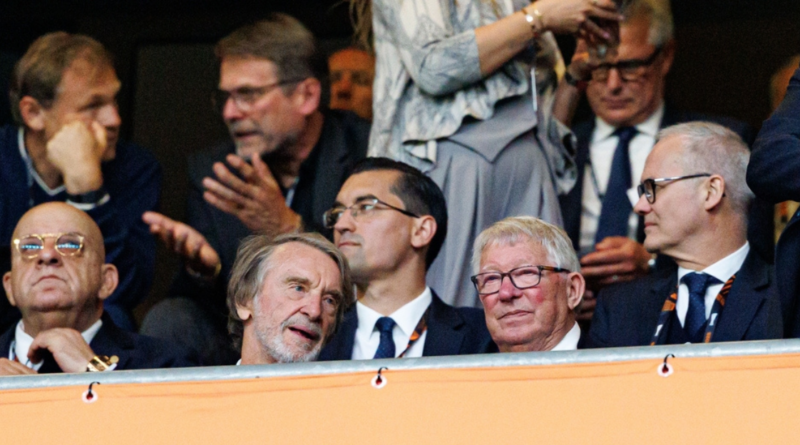
Two years after Sir Jim Ratcliffe acquired a 27.7 percent stake in Manchester United, the club’s trajectory remains difficult to define. The ambition he outlined in February 2024 was sweeping restore United to the summit of English and European football. The results have been mixed, and in some areas, sobering.
In January, Deloitte’s Football Money League ranked United eighth in Europe by revenue, the lowest position the club has occupied in the study. The primary driver was a sharp fall in broadcast income after consecutive failures to qualify for the Champions League.
That absence carries contractual penalties. United’s kit agreement with adidas includes performance-related reductions, trimming roughly £10 million from this season’s value. The club has also yet to replace training kit sponsor Tezos, which exited its deal last year.
Football finance expert Kieran Maguire recently pointed to another indicator: United’s share price, around $17.70, compared with the $33 per share Ratcliffe paid. In his words, "the market thinks Man United is worth substantially less than he paid for it."
Read also: Ferrari’s exhaust concept sparks fresh debate in Bahrain
There are counterpoints. The club posted a record £333.3 million in commercial revenue in its latest accounts, and matchday income rose during an extended Europa League run. Executives privately maintain that Champions League qualification would quickly alter the revenue outlook. Still, the financial cushion is thinner than it once appeared.
The Stadium Gamble
Central to Ratcliffe’s long-term plan is a proposed 100,000-seat stadium to replace Old Trafford a project framed as both commercial engine and civic regeneration scheme. Tottenham Hotspur’s revenue surge following the opening of its new ground offers a clear template.
But large-scale infrastructure projects require more than private capital. They demand political alignment and community backing.
That dynamic became more delicate after Ratcliffe’s recent comments on immigration during an interview with Sky News prompted backlash. Manchester mayor Andy Burnham, who has been involved in regeneration discussions, described the remarks as "inaccurate, insulting, inflammatory" and said they "go against everything for which Manchester has traditionally stood."
Read also: Ancelotti at carnival as AI photo sparks debate
The club responded by reiterating its commitment to inclusivity through its All Red All Equal initiative. Whether the episode complicates broader redevelopment talks remains to be seen, but it underscored how closely football, politics and civic identity intersect in Manchester.
Managerial Missteps
If the financial outlook is unsettled, the sporting decisions have been even more scrutinised.
Erik ten Hag’s authority weakened before the 2024 FA Cup final, when alternatives were explored. He was subsequently granted a contract extension then dismissed four months later after a poor start to the campaign. The reversal proved costly and prolonged uncertainty inside the dressing room.
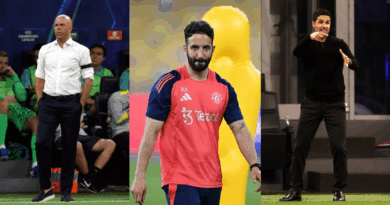
Ruben Amorim’s appointment represented a decisive break in style. His 3-4-3 system and lack of Premier League experience were calculated risks. They did not pay off. A 32 percent win rate followed, along with United’s lowest league finish in 51 years.
Read also: Hamilton says new Ferrari carries his ‘DNA’ as he resets for 2026
The reported cost of managerial and executive changes reached approximately £37 million a figure that undercut savings generated elsewhere.
In that same Sky News interview, Ratcliffe acknowledged the unpopularity of his reforms.
"I've been very unpopular at Manchester United because we've made lots of changes," he said. "But for the better, in my view. And I think we're beginning to see some evidence in the football club that that's beginning to pay off."
For some supporters, the overhaul feels overdue. For others, it has felt improvised.
Read also: Will Michael Schumacher ever return to public life?
Cuts, Culture and Consequences
Cost-control measures extended well beyond the bench. Hundreds of staff roles were eliminated, ticket prices increased and concessions for seniors and children were removed.
Such decisions may balance spreadsheets, but they carry cultural weight. United have long positioned themselves as a community institution as much as a commercial powerhouse. Reductions in scouting and commercial departments have also prompted quiet concern about longer-term competitiveness.
And yet, there are structural positives.
Recruitment strategy appears more coherent than in previous cycles. Recent arrivals account for a significant share of league goals, the squad’s age profile has dropped and wage commitments have tightened. The frantic, late-window spending that marked prior seasons has at least for now subsided.
Read also: Coutinho leaves Vasco: Mentally exhausted
Ratcliffe’s £50 million refurbishment of the Carrington training complex, funded personally, offered a visible sign of infrastructure investment rather than short-term patchwork.
The women’s team has provided relative stability, remaining competitive near the top of the Women’s Super League and progressing deep into domestic competition. In a period of volatility for the men’s side, that consistency has mattered.
A Defining Season Ahead
What remains unresolved is whether United are in the painful middle of a coherent rebuild or stuck in a cycle of reactive correction.
Champions League qualification would ease financial strain and lend weight to Ratcliffe’s argument that disruption was necessary. Another absence would intensify scrutiny of leadership decisions that have already proven expensive.
Two years into the project, the ambition has not softened. Whether the blueprint matches it is the question that will define what comes next.
Sources: GOAL, Sky News, Deloitte Football Money League