Enrique’s tactical gamble: PSG’s shape-shifting plan to outsmart Chelsea
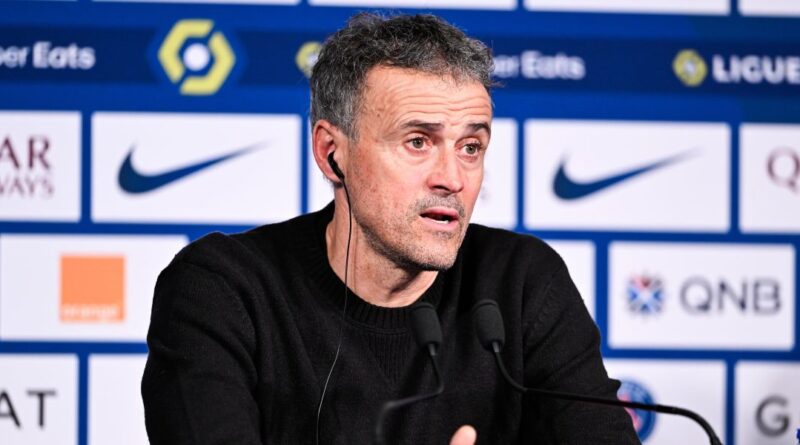
Paris Saint-Germain travel to London with a strong advantage, but also with a tactical identity that refuses to stand still. According to L’Équipe, Luis Enrique has built his European approach on constant in-game adjustments rather than fixed formations, giving PSG an unpredictable edge at a crucial stage of the Champions League.
A system built on movement
Rather than committing to a rigid formation, Luis Enrique prefers a structure that evolves throughout matches. PSG may start in what appears to be a 4-3-3, but that shape quickly changes depending on phases of play and the opponent’s behavior.
According to reporting from L’Équipe journalists Emery Taisne and Loïc Tanzi, the Spanish coach focuses on movement, spacing and coordinated pressing rather than traditional positional labels. His players are expected to interpret roles dynamically, shifting responsibilities as situations develop.
This approach allows PSG to remain fluid, making it harder for opponents to anticipate patterns or exploit weaknesses.
Read also: 2026 World Cup: Iran push FIFA for venue change after Trump security claim
A targeted plan against Chelsea
One of the clearest examples of this philosophy came in the first leg against Chelsea, which PSG won 5-2. According to L’Équipe, Achraf Hakimi was given a specific man-marking assignment on Enzo Fernandez, an unusual move for a player typically deployed as an attacking full-back.
The decision reflected Enrique’s willingness to adapt his tactics to neutralize key opposition threats. Rather than relying on a standard defensive setup, PSG tailored their strategy to disrupt Chelsea’s midfield control.
Such match-specific instructions have become a recurring feature of Enrique’s Champions League management.
Roles constantly redefined
This tactical flexibility has also reshaped individual responsibilities within the squad. Vitinha, traditionally seen as a more advanced midfielder, has often been deployed in a deeper, more defensive role to help control transitions.
Read also: Bayern München calling up 5th reserve goalkeeper for Champions League return leg
At the same time, Ousmane Dembélé has been used more centrally, influencing play in tighter spaces and contributing to build-up phases rather than staying wide.
According to L’Équipe, these adjustments are not temporary fixes but part of a broader philosophy in which players are expected to adapt quickly and operate across multiple roles depending on the team’s needs.
The real test in London
With a three-goal advantage from the first leg, PSG enter the return match in a strong position, but the tactical battle is far from over. Chelsea are expected to respond aggressively, forcing Enrique’s side to adjust once again.
The outcome may depend less on maintaining a fixed plan and more on PSG’s ability to react in real time. Enrique’s approach suggests that control will come from flexibility, not rigidity.
Read also: Chelsea handed record fine and transfer ban by Premier League
If PSG succeed, it will not only be because of their attacking talent, but because of a system designed to evolve with every phase of the game.
Sources: L’Équipe
Read also: Former Syracuse QB, Rex Culpepper, dies at the age of 28
Read also: Jude Trump is untouchable with dominating performance in China