Erling Haaland reveals the surprising sport his father hoped he’d go pro in
A childhood shaped by many sports
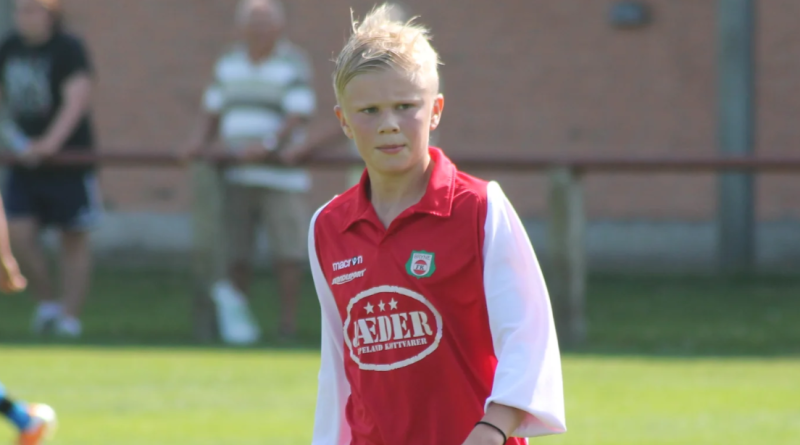
Before Erling Haaland’s rise at Borussia Dortmund and later Manchester City, he spent his childhood in Norway testing nearly every sport available to him. For readers unfamiliar with his background, Haaland did not grow up exclusively in football academies. Instead, he was exposed to a broad athletic environment that is common in Scandinavian countries, where young athletes often participate in multiple disciplines before specializing.
According to reporting from Sportbible, Haaland said on The Rest Is Football podcast that his father, Alf-Inge Haaland, encouraged him to try track and field, cross-country skiing and handball. One moment from that period became local folklore: at age five, Haaland reportedly jumped 1.63 metres in a standing long jump, a mark described as a world record for his age group.
Alf-Inge, a former Premier League midfielder for Leeds United and Manchester City, later told Manchester City’s official website that even Norway’s national handball coach had taken interest in his son’s athletic ability. He recalled, “Norway’s handball manager wanted him to play handball. I thought it was nice to play tennis and handball next door.”
The unexpected dream of a golfing career
Although Haaland gravitated naturally toward football, his father had a completely different vision for his future. On the podcast, Haaland explained that Alf-Inge hoped his son would become a professional golfer, a far cry from the high intensity and public attention of elite football.
Read also: Man Utd ‘ready to offer Marcus Rashford’ in stunning PSG swap proposal
“It’s actually funny because his biggest dream was me becoming a professional golfer, that was his biggest dream,” Haaland told Gary Lineker and Alan Shearer. He added that between the ages of 10 and 13, he practiced golf every week “because he forced me to start on golf,” though he admitted he never developed the swing his father imagined.
According to Sportbible’s summary of the interview, Haaland also shared a detail that surprised many listeners: he still refuses to wear gloves on the pitch, saying his father scolded him for doing so growing up, a habit he jokingly called “old school.”
Early belief from those outside the family
Haaland’s potential did not go unnoticed. Former Tottenham and Aston Villa manager Tim Sherwood recalled on talkSPORT in 2022 that during a golf round in Spain, Alf-Inge spoke enthusiastically about his teenage son, who was then playing for Molde, one of Norway’s top clubs.
Sherwood said Alf-Inge told him “the boy’s got everything,” long before Haaland became widely known in European football. He added that Haaland had clearly inherited not only athletic ability but also “a mentality and a drive and a determination to get better to win.”
Read also: Lando Norris will receive a rare FIA pass after winning his first F1 title
To readers less familiar with the football world, Molde has a history of producing top Norwegian talent, including Ole Gunnar Solskjaer, who later managed Manchester United.
How Haaland turned potential into historic output
Haaland’s athletic foundation and competitive mindset eventually combined into one of the most explosive starts to a career in modern football. According to Sportbible’s reporting on Premier League statistics, the striker reached 100 league goals faster than any player in history, scoring his 100th in just 111 matches. The previous record, held by Alan Shearer, stood at 124 games.
The milestone came in Manchester City’s 5,4 victory over Fulham, further solidifying the 25 year old as one of the most efficient goal scorers in European football.
For context, the Premier League is widely considered the world’s most competitive domestic football league, making Haaland’s acceleration into its record books particularly notable for audiences outside the sport.
The broader picture, what Haaland’s journey illustrates
Haaland’s story speaks to a broader trend in youth athletic development: many elite athletes emerge not from strict early specialization but from diverse sporting backgrounds. His trajectory highlights how skills from other sports, such as balance from skiing or explosiveness from track and field, can translate into world class performance in football.
It also highlights the complex role parents play in shaping future athletes, sometimes steering their children toward dreams very different from the ones that ultimately unfold.
Read also: Klopp opens up on managing Salah as Liverpool turmoil deepens