FIFA sanctions possible if nations boycott 2026 World Cup amid Trump tensions
As preparations accelerate for the 2026 World Cup, football’s governing body faces growing questions about how geopolitical tensions could affect the tournament and what consequences nations might face if politics spill onto the pitch.
The competition, set to run from June 11 to July 19 across the United States, Mexico and Canada, is expected to be the largest World Cup ever staged. Yet recent political developments involving Washington have prompted renewed debate about whether international football can remain insulated from diplomatic disputes.
Political backdrop raises concerns
Since returning to office in January 2025, US President Donald Trump has pursued a series of immigration and foreign policy moves that have drawn criticism abroad. According to reporting by SPORTbible, these include military action in Venezuela and Nigeria, alongside threats of intervention involving Mexico, Colombia and Iran.
Trump has also publicly called for Denmark to hand over Greenland an autonomous territory arguing the move would strengthen US national security. The proposal was rejected by Greenland’s leaders, NATO and several European governments. UK Prime Minister Keir Starmer described the idea as “utterly wrong” in January.
Read also: Kim Kardashian’s dating list resurfaces amid Lewis Hamilton rumours
While Trump later said the US would not “use force” to acquire Greenland and rolled back proposed tariff increases, the episode intensified diplomatic friction at a time when the US is preparing to co-host a global sporting event.
Calls to challenge US hosting role
Those tensions have spilled into political debate about sport. In the UK, 23 MPs from Labour, the Liberal Democrats, the Green Party and Plaid Cymru signed a parliamentary motion urging international sporting bodies to consider whether the US should remain eligible to host major tournaments, including the World Cup.
That has raised a sensitive question: could FIFA remove hosting rights from one of its most powerful members?
Jack Anderson, a professor of sports law at the University of Melbourne, told SPORTbible that FIFA technically has broad contractual authority but is highly unlikely to exercise it. He described stripping the US of hosting duties as “unusual” and warned such a move would carry serious diplomatic and economic consequences for FIFA itself.
Read also: Experts break down Formula One’s 2026 competitive order after early testing
Anderson said only extreme circumstances such as a major international conflict involving a host nation would plausibly meet the threshold for terminating hosting agreements.
What happens if countries boycott?
While the prospect of FIFA sidelining the US appears remote, the issue of national boycotts carries clearer risks.
A 2018 Sky Sports News report, cited in coverage of previous tournaments, noted that FIFA rules allow for sanctions against associations that refuse to participate, including exclusion from future competitions and potential financial liability.
Under current regulations for the 2026 World Cup, FIFA states it may “take whatever action is deemed necessary” if a qualified nation withdraws or is excluded. That discretion includes replacing the team with another association.
Read also: “He does not know he’s a seven-time champion,” ex-teammate claims in Schumacher update
In practical terms, this means any boycott would likely come at a high sporting and commercial cost.
Limited support among football authorities
So far, there is little evidence of appetite among football officials for coordinated action. France’s sports minister, Marina Ferrari, has dismissed calls for a boycott. In Germany, comments from St. Pauli president Oke Gottlich suggesting the idea should be debated were publicly rejected by German FA president Bernd Neuendorf, who described the view as unrepresentative, according to Morgen Post.
Professor Simon Chadwick, who has previously advised FIFA and now writes for GeoSport, told SPORTbible that a mass European boycott would be difficult to organise. He said countries have differing political relationships with the US, making a unified stance unlikely.
Individual actions cannot be ruled out, Chadwick said, but added bluntly: “I think England will go.”
Read also: "He breaks promises": NHL legend condemns Donald Trump over Ukraine
FIFA keeps distance from geopolitics
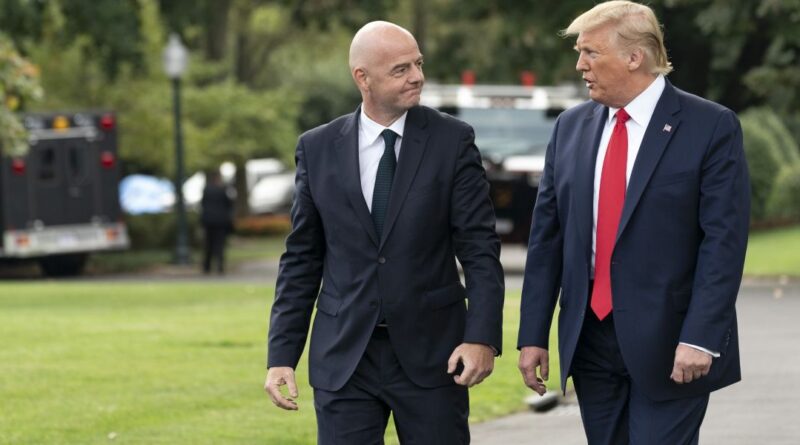
FIFA president Gianni Infantino has not commented directly on the latest boycott speculation. However, when faced with similar political pressure in October 2025 over calls to ban Israel from FIFA competitions, Infantino said the organisation “cannot solve geopolitical problems”.
That position suggests FIFA is likely to maintain its long-standing stance that international football should proceed regardless of political disputes even as those disputes grow harder to ignore.
Sources: SPORTbible, Sky Sports News, Morgen Post, GeoSport
Read also: Why England Is unlikely to boycott the 2026 World Cup