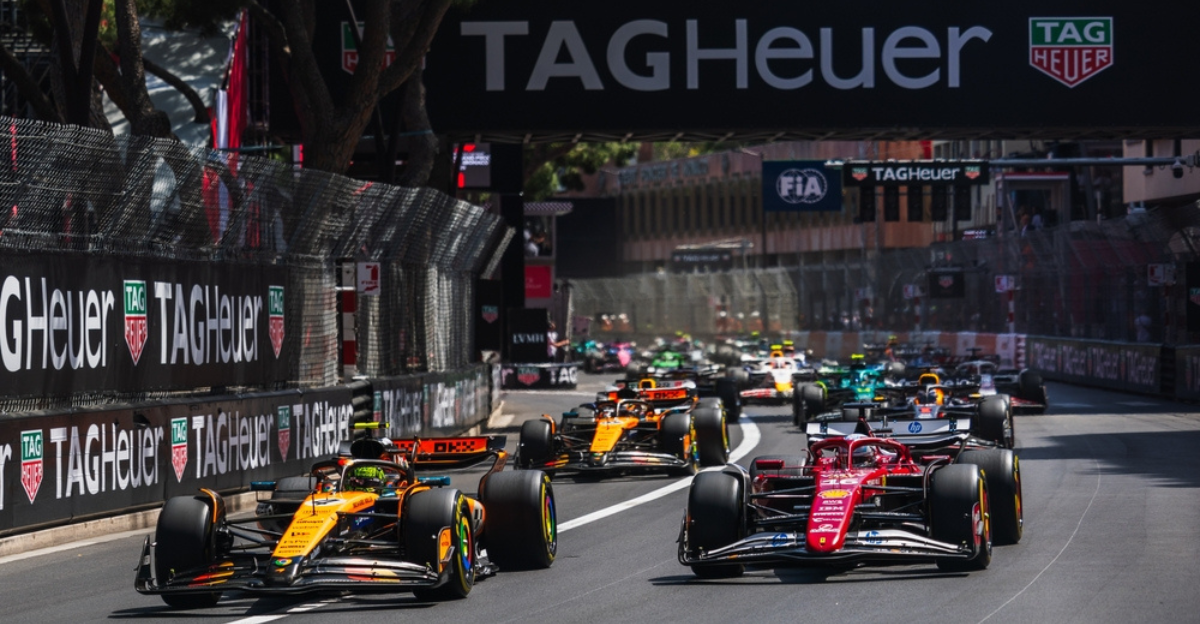
Over the past several years, Formula One has evolved from a niche motorsport into a full-fledged media ecosystem. Forbes’ valuation data indicates that Apple TV’s newly secured U.S. broadcasting agreement estimated at roughly $140 million annually for five years is one of the clearest signals of this new commercial era.
Momentum has been further fueled by Netflix’s Drive to Survive, a Brad Pitt-led feature film currently in production and Cadillac’s confirmed plans to enter the championship.
This wave of attention has driven valuations upward across the board, with every constructor now comfortably surpassing the billion-dollar mark.
Rising programs and emerging contenders
Haas, which joined the grid in 2016, ranks tenth at $1.5 billion, according to Forbes’ data. Despite working through a transitional year with new drivers Esteban Ocon and Oliver Bearman, the American outfit still posted $150 million in revenue and a modest operating profit.
Read also: Abu Dhabi United Group financed them for years
One position ahead, the Racing Bulls come in at $2.3 billion. Their 2025 season has included one of the more memorable surprises of the campaign: Isack Hadjar’s unexpected Dutch Grand Prix podium. Liam Lawson’s rebound after an early-season lineup shuffle has helped the team maintain sixth place in the standings.
Midfield teams preparing for change
Sauber, valued at $2.4 billion, is in the midst of yet another reinvention. With its high-profile partnership paving the way for Audi’s official entry in 2026, the team is leveraging strong commercial relationships with companies such as Puma and Stake while preparing for its next chapter.
Just ahead is Alpine, placed at $2.45 billion by Forbes. Although its on-track performance has fluctuated, the Renault-owned team has remained commercially stable. Recent sponsorship deals with MSC Cruises, Castore and Oakberry, along with Pierre Gasly’s contract extension through 2028, have helped offset projected operating losses.
A historic name rebuilding
Williams, valued at $2.5 billion, continues to execute one of the grid’s most notable rebuilds. Following Dorilton Capital’s 2020 acquisition and the leadership shift under team principal James Vowles, the team has begun reestablishing itself as a competitive force. Its 2025 driver pairing of Carlos Sainz Jr. and Alex Albon has strengthened that upward trajectory.
Read also: Dana White on ownership of new Las Vegas NBA Team: “YES”
Financial heavyweights at the front
At $3.2 billion, Aston Martin sits fifth. While the 2025 campaign has challenged both Fernando Alonso and Lance Stroll on track, the team’s financial stability remains firm under the backing of chairman Lawrence Stroll.
Red Bull, valued at $4.35 billion, has experienced a season defined as much by off-track developments as competitive results. Reports of a $105 million severance agreement involving former team principal Christian Horner contributed to a turbulent year, though Max Verstappen’s decision to remain with the team for 2026 helped restore some stability.
Champions on and off the track
McLaren, valued at $4.4 billion, has enjoyed both sporting and financial success. Lando Norris and Oscar Piastri have delivered one of the most dominant driver pairings in recent memory, each securing seven victories so far this season. With 756 points, McLaren has turned the constructors’ title into a formality, further reinforcing its commercial strength.
The top of the valuation table
Mercedes, listed at $6 billion, continues to adapt to the post-Hamilton era. Kimi Antonelli’s debut season and George Russell’s consistent podium finishes—including two victories—have provided the team with competitive momentum. New partnerships with Adidas, Signify and Mous offer commercial balance after the loss of Puma and Tommy Hilfiger.
Read also: Aymeric Laporte exposes ugly side of Pep Guardiola relationship
At the top of the financial hierarchy sits Ferrari, valued at $6.5 billion. Forbes attributes the Scuderia’s commanding position to a combination of significant commercial leverage highlighted by an HP title partnership reportedly worth $100 million per year and substantial revenue estimated at $670 million, paired with an $80 million operating profit.
Though the arrival of Lewis Hamilton has generated excitement, the team remains in pursuit of a genuine challenge to McLaren’s dominance.
What the boom means for the future
Formula One’s valuation surge signals long-term structural change. As teams grow financially stronger, they gain resilience during competitive downswings while becoming increasingly attractive to global brands and investors. The influx of manufacturers, expanded media exposure and rising sponsorship interest suggest that Formula One’s evolution is still accelerating.
With cost-cap pressures, regulatory debates and new entrants ahead, the sport’s next era may see the competition for commercial supremacy become just as intense as the battle for championship points.
Read also: Manchester City face new panel that could reopen the 115-charge verdict
Sources: Forbes, BBC, AP.
Read also: UK Tax-service (HMRC) is coming after Manchester City now