Real Madrid and the language of persecution
According to Alex Kirkland and Rodrigo Faez at ESPN in “LaLiga appeal to Spain federation over Madrid ref complaint”, Real Madrid’s February 2025 letter after the defeat at Espanyol did not describe the problem as a bad night or a human error. The club called the system “completely discredited” and spoke of “manipulation and adulteration.” That matters because it turned one refereeing argument into a claim about the legitimacy of the whole competition. Once a club speaks in those terms, every later decision starts to look like evidence in an ongoing case, not just another call that can be debated and left behind.
According to Alex Kirkland at ESPN in “Real Madrid fume at ‘joke’ Camavinga red card against Bayern”, that same vocabulary carried into Europe after Madrid’s quarterfinal exit to Bayern Munich on April 15, 2026. Álvaro Arbeloa said it was “obvious” that Eduardo Camavinga’s dismissal decided the tie, and Jude Bellingham called the decision “a joke.” The interesting part is not that Madrid complained, every elite club does that. It is that the complaint was instantly presented as proof that the match had been taken away from them, which is the same frame the club has been using in Spain for more than a year.
According to Reuters reporter Fernando Kallas in “Soccer, Real demand action against referees and boycott pre Cup final activities”, Madrid pushed the argument even further before the 2025 Copa del Rey final, accusing the appointed officials of “animosity and hostility” after Ricardo de Burgos Bengoetxea’s emotional press conference. According to Reuters in “LaLiga chief slams Real Madrid letter: ‘They’ve lost their minds’” on ESPN, Javier Tebas answered by saying Madrid had built a “narrative of victimhood.” Put those two positions beside each other, and the dispute stops being about one whistle. It becomes a fight over who gets to define reality first, the club that says it is being targeted, or the institution that says the club is manufacturing outrage.
Barcelona and Atlético Madrid are arguing in the same register
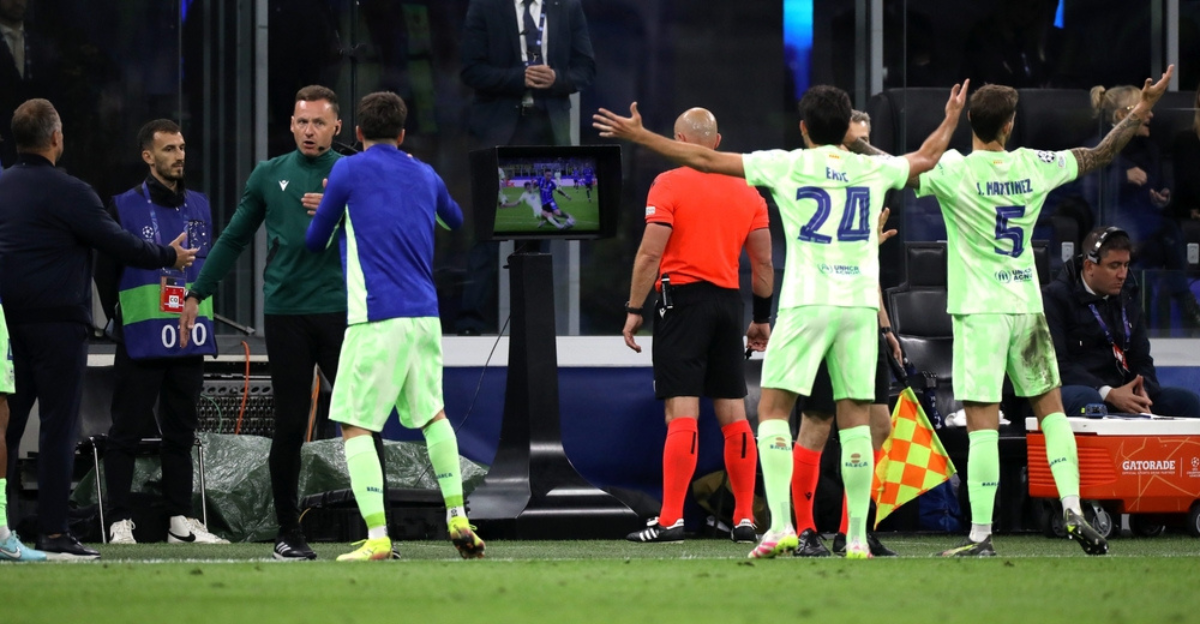
According to FC Barcelona’s official statement, “FC Barcelona statement”, the club filed a formal complaint to UEFA after the first leg against Atlético Madrid and said the refereeing “did not adhere to the current law” and that VAR had made “a major error.” According to Sam Marsden at ESPN in “Hansi Flick backs Barcelona’s complaint to UEFA over refereeing in Atlético defeat”, Flick backed the move and said, “Everyone knows it was really unfair.” Barcelona’s language was different from Madrid’s in tone, but not in structure. It also took a disputed incident and placed it inside a larger story about institutional failure.
Read also: Cristiano Ronaldo crisis forces Portugal chief into emergency action
According to Miguel Ángel Gil on Atlético Madrid’s official website in “The VAR should only intervene to correct clear cut errors”, Atlético had used nearly the same logic only days earlier after a domestic match against Barcelona. Gil said the club felt “shame” after hearing the released VAR audio and argued that officials had overstepped their authority. That is the part much of the coverage misses. Madrid, Barcelona and Atlético all complain in roughly the same register, they all say the criteria are inconsistent, and they all present themselves as the side being denied a fair process.
According to Sam Marsden at ESPN in “UEFA dismiss Barcelona complaint over pen denied in Atlético defeat”, UEFA later ruled Barcelona’s protest “inadmissible.” The contrast is sharp. A club can be certain that the law was broken, the coach can say the moment was decisive, and the governing body can still refuse even to treat the protest as a live case. That gap between club certainty and institutional refusal is where most of the current anger is now living.
When referees start speaking for themselves
According to Al Jazeera’s report, “Copa del Rey final referee breaks down over Real Madrid TV pressure”, De Burgos Bengoetxea described what the pressure campaign around officials had done to his family. He said that when children tell his son his father is a “thief,” “it makes you sick.” That was one of the rare moments when a top level referee stopped acting as a silent institution and answered as a person. It also changed the frame of the story, because the discussion was no longer only about whether Madrid had a right to criticize officiating, but about what constant public targeting does to the people making those decisions.
According to Fernando Kallas for Reuters in the same cup final dispute, Barcelona coach Hansi Flick responded by saying football has a responsibility to protect “all the people involved in the game.” That is a useful counterpoint to Madrid’s defense of those broadcasts as an issue of free expression. Set those quotes against each other, and the fault line becomes clear. One side frames the videos and statements as legitimate scrutiny, the other frames them as a form of pressure that is poisoning the profession itself.
Read also: Harry Kane breaks silence on Man City verdict
Europe has its own memory
According to ESPN’s report, “Bayern’s De Ligt slams offside call as ‘disgrace’ in UCL exit”, Bayern’s 2024 semifinal exit against Real Madrid ended with Thomas Tuchel calling the late offside whistle a “disastrous decision,” while Matthijs de Ligt called it “a disgrace.” In the same report, Carlo Ancelotti answered that Madrid’s defenders had stopped because the whistle had already gone. According to Dale Johnson’s ESPN analysis, “The VAR Review: Explaining Bayern’s offside ‘goal’ vs. Real Madrid”, the core problem was that the referee halted play too early, which meant VAR could not review the finish. So even there, the argument was not simply over an offside line, but over process, timing and whether the officials had respected the protocol.
That older case matters now because the newest Madrid, Bayern argument arrived on top of it. According to Alex Kirkland’s ESPN report on Madrid’s 2026 exit in Munich, Madrid immediately turned Camavinga’s second yellow into the decisive story of the night. But European refereeing controversies do not appear in a vacuum anymore. Bayern supporters still remember 2024, Madrid supporters now point to 2026, and each new incident is absorbed into an archive of grievance that makes neutrality harder to believe in every season. That is one reason these debates are getting louder, they are not starting from zero.
What the noise is doing to the game
According to the RFEF’s account of its March 2025 reform meeting, “Rafael Louzán chairs a meeting of Spanish clubs in order to improve the refereeing”, Spanish football brought clubs, referees and federation officials together to improve transparency and build reforms. According to Adriana Garcia at ESPN in “Spain federation changes refs after Real Madrid controversy”, the federation then removed the heads of the refereeing committee and VAR in June 2025 and said it wanted to open “a new era.” Institutions do not make moves that large unless they understand that the credibility problem has become structural. Spain’s football authorities have already acted as if the argument is bigger than a few angry press conferences.
The real damage is not that clubs complain, that has always been part of football. The damage is that every complaint now arrives with its own media machine, club television, instant video compilations, selective audio, viral quote cards and studio debate built for loyal audiences before anyone has had time to cool down. In that environment, referees are no longer presented as fallible officials.
Read also: Phil Taylor comes out of retirement for stunning darts return
They are cast as villains, symbols or proof. According to the reporting and official statements cited above, that is now the common language across Madrid, Barcelona, Atlético and even Europe’s biggest ties, and once that language becomes normal, every major match starts under suspicion before kickoff.
Sources cited in the article: Reuters, ESPN, FC Barcelona, Atlético de Madrid, RFEF, Al Jazeera.
Read also: ‘If you lie to me, I will leave’: Guardiola’s City warning takes on new weight