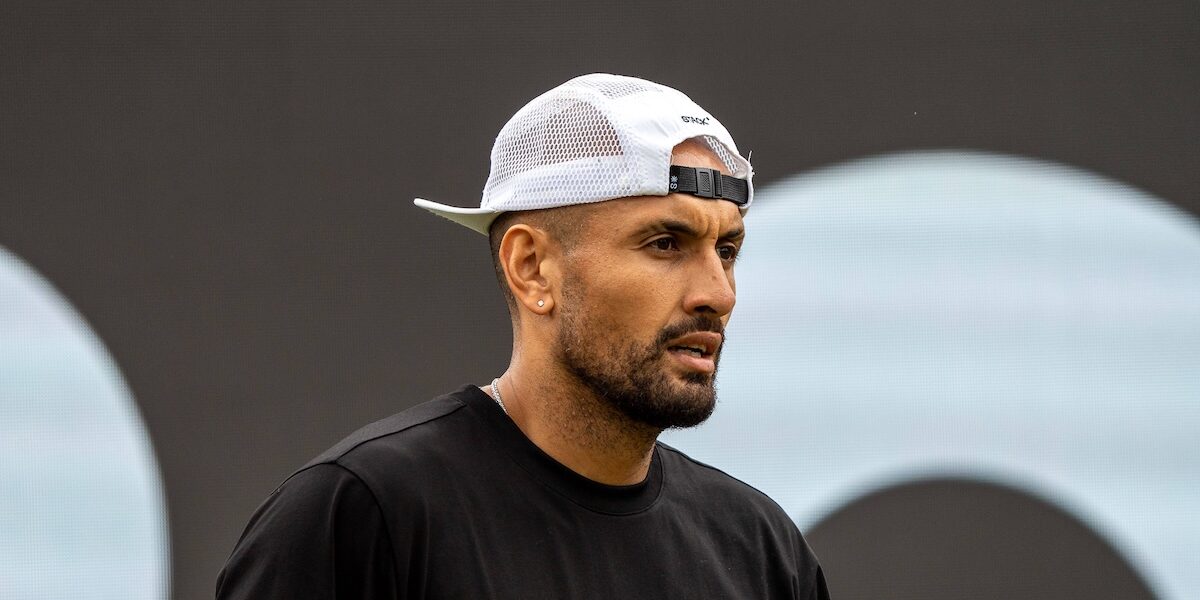
Nick Kyrgios opened his Instagram apology with a sentence tennis rarely hears from a positive-tested player.
“I made a huge mistake and I take full responsibility for it.”
The 31-year-old Australian shared the statement on Wednesday. The International Tennis Integrity Agency had confirmed earlier this month that he tested positive for benzoylecgonine, a metabolite of cocaine, from a sample given at an ATP event in Mallorca in late June. He has been provisionally suspended since 4 August and cannot play or attend tournaments while a tribunal weighs the case.
“I’m sorry to my fans, my family, my sponsors and everyone close to me,” Kyrgios wrote.
Read also: 10 things the commission found Manchester City guilty of
“Above all, I’m sorry to the kids who follow me. I know the example this sets and I’m deeply disappointed in myself.”
He said he would step away from social media and public life for 28 days to “focus on getting myself right”.
Kyrgios did not reach for the contamination defence
Cocaine is banned in competition, and the exact metabolite that showed up in Kyrgios’s sample has cleared a top-level tennis player before. In 2009, Richard Gasquet escaped a full ban at the Court of Arbitration for Sport on the finding that a trace amount could plausibly have transferred from kissing a woman in a nightclub. The “no fault or negligence” route remains available to any player in the same position.
Kyrgios’s Instagram post contains no mention of contamination, no accidental exposure, no medical explanation. Only the words “full responsibility”.
Read also: Leaked Man City video: CEO brands guilty verdict a ‘conspiracy theory’
Sinner and Swiatek framed theirs as accidents
That is a break from the two biggest tennis doping cases of the past two years.
Jannik Sinner, then the men’s world No. 1, agreed a three-month ban with the World Anti-Doping Agency in February 2025 over two positive tests for clostebol. WADA accepted the substance had entered his system after a physio applied an over-the-counter cream to a cut on his own finger and then treated Sinner.
Iga Swiatek accepted a one-month suspension in November 2024 after testing positive for trimetazidine. The ITIA traced the source to a contaminated batch of melatonin she had been taking for jet lag and placed her fault “at the lowest end” of the no significant fault scale.
Kyrgios was the loudest critic of exactly that framing. He repeatedly used his own platform to argue that tennis anti-doping treats its top-ranked names differently from everyone else.
Read also: Ferrari issues unusual statement as Christian Horner rumours grow
The Gasquet route is still there
An independent tribunal will now decide the case. A “no fault” outcome on the same substance is not out of reach, and the Gasquet precedent is more than 15 years old but has never been formally overturned. The setup for that argument, though, is missing here. Kyrgios has not publicly said the cocaine reached him by accident. So far, his statement points in a strikingly different direction: he has chosen to stress personal responsibility.
The ITIA has confirmed he remains barred from tournaments, on court and off, until the tribunal reports.
Read also: Jamie Carragher: ‘always felt’ Man City were guilty