Italian football broke down in Zenica, now the fight for control begins
The three departures have now been confirmed
According to FIGC’s statement on Gabriele Gravina’s resignation, the federation announced on April 2 that the president had stepped down and that an extraordinary election to choose new leadership has been scheduled for June 22. According to FIGC’s separate statement on Gianluigi Buffon’s departure, he left his role as head of delegation for the national team on the same day after submitting his resignation to the federation president. The following day, FIGC said in its announcement on Gennaro Gattuso that his contract as national team coach had been ended by mutual agreement, meaning the central claim in Fabrizio Romano’s post is correct on the key points.
The defeat to Bosnia and Herzegovina triggered the collapse
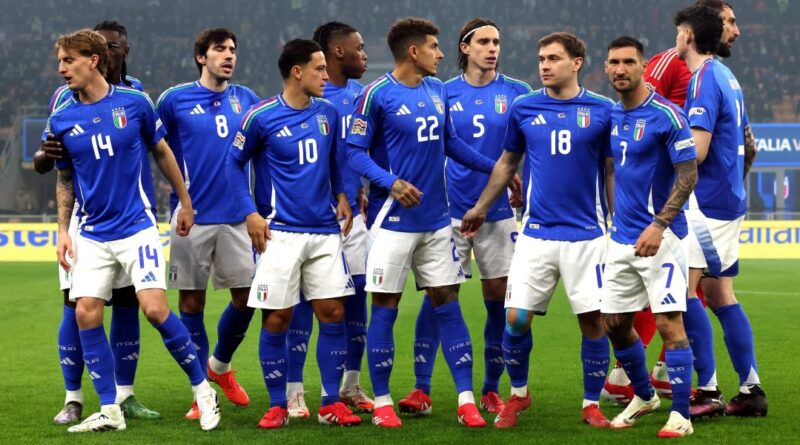
According to Andrew Dampf’s reporting for AP, the disaster began on the pitch in the playoff final against Bosnia and Herzegovina, where Italy took the lead through Moise Kean, but were then hit by Alessandro Bastoni’s red card, a late Bosnian equalizer, and a 4,1 penalty shootout defeat. The loss means Italy have now missed three straight World Cup tournaments, after previously failing to qualify for the 2018 and 2022 editions. AP also noted that none of the current Italy players have World Cup tournament experience, which says a great deal about how long and how deep the crisis has become.
The pressure had been building long before the latest exits
According to Nick Ames in The Guardian, the departures did not come out of nowhere. Gattuso took over in the summer of 2025 after Luciano Spalletti’s exit, at a time when qualification had already gone badly off course, and although he steadied the team for a period, Italy never managed to repair the damage that had been done earlier in the campaign. After the latest collapse, the political and sporting pressure rose quickly, and according to ANSA’s reporting on Andrea Abodi’s reaction, the sports minister said directly that Italian football needed to be rebuilt, and that the process should begin with a renewal of FIGC’s leadership.
The crisis goes far beyond the national team bench
According to The Guardian’s report on UEFA’s warning to Italy, the problems are not limited to the choice of a new coach. The newspaper reported that UEFA president Aleksander Čeferin had also warned that Italy could be at risk of losing its share of hosting Euro 2032 if stadium infrastructure is not improved quickly enough. The same report said that only Juventus’ Allianz Stadium currently meets the requirements among the Italian candidate venues, and that work on new or upgraded arenas must be underway by March 2027. That makes the current FIGC crisis much bigger than another coaching change, because it is also about leadership, investment, and the overall credibility of Italian football.
Read also: Vinicius and Bernado Silva in a June swap deal?
Italy now faces a full institutional rebuild
According to FIGC’s official update on the federation’s next steps, the next formal step is the election of a new president on June 22, but the real task will be much broader than appointing another new face at the top. FIGC’s statement on Buffon’s resignation shows he had been in his role since August 2023, while FIGC’s farewell announcement for Gattuso confirms that he lasted only around nine months as national team coach before the project fell apart. Italy therefore now finds itself with not just three vacant key positions, but with a fundamental question about how a country with four World Cup titles has once again ended up outside football’s biggest stage.
Sources: FIGC, AP, The Guardian, ANSA.
Read also: F1 forced into early 2026 rethink as car concerns grow