Joe Biden kept FIFA at arm’s length, while Donald Trump turned World Cup 2026 into a personal project
Joe Biden said less, but showed a clear line
If you go looking for a major public Biden statement about Gianni Infantino, you find surprisingly little.
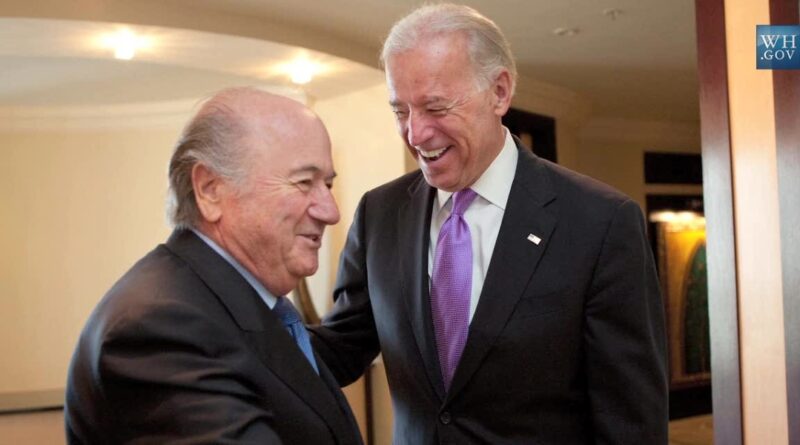
According to the AP article republished by Fast Company, written by Seung Min Kim and Graham Dunbar, the connection between Joe Biden and Infantino was far more limited than the relationship between Donald Trump and the FIFA president. The article points to a brief meeting at the G20 summit in Bali in 2022, a meeting between Douglas Emhoff and Infantino during the Women’s World Cup in 2023, and a 2024 meeting between Infantino and Jake Sullivan, not Biden himself.
According to the same AP article in Fast Company, the Biden administration kept World Cup preparations more low key and emphasized that host cities should gain real value from the tournament, and that American human rights values should be respected.
That says a great deal about Biden’s method. Instead of turning the relationship with FIFA into a personal showcase, the work was kept on a more institutional track.
Read also: Even with Lionel Messi, Argentina’s World Cup defence is facing serious doubts
It points to a former American president who did not want to turn Infantino into a public partner, but rather saw FIFA as an organization that had to be handled professionally, soberly and with an eye on the practical consequences of hosting.
Football was used as diplomacy under Biden
The fact that Biden kept his distance from Infantino does not mean that he did not care about football. On the contrary, official White House statements show that his administration used FIFA tournaments as part of American representation abroad.
According to the White House statement on the 2022 World Cup in Qatar, Biden sent an official presidential delegation to the closing ceremony in Doha, led by Linda Thomas Greenfield.
According to the White House statement on the 2023 Women’s World Cup, he also sent an official delegation to the opening ceremony in Auckland, with Douglas Emhoff as delegation head.
Read also: Italy's World Cup collapse pushes FIGC toward a defining reset
It looks like a deliberate sports diplomatic line, in which world football was treated as a platform for state presence, not as a personal show built around the president.
Biden also said something important about the place of the sport in the United States. In his remarks before a meeting with Keir Starmer in July 2024, he said that soccer had become incredibly popular in the United States, and that the sport was really growing.
That is not a hard hitting comment on FIFA, but it is still an important key to his view. Biden saw football as a growing part of America’s international profile and as a sport that increasingly belonged in American public life and diplomacy.
FIFA also became a question of equality
The most explicit FIFA related criticism from the Biden administration did not necessarily come from Joe Biden himself, but from his vice president.
Read also: Max Verstappen’s frustration with Formula 1 may be about more than racing
According to the White House transcript of Kamala Harris’ conversation with current and former players from the U.S. women’s national team, she pointed directly to the huge gap between prize money in the men’s and women’s World Cups. She highlighted that the most recent men’s world champion received 38 million dollars, while the women received only 4 million dollars, and described the differences as built in and systemic.
That makes the administration’s FIFA line more sports political than merely symbolic, because the criticism was about governance, distribution and institutional fairness in the world’s biggest football tournaments.
That dimension becomes even more interesting when viewed against the broader debate around World Cup 2026.
According to Amnesty International, human rights criteria were introduced into FIFA’s selection process for the men’s World Cup for the first time with the 2026 tournament. Amnesty has also later warned that the tournament in North America could be undermined if FIFA does not address risks facing fans, workers, journalists and local communities.
Read also: Why Iran’s World Cup standoff is also a test for Trump and Infantino
That framework aligns remarkably well with the line that Biden officials, according to the AP article in Fast Company, brought into meetings with Infantino, namely that host cities should gain lasting value and that American human rights values should be respected.
Here, Biden is not the president who embraces FIFA personally, but the leader whose administration reads football as a field where sport, rights and state credibility are closely connected.
Donald Trump and Gianni Infantino made the relationship personal
The contrast with Donald Trump is sharp.
According to the Trump White House archive, Trump welcomed Infantino to the Oval Office as early as 2018 after the awarding of World Cup 2026, thanked him publicly, called him highly respected and spoke about the tournament as one of the world’s greatest sporting events.
Read also: Danish head coach Brian Riemer: "We have nothing to loose", while actually loosing everything..
The tone was personal, and the meeting was staged as a shared moment between two leaders, not simply as an administrative marker. The sporting project was therefore quickly woven into Trump’s personal brand, his public style and his desire to stand at the center of the biggest events.
That pattern only grew stronger when Trump returned to the White House.
According to the official White House announcement from March 2025, he created a White House Task Force for World Cup 2026 with himself as chair.
According to FIFA’s own account of the meeting with Trump, Infantino directly thanked him for creating the task force and described it as confirmation of the American government’s commitment to the tournament.
And according to the AP article in Fast Company, the relationship between Trump and Infantino has since become so close and visible that Infantino has presented it as crucial to the success of the World Cup.
Where Biden kept FIFA on a more institutional track, Trump made the relationship personal, visible and part of his own leadership around the sport.
World Cup 2026 as a mirror of two very different sporting power strategies
So what does the former American president actually say about FIFA, Gianni Infantino and Donald Trump, if one sticks closely to the documented sources?
The short and honest answer is that Joe Biden does not say very much directly. But the traces left by his administration are clear enough that a distinct position can be read from them.
According to the public sources, FIFA under Biden was treated as a matter of diplomacy, host cities, equality and responsible hosting, not as a personal relationship between president and president. It is an interpretation based on actions and priorities, not on one single Biden remark, and that is exactly why it is more interesting from a sports political perspective than from a purely rhetorical one.
Seen in that light, Joe Biden’s overall position appears more institutional than emotional. He let football speak through delegations, official representation and a values based approach to hosting.
Donald Trump, by contrast, has made FIFA and Gianni Infantino a far more personal part of the story around World Cup 2026.
That is why the sharpest conclusion is not that Biden was against FIFA, but that he wanted to keep the organization at arm’s length, while Trump has pulled it directly into his own political and sporting stage.