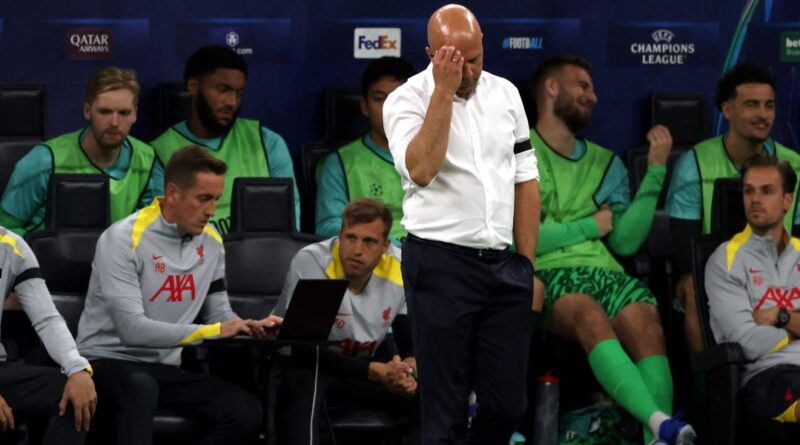
Liverpool search for answers
A season that has lost its early rhythm
Liverpool began the Premier League season with a sense of continuity that suggested a smooth transition after managerial change. Results were steady, performances followed a recognisable pattern, and selection rarely varied.
That stability has faded. Recent matches have raised broader questions about direction, particularly for observers outside football who may simply see fluctuating performances rather than the structural causes behind them.
According to data reported by Premier League match analysts and highlighted by several English media outlets, Liverpool’s early season approach relied heavily on cohesion and predictable roles. That clarity has since become harder to detect.
Selection tells its own story
The most visible shift has come in team selection. In the opening eight league matches, Liverpool made just eight changes to their starting line ups. According to Premier League statistics referenced by multiple outlets including BBC Sport, that level of consistency was among the lowest rotation rates in the division.
Read also: US tv names top five sporting GOATs list sparks instant controversy
Over the following seven league games, Arne Slot made 19 changes to his starting XI. Rather than indicating squad depth alone, the scale of rotation points to ongoing experimentation.
For readers unfamiliar with football tactics, frequent changes at this level often suggest a manager is still refining how different players fit together, rather than simply resting individuals.
Tactical issues emerging on the pitch
The consequences have been visible during matches. Liverpool have started games more slowly, reducing the effectiveness of quick counter attacking moves that previously allowed them to score early and control momentum.
According to analysis published by The Athletic, opponents have adjusted by pressing earlier and denying Liverpool space to transition quickly from defence to attack. This has forced the team into slower build up play, an area still developing under Slot.
Read also: Premier League clubs ready to spend €100 million on one rising star
Defensively, teams have increasingly focused attacks down Liverpool’s right side. The repetition of this pattern across several matches suggests a weakness opponents have actively identified rather than a one off problem.
Why this matters beyond one result
These issues point to something deeper than frustration after a single match. They reflect a team still adapting to new leadership, new ideas, and new expectations following the departure of Jürgen Klopp, who managed the club for nearly nine years.
According to reporting by The Guardian, Slot’s challenge is balancing long term tactical development with the short term demands of a title defence. Rotation can protect players over a long season, but too much change risks undermining collective understanding.
For fans and casual observers alike, the concern is not a lack of talent, but a lack of a dependable reference point when matches become difficult.
Read also: Joe Rogan calls out Trump’s ‘nuts’ birthday UFC upercard idea
A test of leadership and identity
The coming weeks represent a crucial period. Slot must decide whether to double down on experimentation or re establish a clearer core structure that players can rely on instinctively.
For a club accustomed to strong identity and clear patterns of play, restoring cohesion may prove as important as any tactical innovation.
According to Reuters, early success under a new manager often depends less on reinvention and more on clarity. Liverpool’s task now is ensuring short term uncertainty does not become a defining feature of the season.
Sources
Reuters, BBC Sport, The Athletic, The Guardian, Premier League data
Read also: Toto Wolff says Christian Horner’s downfall began long before Red Bull fired him
Read also: Full breakdown: What each F1 driver must pay to compete in 2026