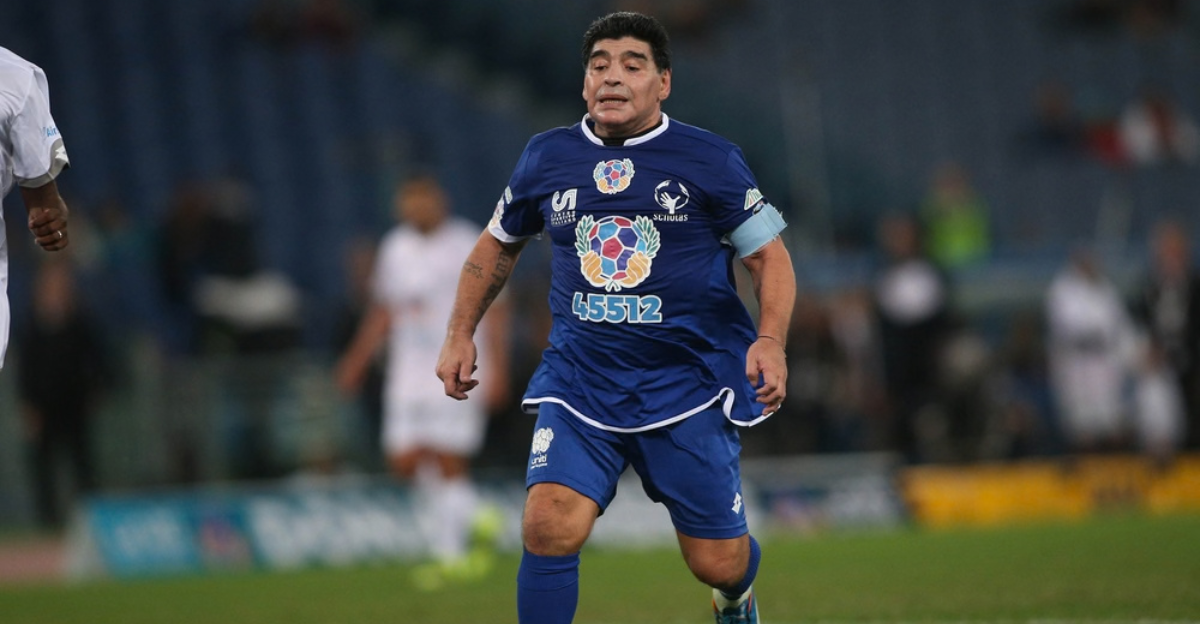
The trial examining Diego Maradona’s death has taken an unexpected turn after an official court expert raised a theory that had not featured during the previous months of testimony.
Forensic doctor Pablo Ferrari told the court in San Isidro that Covid-19 could not be excluded as a possible cause of the Argentine football icon’s death. His evidence, described by Digi24, also directly challenged the prosecution’s claim that Maradona may have suffered for as long as 12 hours before his death.
The testimony does not establish that Maradona had Covid-19. No positive test was presented to the court, and Ferrari’s point was instead that no coronavirus screening had been carried out as part of the post-mortem examination. That distinction is central to understanding the new claim: it is an untested possibility rather than a newly proven cause of death.
A possibility no previous witness had raised
Maradona died on 25 November 2020 at the age of 60 while receiving treatment at a rented home outside Buenos Aires. He had recently undergone surgery for a subdural haematoma and was recovering under the supervision of a medical team when he suffered a cardiorespiratory arrest.
Read also: Arsenal make huge Arteta decision as five more deals are agreed
Ferrari appeared as the final witness in the current trial. According to an EFE report published by Infobae, he called the absence of a coronavirus test during the autopsy a methodological error.
“We cannot rule out that he died of Covid-19,” Ferrari told the court. He argued that the virus could act aggressively through the respiratory system and, in some circumstances, kill a patient within a matter of hours. However, he did not present evidence showing that Maradona had contracted the virus.
Expert rejects the 12-hour timeline
The more consequential part of Ferrari’s testimony may be his rejection of the prosecution’s medical timeline. A multidisciplinary panel previously concluded that Maradona’s condition had deteriorated over a prolonged period and that his medical team had missed warning signs that should have prompted urgent treatment.
Ferrari offered a sharply different interpretation. He said fluid accumulated in Maradona’s lungs over a short period, possibly minutes or a few hours, causing acute pulmonary oedema and ultimately a cardiorespiratory arrest. “It was a sudden death,” he said, as quoted by Clarín.
Read also: Melania Trump’s campaign appeared on every IndyCar. Then cameras showed empty seats at the UN
That distinction could be important for the defence. If Maradona’s final collapse developed suddenly, his lawyers can argue that the accused had far less time to recognise and reverse the crisis than prosecutors have claimed. It does not by itself answer whether the home-care arrangement was adequate or whether earlier medical failures contributed to his condition.
The short-death argument is not entirely new
Ferrari’s wider position was already known before his appearance in court. In 2024, the Associated Press reported that a medical report prepared by Ferrari disputed the conclusion that Maradona had endured a prolonged period of suffering and suggested that his fatal arrhythmia may have developed naturally or through an external factor.
The genuinely new element in his latest testimony was the explicit Covid-19 possibility. Ferrari participated in an expert examination requested by the defence of neurosurgeon Leopoldo Luque, one of the principal defendants, although Ferrari appeared in court in his capacity as an official judicial expert.
Prosecutors have previously criticised his assessment as incomplete and overly dependent on a limited part of the available evidence. His testimony therefore gives the defence a significant counterargument, but it does not replace the conclusions reached by the larger medical panel or settle the factual dispute before the judges.
Read also: Missing Shelton and Paul, Agassi braces Team World for uphill Laver Cup defence in London
Testimony challenged under cross-examination
Ferrari’s evidence came under sustained pressure from prosecutors and lawyers representing Maradona’s family. He acknowledged that he is not a cardiologist, although he defended his ability to assess cardiac issues by referring to his experience in thousands of forensic proceedings.
He also admitted that he had not been able to read every part of the medical material because some handwritten sections were illegible. When questioned by the court, Ferrari said that anything he could not understand had not been included in his assessment. Those admissions are likely to be used by the prosecution when arguing how much weight the judges should give his conclusions.
The hearing also became tense when Luque’s lawyer objected to questions about Ferrari’s work in an unrelated medical negligence case. The judges reprimanded the lawyer after he described the situation in court as “insane”, adding another heated exchange to proceedings that have already been marked by controversy.
A second trial approaches its final stage
The present proceedings began in April 2026 after the original trial collapsed amid controversy surrounding judge Julieta Makintach and her involvement in a documentary project connected to the case. As explained by El País, the retrial centres on whether the medical professionals responsible for Maradona’s care knowingly exposed him to a fatal risk through serious failures and omissions.
Read also: Barcelona U-turn opens door for shock Arsenal move for Julian Alvarez
Luque, psychiatrist Agustina Cosachov and five other healthcare professionals are being tried on a charge commonly translated as simple homicide with eventual intent. All have denied criminal responsibility. The prosecution argues that Maradona was left in unsuitable home care without the monitoring and specialist treatment his condition required, while the defence maintains that his death was sudden and could not have been prevented.
The court is due to resume proceedings on 29 September, when the defendants may provide further statements. Closing arguments are scheduled for October. Ferrari’s evidence has ensured that the judges will enter that final stage facing two sharply conflicting accounts: one of a prolonged and detectable decline, and another of a fatal event that unfolded with little warning.
Read also: Blatter beats the biters: a former FIFA boss ranked football's most hated ever