Nicklas Bendtner: talent, timing and a career that slipped away
For a brief period in the late 2000s, Nicklas Bendtner appeared to have everything required of a modern elite striker: size, confidence, technical ability and opportunity. What followed instead was a career that became a case study in how promise can be undone by instability, impulse and the relentless glare of modern football culture.
Bendtner’s story is not simply one of wasted talent. It is also about timing his rise coinciding with football’s early internet age and how personality, scrutiny and self-discipline can collide at the highest level.
A reputation formed early
Bendtner emerged from Copenhagen’s youth ranks as one of Denmark’s standout prospects and joined Arsenal in 2005 with a reputation for fearlessness that occasionally bordered on recklessness. He later acknowledged that he was “hot-headed” as a teenager, an attitude that followed him into a dressing room filled with established stars.
In his autobiography, later excerpted by Danish outlets including Ekstra Bladet, Bendtner described a training-ground confrontation with Thierry Henry, admitting he had overstepped the mark and been firmly put in his place.
Read also: Salah’s frustration points to deeper doubts inside Liverpool
Opportunity and distraction
A loan spell at Birmingham City during the 2006–07 season highlighted Bendtner’s potential. He scored regularly, helped the club secure promotion and earned the trust of manager Steve Bruce. At the same time, British tabloids and Danish newspaper BT reported on his nightlife during his spell in the Championship.
Bendtner later said in interviews with Politiken that the stories were exaggerated, explaining that he was socialising while injured and had underestimated how closely his behaviour was being monitored.
Arsène Wenger nevertheless retained faith, integrating Bendtner into Arsenal’s senior squad during the 2007–08 title challenge. He scored nine goals in all competitions and memorably netted a late winner against Tottenham Hotspur. On the pitch, he was contributing; off it, volatility remained close to the surface.
Volatility under pressure
Moments of promise were repeatedly undercut by lapses in judgment. During a heavy League Cup defeat to Spurs in 2008, Bendtner scored an own goal and clashed physically with teammate Emmanuel Adebayor a snapshot of a player struggling to manage frustration on a high-profile stage.
Read also: Why Roy Keane and Sir Alex Ferguson’s partnership finally collapsed
In September 2009, Bendtner survived a serious car accident on his way to Arsenal training. Speaking at the time, he described the incident as a “miracle” and denied claims he had been driving at excessive speed. In a 2020 interview with Politiken, he said lingering injuries from the crash disrupted his career in the years that followed.
Seeking risk elsewhere
As injuries limited his playing time, Bendtner has said he turned to gambling to replicate the adrenaline of elite competition. He told Politiken and BT that he once lost hundreds of thousands of pounds in a single night before reassessing his lifestyle and stepping away from high-stakes gambling.
During that period, Bendtner said he leaned heavily on Steve Bruce for advice, describing the former Birmingham manager as a stabilising influence during interviews with Danish media.
Personal relationships were similarly turbulent. Bendtner detailed chaotic breakups and alleged blackmail in his autobiography, passages that were later widely reported by Danish tabloids.
Read also: Manchester City’s chase looks uncomfortably familiar for Arsenal
When the brand overtook the player
International football brought Bendtner both success and controversy. At Euro 2012, he scored twice against Portugal but drew greater attention for revealing gambling-sponsored underwear in celebration. UEFA fined him €100,000 and suspended him for one 2014 World Cup qualifier, a penalty that bookmaker Paddy Power later said it would pay on his behalf.
The incident cemented Bendtner’s transformation from striker to spectacle. Online, the ironic nickname “Lord Bendtner” initially mocking his self-confidence became firmly embedded in football culture.
Decline and consequence
A loan move to Juventus in 2012 offered a chance at reset, but injuries restricted his involvement. Later that year, Bendtner was convicted of drink-driving in Copenhagen, receiving a fine, a driving ban and a temporary suspension from the Denmark national team, according to the Danish FA.
Further incidents followed, including a taxi-related scandal reported by Danish media in 2014 and a 2018 assault conviction that resulted in a short prison sentence, which he served under house arrest.
Read also: F1 driver hit with brutal penalty months before new era even begins
Embracing the myth
Bendtner eventually leaned into the persona that had come to define him. In 2015, Danish magazine Se og Hør purchased a small plot of land in Scotland in his name, allowing him to jokingly claim the title of “Lord”. His agent, Elisa Lykke, later confirmed the purchase was a publicity stunt supporting a nature conservation area.
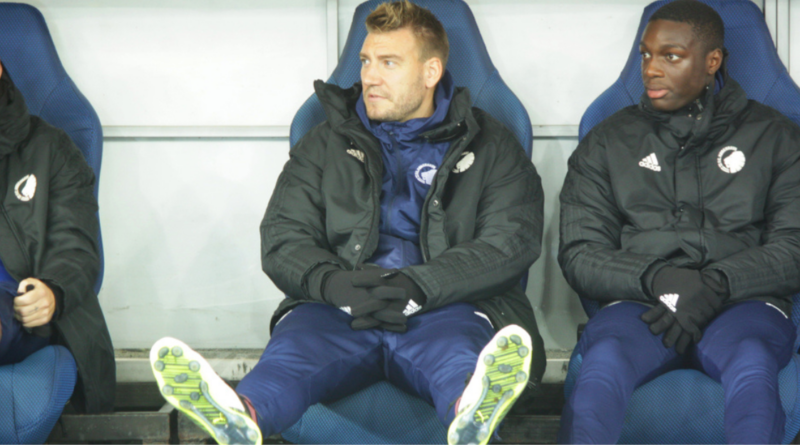
A return to FC Copenhagen in 2019 was intended to provide a fitting conclusion. Instead, he scored once in nine appearances and departed quietly. After a brief spell in Denmark’s lower leagues, Bendtner retired from professional football in 2021.
A cautionary tale of the modern game
Nicklas Bendtner’s career resists easy conclusions. He was neither the delusional figure of internet mockery nor the elite striker his early promise suggested. Instead, he became emblematic of a football era in which talent, ego and exposure collided faster than players could adapt.
In another time or with different guidance his story might have unfolded very differently.
Read also: As he thrives at Napoli, McTominay challenges the Manchester United exit narrative
Sources: Reuters, BBC, Politiken, BT, Ekstra Bladet, Se og Hør, Bendtner autobiography