No evidence of FIFA warning over Fabrizio Romano claims, but confidential leaks could still trigger sanctions
What the post claims
The viral Instagram post says FIFA has warned clubs, agents, and sporting directors that leaking contract information to journalists, including Fabrizio Romano, could lead to heavy sanctions, and that a major investigation would begin at the end of the season. The problem is that this wording cannot be traced in FIFA’s public news archive or in the organization’s ongoing legal updates.
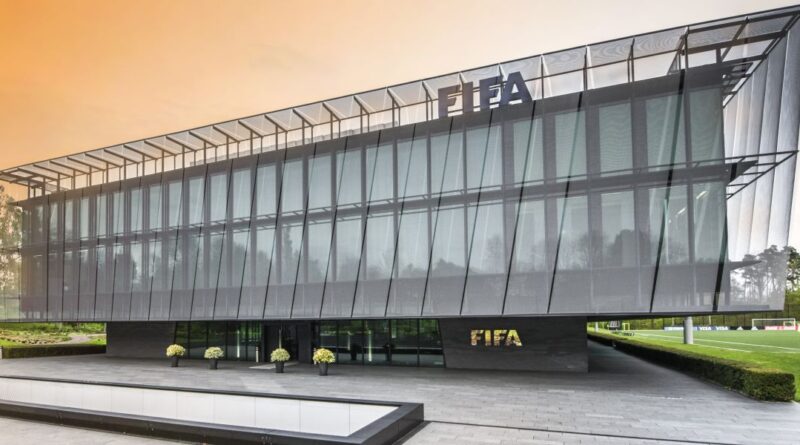
According to FIFA’s official overview of media releases and Latest from Legal & Compliance, FIFA has published many items about disciplinary cases, agent rules, and integrity matters, but there is no public text describing a specific campaign against journalists or an investigation tied to Fabrizio Romano. Because of that, the most accurate journalistic angle is not that FIFA has already launched such a case, but that the post is circulating a claim that does not appear in the official sources.
What FIFA has actually published
According to the FIFA Football Agent Regulations, especially Article 19, FIFA itself must make a range of information publicly available, including the names of licensed agents, the clients they represent, the agency services provided, any sanctions, and details of transactions, including service fees. That matters because it shows FIFA’s own framework already includes a degree of transparency, and not every disclosure of information can automatically be described as an improper leak.
At the same time, Article 21 of the same regulations states that FIFA’s Disciplinary Committee and, where relevant, the Ethics Committee may sanction an agent or a client that violates the rules, the FIFA Statutes, or other FIFA regulations. In other words, there is clearly a disciplinary pathway in the rules, but the public documents do not say FIFA has issued the broad warning described in the post, and they do not say it is automatically unlawful to speak to a journalist. That depends on what was shared, who shared it, and which duties applied in that specific relationship.
Read also: Nate Diaz opens up on decision to reject UFC return against Conor McGregor
Why leaks of contract information can create legal problems
If a club official, sporting director, or licensed agent shares confidential contract details, the first issue may be loyalty and confidentiality. According to the FIFA Code of Ethics, the code applies to officials, players, match agents, and football agents, and Article 16 imposes a duty of loyalty, while Article 17 requires covered persons to treat confidential information as confidential when it was given with an understanding of secrecy. The code also states that breaches may be punished with fines and bans from football related activity.
In addition, ordinary law may also become relevant. If the leaked material contains personal data, such as salary details, bonuses, or other identifiable contract terms, the GDPR’s core principles and rules on lawful processing require that data be handled lawfully, fairly, and transparently, and that there be a valid legal basis for processing. If the information is also commercially sensitive and not publicly known, it may in some cases fall under the EU Trade Secrets Directive, which protects undisclosed know how and business information against unlawful acquisition, use, and disclosure.
The key point, however, is that this does not automatically make the journalist’s work unlawful. Article 11 of the EU Charter of Fundamental Rights protects freedom of expression and information, and GDPR Article 85 requires member states to balance data protection with freedom of expression and information, including for journalistic purposes. Because of that, the clearest legal risk would usually fall on the person or entity that may have breached a duty of confidentiality, a contract, or data protection rules, not necessarily on the journalist who receives and publishes the information in a news context.
What the rules and the public record actually suggest
According to the sources that are publicly available as of April 1, 2026, there is no evidence that FIFA has officially announced that clubs, agents, and sporting directors will face a special end of season investigation over leaks to journalists such as Fabrizio Romano. That part of the story should therefore be treated as unconfirmed, not established fact. A more precise and source based formulation is that FIFA’s rules allow sanctions for specific misconduct, but the open FIFA sources do not contain the specific warning described in the viral post.
Read also: Europe’s most in-form wingers: Opta data highlights football’s most dangerous wide players
If the story is to be written responsibly, the angle should therefore be twofold. First, the Instagram claim itself is not supported by an official FIFA statement. Second, confidential leaks in football can still create legal or disciplinary exposure if they involve breaches of FIFA’s ethical rules, agent regulations, contractual confidentiality, data protection law, or trade secret protections. That is a much more accurate conclusion than claiming Fabrizio Romano has already been declared unlawful or is directly the target of a confirmed FIFA case.
Sources: FIFA, All media releases, FIFA, Latest from Legal & Compliance, FIFA Football Agent Regulations, FIFA Code of Ethics, European Commission, Principles of the GDPR, EUR-Lex, Directive (EU) 2016/943, EUR-Lex, Article 11 of the Charter, GDPR Article 85.
Read also: Euro 2028 is already sending a clear message to fans on ticket prices