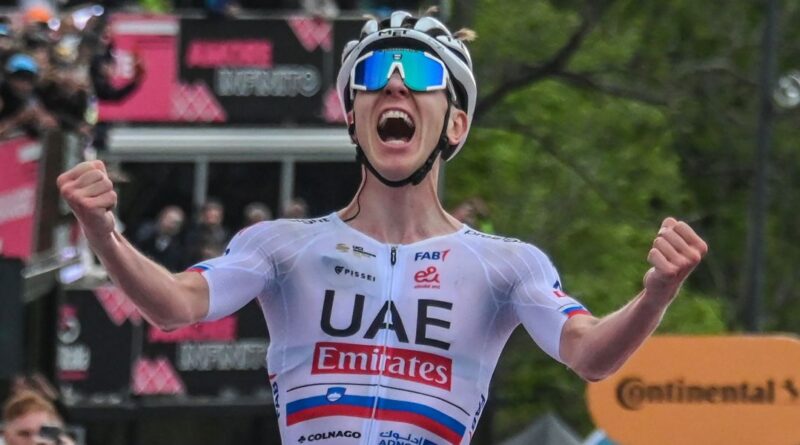
Paris, Roubaix 2026 may be Pogacar’s toughest monument test yet
According to Jorge Borreguero in CyclingUpToDate’s original analysis, the main story around Sunday’s Paris, Roubaix is simple enough: Pogacar is close to something rare, but the race in front of him may be the least forgiving of all the Monuments. Borreguero’s piece centers on five riders who could block that step, and the list makes sense. Pogacar arrives after winning both Milano, Sanremo and the Tour of Flanders this spring, but Roubaix asks a different question from the one he answered in Italy or on the climbs in Flanders.
There is also the course itself, which changes the mood of the race. According to the official Paris, Roubaix route page, the 2026 edition runs 258.3 kilometers from Compiègne to Roubaix and still includes the sectors that usually strip the race down to its essentials, the Trouée d’Arenberg, Mons, en, Pévèle and Carrefour de l’Arbre. That matters because Pogacar can no longer count on one sharp uphill acceleration to split the field. Here, the damage is usually done by repeated pressure, clean bike handling and the ability to stay calm when the road starts throwing riders around.
Van der Poel is still the rider to beat
If this race has a natural reference point, it is still Mathieu Van der Poel. The official Paris, Roubaix recap from 2025 notes that his win last year made it three straight victories in the race, which tells you almost everything about how comfortable he is on this terrain. Borreguero makes the same point in his piece, and it is hard to argue with it. Pogacar may be the stronger rider in many races, but Roubaix is one of the few places where Van der Poel still looks like the man everyone else has to solve first.
That edge is easier to understand when you look at what happened a few days ago in Flanders. Cycling Weekly’s race report showed Pogacar dropping Van der Poel on the final Oude Kwaremont, but it also showed something else: Van der Poel is still right there in the biggest races, and Roubaix suits him better than Flanders does. Pogacar beat him on climbs. On Sunday, he will have to beat him on sectors where Van der Poel almost never looks uncomfortable.
Read also: Trump’s college sports order turns policy into political theater
Van Aert remains dangerous if the race stays alive late
Wout Van Aert does not need much explanation in a race like this. He has the engine for a long day, the size for the cobbles and the finish speed to make every late group awkward for the riders around him. Borreguero highlighted him as one of the clearest threats, and that feels right because Roubaix has always looked like the Monument most naturally suited to him, even if it is still missing from his list.
His recent shape gives that case more weight. In the Tour of Flanders report from Cycling Weekly, Van Aert finished fourth, ahead of Mads Pedersen, after staying in the mix until the race split for good on the hardest climbs. Roubaix removes some of those explosive uphill moments and replaces them with attrition, positioning and force. That opens the door a little wider for Van Aert than it did in Flanders.
Ganna can make it a race of raw force
Filippo Ganna is the rider who can make this feel less like a classic duel and more like a power test. Borreguero pointed to his second place at Milano, Sanremo in 2025 and his strong recent form, and that broader picture holds up. He is no longer just a specialist with a huge time trial engine. He is now a serious one day racer in the biggest events.
There is also a fresher reason to take him seriously. FirstCycling’s result page for Dwars door Vlaanderen shows Ganna won that race on April 1, which is exactly the kind of sign you want before Roubaix. If he gets through Arenberg without losing ground to bad luck, he has the kind of steady power that can keep him glued to the front when other riders start fading in the final hour.
Read also: From Anfield allies to European rivals: Alexander-Arnold and Diaz on opposite paths
Pedersen fits the rhythm of Roubaix better than Flanders
Mads Pedersen is easy to underrate because he does not come into this weekend with the same spotlight as Pogacar or Van der Poel, but Roubaix has never been a race that only rewards the loudest favorite. Borreguero’s argument for Pedersen was based on steady progression after an interrupted early spring, and that feels fair. He has been present across the cobbled block, and that counts for a lot in a race where condition and stubbornness often matter as much as one brilliant move.
Flanders also gave a useful clue. Pedersen finished fifth there, according to Cycling Weekly, but the way he lost contact matters more than the placing itself. He was dropped on the decisive climbs, and Roubaix gives him fewer of those moments. The flatter, heavier shape of this race should suit him much better than a final built around repeated uphill accelerations.
Philipsen is the threat nobody wants to drag to the velodrome
Jasper Philipsen brings a different sort of pressure to the race. He does not need to be the strongest rider on the cobbles all day to become a major problem. He only needs to survive the hard parts and reach the closing kilometers with a realistic shot. Borreguero framed him as the rider who becomes especially dangerous if the race tightens up late, and that is probably the cleanest way to read his chances.
His recent form backs that up. CyclingNews reported that Philipsen won Nokere Koerse for his first victory of the 2026 season, and that matters because sprinters still need confidence as much as speed. In Roubaix, a rider like Philipsen can look quiet for hours and then suddenly become the man nobody wants to tow into the velodrome.
Read also: Tadej Pogačar’s Flanders triumph collides with a railway inquiry
The sectors that could pull the race away from Pogacar
The most interesting extra angle is not really about one rider at all. It is about where the race can change shape. According to the official route breakdown, Arenberg comes with 95.3 kilometers left, Mons, en, Pévèle with 48.6 left, and Carrefour de l’Arbre with 17.1 left. Those are not just famous names. They are the points where a race like this stops being theoretical. A puncture, a bad entry or a moment of hesitation can undo everything that happened before it.
That is why Pogacar can be both the biggest story and still not the safest pick. He has already shown he can handle this race, he was second here last year, and his spring form is almost impossible to question. But this is still the Monument where specialists can pull the favorite into their kind of fight. According to Borreguero’s original piece, Van der Poel, Van Aert, Ganna, Pedersen and Philipsen are the five men most likely to do it. Looking at the route, the recent results and the shape of the field, that call feels solid.
Sources: CyclingUpToDate, Jorge Borreguero, Paris, Roubaix official route, Paris, Roubaix 2025 official recap, Cycling Weekly, Tour of Flanders 2026 report, FirstCycling, Dwars door Vlaanderen 2026, CyclingNews, Nokere Koerse 2026.
Read also: President Trump signs executive order targeting college athlete eligibility and transfer rules