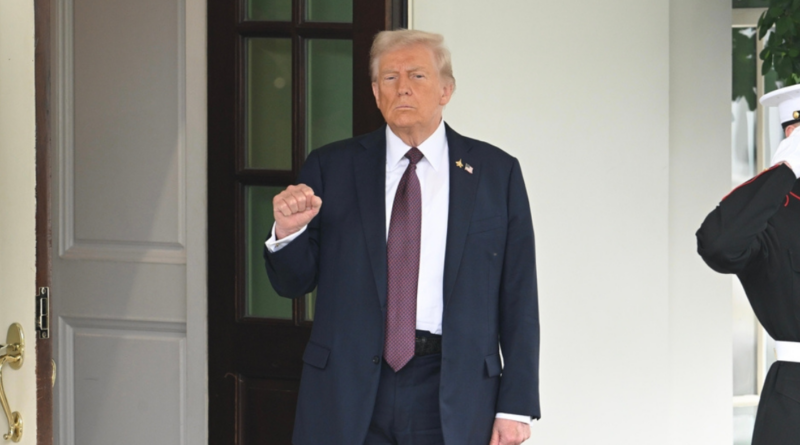
President Trump signs executive order targeting college athlete eligibility and transfer rules
A new executive order from President Donald Trump is putting fresh pressure on college sports leaders, proposing nationwide limits on how long athletes can compete and how often they can change schools.
Signed Friday, the directive calls on the NCAA to cap athletes’ eligibility at five years and restrict most players to a single transfer without losing a season of competition. The changes, if implemented, would take effect Aug. 1.
According to a White House statement, the administration argues that the current system has become unstable. “College sports cannot function without clear, agreed-upon rules concerning pay-for-play and player eligibility that can't be endlessly challenged in court,” the statement said.
The order also outlines broader reforms, including the creation of a national registry for player agents and protections aimed at preventing schools from cutting funding for women’s and Olympic sports programs to offset athlete compensation costs.
Legal concerns and enforcement questions
However, the proposal is already facing skepticism. Attorneys representing both universities and athletes told ESPN they expect the order to face immediate legal challenges, particularly over questions about presidential authority and antitrust law.
Enforcement could also prove difficult. The order suggests that schools violating the new rules risk losing federal funding, a tactic the Trump administration has used in other policy areas with mixed results.
NCAA president Charlie Baker said he had not yet reviewed the full order but indicated that parts of it align with ongoing discussions between the NCAA, lawmakers and federal officials.
“There’s a bunch of things in there that are pretty consistent with the things we've been talking to them and to Congress about,” Baker said.
Read also: Sergio Ramos names his GOAT after playing with both Messi and Ronaldo
At the same time, he stressed that lasting change would likely require action from Congress rather than relying solely on executive authority.
“We need congressional action to sort of seal the deal on a number of these things,” Baker said, adding that resolving disputes through the courts alone can take years and create uncertainty for schools and athletes.
A system under pressure
The executive order arrives at a time of significant upheaval in college sports. Since a 2021 Supreme Court ruling made clear that the NCAA is subject to antitrust laws, the organization has struggled to enforce limits on athlete compensation and mobility.
Athletes now transfer more freely and have increasingly challenged eligibility restrictions in court, reshaping the competitive landscape.
Read also: Top 25 Premier League transfers that went wrong
Despite years of debate, Congress has yet to pass comprehensive legislation governing college athletics. Lawmakers remain divided on key issues, especially whether athletes should be classified as employees and allowed to collectively bargain.
Senator Maria Cantwell said the executive order highlights ongoing concerns but emphasized the need for a legislative solution.
“Congress should continue to have bipartisan discussions about how to increase revenue to meet these goals,” she said.
For now, the order leaves several major questions unresolved, including athlete employment status and how schools should share revenue from lucrative media deals.
Read also: “I want to kill him” Didier Drogba clash exposed
Sources: ESPN, White House
Read also: Bryson DeChambeau’s water skip shot turns a practice round into a physics lesson