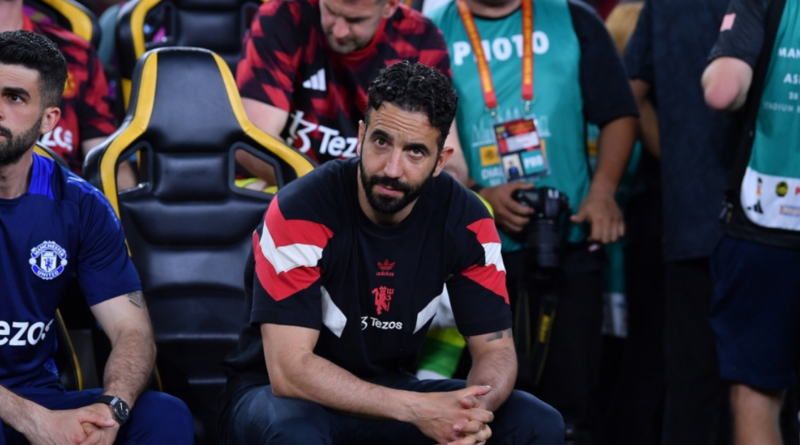
Ruben Amorim only has himself to blame after poor results end his Manchester United job
Manchester United maintain that Ruben Amorim’s dismissal was driven by results, but those close to the decision say his public challenge to the club’s leadership accelerated an outcome that had been edging closer for weeks.
The Portuguese coach was removed just 14 months into the role, following mounting internal strain over decision-making authority and communication, according to reporting by GOAL.com.
Governance tensions surface
Amorim’s final press conference, held after a draw at Leeds, brought those tensions into the open. Asked whether he still felt the confidence of the board, he drew a clear line between his understanding of the job and the structure he encountered at Old Trafford.
“I came here to be the manager of the Manchester United, not to be the coach of Manchester United,” Amorim said, signalling that he expected influence beyond training and matchdays.
Read also: Nani urges calm at United
He reinforced the point moments later: “In every department – the scouting department, the sporting director needs to do their job, I will do mine for 18 months and then we move on.”
Internally, the remarks were interpreted as a direct critique of United’s sporting model and the role of sporting director Jason Wilcox.
The reaction inside the club was swift.
A short road to dismissal
By Monday morning, Amorim had been sacked. Club sources told GOAL.com there had been no formal ultimatum, but acknowledged a widening gap between the coach and senior leadership that had become increasingly difficult to manage.
Read also: Why Manchester City moved early for Antoine Semenyo
Tactical disagreements reflected that divide. Amorim’s near-total commitment to a 3-4-2-1 system frustrated executives who wanted greater adaptability, particularly as results faltered. Similar public breakdowns at Chelsea and Nottingham Forest in recent seasons have shown how rarely managers survive after openly criticising club structures.
Results leave little defence
United officials argue the numbers alone made the decision unavoidable. Amorim won 24 of his 63 matches in charge, a 38.7% win rate the club’s lowest since the early 1970s.
That record came despite substantial backing. United spent £216 million last summer to reshape the squad around Amorim’s preferences, while the absence of European football offered additional preparation time and reduced physical strain. Neither advantage produced sustained improvement.
League form remained erratic, cup exits came early, and performances failed to stabilise.
Read also: Barcelona’s €8.4m Negreira case still hangs over el clasico
Dressing-room strain
Concerns were not limited to tactics or results. Amorim’s public comments increasingly unsettled players, particularly after he described the squad as “maybe the worst team in the history of Manchester United” and made pointed remarks about Marcus Rashford.
Christian Eriksen later acknowledged the impact of that approach. “I don’t think that helped the players at all,” he said. “Some stuff you can say inside and it’s not too clever to say outside.”
Several players felt exposed rather than protected, according to people familiar with the dressing room mood.
What it signalled
For months, board-level backing shielded Amorim from growing criticism. Once that relationship fractured in public, his position became increasingly fragile.
Read also: Manchester United close in on manager decision
United may frame the decision as performance-based, but internally the episode is viewed as a warning about alignment. Authority, messaging and trust now sit alongside results as non-negotiables at the club.
Amorim’s exit, those close to the process suggest, was not just about what happened on the pitch but about who ultimately gets to shape Manchester United.
Sources: GOAL.com
Read also: Dembélé contract talks stall at PSG