EU High Representative Kaja Kallas confirmed the move on Monday, after a Foreign Affairs Council meeting in Brussels. Ministers, she said, have called for a tougher visa policy and for Russian athletes to be barred from taking part in sporting competitions in the EU.
Two options are on the table. The first is a straight entry ban for Russian competitors at any tournament held on EU soil. The second is a stricter version of what the IOC already demands, with Russian athletes blocked from using their flag, anthem or national symbols at any event inside the bloc.
Whichever path Brussels chooses, the restriction would be binding across the 27 member states regardless of any decisions by the International Olympic Committee.
A package still being negotiated
The timing is tight. The sanctions package is due to land on national capitals within days and go before the European Council on November 26 and 27.
Read also: EA Sports FC 27 solo in The Game Awards sports category
Speaking to reporters in Brussels, Kallas acknowledged that parts of the 22nd package are still being negotiated. Pressed on a separate proposal to bar Russians who have fought in Ukraine from entering the bloc, she said: “As I said, we are presenting in a few days the 22nd package to member states, and let us see if that will be in it. The discussions are ongoing. Some member states have question marks about implementation.”
Collision course with the IOC and CAS
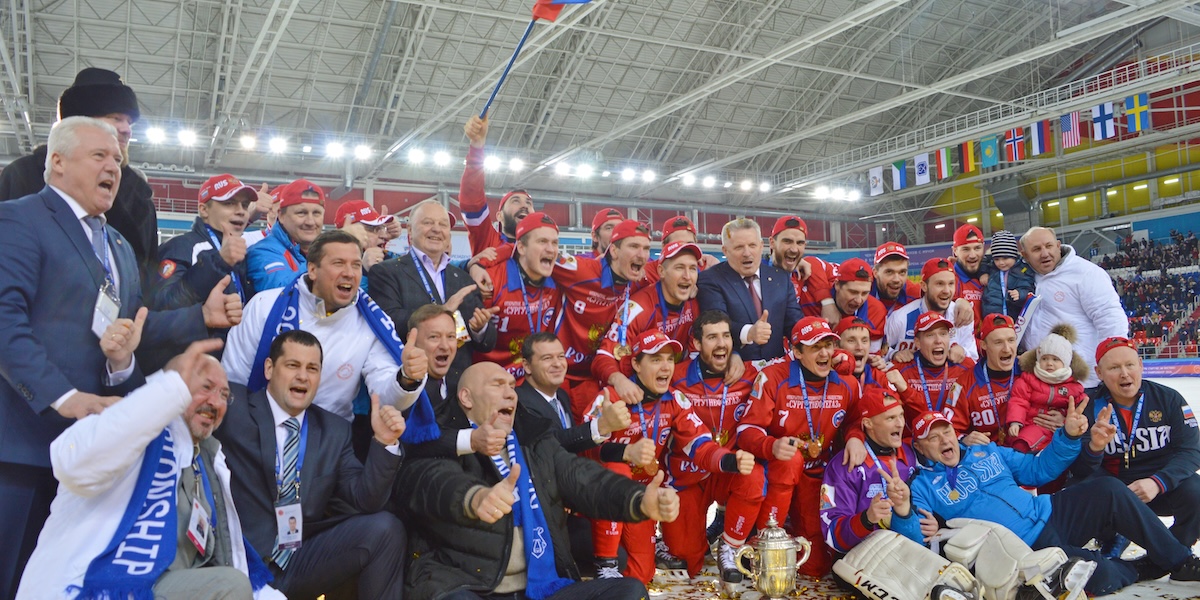
The move puts the EU on a direct collision course with the Olympic movement, which has edged Russia back toward full participation over the past year.
The Court of Arbitration for Sport went furthest. On November 5, CAS ordered the International Ice Hockey Federation to reinstate Russia for international competition, after finding the IIHF had not provided sufficient evidence to justify continuing the ban in place since 2022.
Finland, Sweden, Czechia, Norway, Denmark, Latvia and Austria have already said they will not take the ice against Russia. An EU-wide sanctions ban would turn those individual refusals into a legal wall across most of the bloc, with the force of EU law behind it.
Read also: Vincent Kompany’s secret training plans at Bayern Munich suffer unexpected setback
What gets caught in the net
Non-EU countries with European tournaments would not be covered. The United Kingdom, Norway and Switzerland set their own sports policy and would retain the authority to decide independently whether Russian athletes may compete on their soil.
Inside the bloc the picture is different. Grand slam tennis in Paris, Formula 1 rounds in Italy and Spain, the Giro d’Italia, the Vuelta a España and multiple Champions League and Europa League host cities would all fall under the ban if Russian athletes attempt to compete there.
The 22nd package would also tighten visa rules for Russian citizens more broadly. Kallas said ministers want tougher entry controls, and separately floated the idea of barring Russians who have fought in Ukraine, though she acknowledged that some capitals have doubts about how that would work in practice.
National governments are already moving on their own. Finland is preparing to tighten visa rules to block Russian athletes from obtaining short-term work permits, and Canada has excluded Russian and Belarusian national teams from the 2027 World Junior Ice Hockey Championship, which runs in Canada from December 26 to January 5.
Read also: Hornets stun Lakers with a Miller/Reid showoff
The next concrete step is the European Council on November 26 and 27, where heads of state and government will decide whether the athlete clause survives into the final sanctions text.