TIKI-TAKA: The passing obsession that conquered football and changed the game forever
How a simple idea became tiki taka
Tiki Taka describes a possession focused style built on short passes, constant movement and positional awareness. Rather than relying on speed or physical strength, teams aimed to dominate matches by controlling the ball and exhausting opponents mentally.
The expression entered football’s mainstream vocabulary during the 2006 World Cup. Spanish commentator Andrés Montes used the phrase repeatedly while describing Spain’s passing rhythm, chanting “Tiki Taka, Tiki Taka” during broadcasts. According to Spanish media retrospectives cited by the BBC, Montes compared the passing to a musical tempo that opponents could not interrupt.
What began as a spontaneous description quickly evolved into a label for an entire footballing philosophy rooted in control and patience.
Dutch ideas behind a Spanish identity
Although closely associated with Spain, the foundations of Tiki Taka were laid decades earlier in the Netherlands. The style drew heavily from Total Football, developed by Rinus Michels and brought to life by Johan Cruyff in the 1970s, according to UEFA historical archives.
Read also: 2015 FIFA Scandal
Total Football emphasized positional interchange, high pressing and intelligent use of space. Cruyff later carried these ideas to FC Barcelona, first as a player and later as head coach. During his managerial spell, he embedded positional play and technical discipline into the club’s identity, shaping how future generations would understand the game.
Louis van Gaal continued this philosophy in the late 1990s, relying heavily on youth academy players and reinforcing a culture built on technical excellence and tactical understanding.
Barcelona perfects the formula
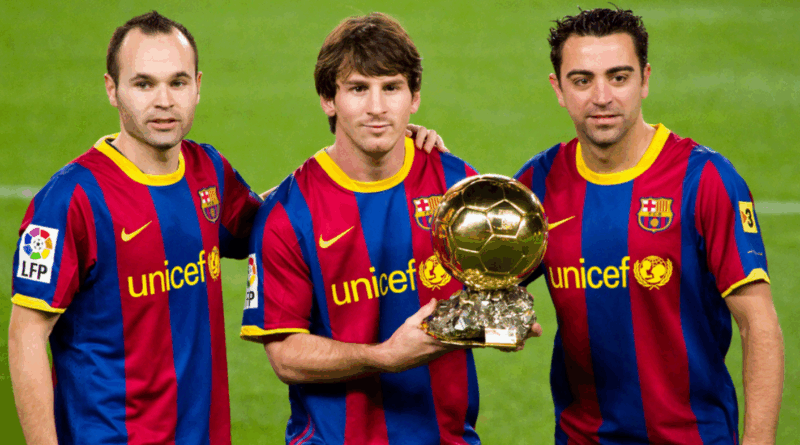
The modern expression of Tiki Taka began to take shape under Frank Rijkaard in the mid 2000s. With Xavi Hernández and Andrés Iniesta controlling midfield tempo, Barcelona combined possession with creativity and balance.
This approach delivered tangible success. Barcelona won the Champions League in 2006, defeating Arsenal in the final. According to UEFA match reports, the victory highlighted how controlled possession could overpower more direct opponents.
Read also: Liverpool and Arne Slot are plotting blockbuster winger raid as european giants circle
Pep Guardiola’s appointment in 2008 marked the style’s peak. Although Guardiola disliked the label Tiki Taka, his teams refined positional play to near perfection. Barcelona won the Champions League in 2009 and 2011, defeating Manchester United in both finals, results widely covered by Reuters at the time as examples of tactical dominance.
When spain turned possession into history
The philosophy soon translated to international football. Spain’s national team adopted a similar approach under Luis Aragonés and later Vicente del Bosque.
According to Reuters and BBC reporting, Spain won Euro 2008, the 2010 World Cup and Euro 2012 consecutively, becoming the first men’s national team to secure three major international titles in a row.
The defining moment came in the 2010 World Cup final, when Andrés Iniesta scored the winning goal against the Netherlands in extra time. The goal symbolized the peak of possession based football on the world’s biggest stage.
Read also: Man United links to Ruben Neves quietly unravel behind the scenes
When rivals learned how to fight back
As success grew, so did opposition resistance. Teams began developing strategies to disrupt prolonged possession. Bayern Munich’s 4 0 victory over Barcelona in the 2013 Champions League semifinals exposed structural weaknesses, using aggressive pressing and physical intensity.
Reuters analysis at the time described the match as a tactical turning point. Spain’s group stage exit at the 2014 World Cup reinforced the idea that pure possession was no longer sufficient.
Barcelona adapted under Luis Enrique, blending controlled build up with faster transitions and direct attacking play. This evolution culminated in a Champions League title in 2015, showing that Tiki Taka could survive by changing.
Why tiki taka still shapes modern football
Few teams today replicate Tiki Taka in its original form. Modern football prioritizes flexibility, pressing intensity and transitional speed. Yet the core ideas remain deeply influential.
Read also: The 23 Greatest Bayern Munich Players of All Time – Ranked
According to UEFA technical studies, positional play principles derived from Tiki Taka are now embedded in coaching education across Europe. Managers like Pep Guardiola have adapted the philosophy to new environments, proving that control and structure can coexist with modern intensity.
Tiki Taka no longer dominates football, but its legacy lives on in how teams think about space, movement and the ball itself.
Sources: Reuters, BBC, UEFA archives
Read also: Liverpool’s january gamble that could quietly transform their season