Trump signs executive order: Transgender banned from female across the board
According to reporting by Callum Jones, the International Olympic Committee announced a major change to eligibility for female events that will take effect from the 2028 Los Angeles Olympics. AP reported that the policy limits entry in the female category to biological females, and that the rule is intended for future Games rather than being applied retroactively. That makes the decision one of the most significant shifts in Olympic eligibility policy in recent years, especially because it arrives after a long international debate over fairness, inclusion, and safety in elite women’s sport.
The IOC said in its statement: "Eligibility for any female category event at the Olympic Games or any other IOC event, including individual and team sports, is now limited to biological females." In comments reported by multiple outlets, IOC President Kirsty Coventry said the policy was shaped by scientific and medical advice, and argued that the smallest physical margins can decide medals at the Olympic level. She also said the issue was not only about fairness, but in some sports about safety as well.
Eligibility rules for LA 2028
Under the new approach, AP reported that the rule will begin with the Los Angeles 2028 Summer Games and continue beyond them. The policy is focused on the female category at elite Olympic level, and coverage of the decision says it also affects some athletes with differences of sex development, not only transgender women. That wider scope matters because it shows the IOC is presenting the move as a broader eligibility framework rather than as a rule aimed at one single group alone.
In practical terms, the change means athletes who want to compete in the female category will have to meet a biological standard set by the IOC. According to the source article provided by the user, the committee framed the move as a response to concerns about competitive balance in women’s sport. That reflects a wider trend already seen in some international federations, where governing bodies have moved toward sex based eligibility rules in top level female competition.
Read also: TSA staffing fears grow as World Cup travel nears during US shutdown
One time SRY testing under the policy
According to the source article and AP’s reporting, eligibility under the new policy would be determined through a one time test for the SRY gene, which is commonly associated with male sex development. The IOC said the screening could be done through saliva, a cheek swab, or a blood sample. It also said athletes who return a negative result would permanently satisfy the standard for the female category unless there were clear grounds to believe the reading was wrong.
The IOC described that process in the following terms: "The IOC considers that SRY gene screening via saliva, cheek swab or blood sample is unintrusive compared to other possible methods." That language is central to how the committee is defending the rule, because criticism of sex testing in sport has often focused on privacy, dignity, and the possibility of flawed or overly broad screening. Even so, the policy is likely to remain controversial as athletes, federations, and rights groups weigh its legal and ethical implications before LA 2028.
Why the U.S. debate matters here
The timing of the IOC decision has also drawn attention because it comes after political pressure in the United States intensified around transgender participation in women’s sport. AP reported that the Olympic policy aligns with President Donald Trump’s executive order on the issue, but also noted that Coventry said her push to protect the female category predated Trump’s return to office. That distinction is important, because it suggests political alignment without proving that the White House directly caused the IOC decision.
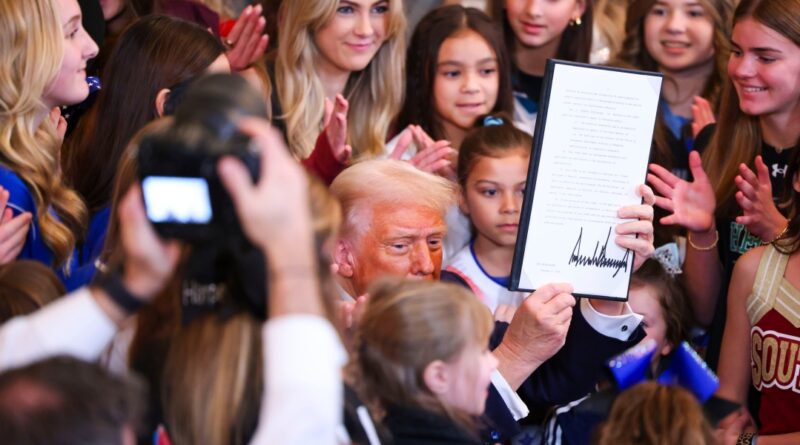
Trump signed the executive order "Keeping Men Out of Women’s Sports" on February 5, 2025, not last month, and the order directs federal agencies to interpret Title IX in a way that excludes transgender girls and women from female sports categories in federally funded education settings. In the source article, Trump was quoted as saying: "If you let men take over women's sports teams or invade your locker rooms, you will be investigated for violations of Title IX and risk your federal funding." That political backdrop helps explain why the IOC announcement is already being viewed not just as a sports policy decision, but as part of a broader cultural and legal fight that will continue as Los Angeles 2028 approaches.
Read also: Fabrizio Romano reveals fresh details on Cristian Romero ‘release clause’ At Tottenham
Sources: Article by Callum Jones, AP, The White House.
Read also: Manchester United weigh Fermín López move as Barcelona contract adds complication