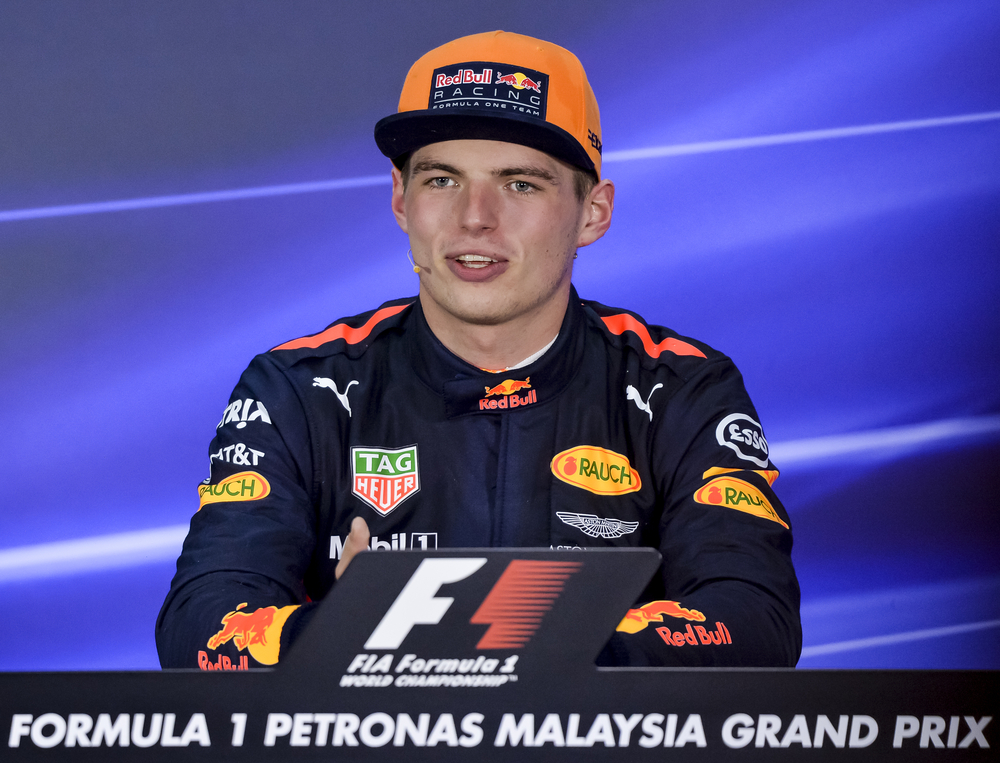
Max Verstappen has put a long horizon on Formula 1’s structural racing problem.
Speaking after winning a chaotic Las Vegas Grand Prix on Sunday, the Red Bull driver told RaceFans that the interim changes to the current hybrid era are too timid to end the “yo-yo” dynamic the Nevada race produced. For a real fix, he said, the sport needs to wait for the next engine era.
“If you want to still have a battery, you need at least 80:20 to be more normal. But let’s just hope that 2030 is just solving everything or most of it,” Verstappen said to RaceFans.
What 352 position changes actually looked like
The race itself laid the problem bare. F1 said the lead changed 35 times, and the field produced 352 position changes across the 50 laps, as a huge tow and depleting batteries made it almost impossible to pull a clear gap. The leader would be swallowed by the car behind, be passed, and then overtake again a corner or two later as his rival in turn ran out of electrical power.
Read also: Insider predicts Sabalenka will face WTA blacklisting
That is the “yo-yo” effect: not wheel-to-wheel combat, but cars snapping past each other on slipstream and energy management, with position often decided by who has enough battery left to defend the line.
Verstappen called the Vegas spectacle “really, really surreal and something I’ve never seen before in F1 myself.” Lando Norris and Oscar Piastri rounded out the podium.
A 50:50 split, and a ‘whiff’ of change
The current rules run a roughly 50:50 power split between the internal combustion engine and the hybrid system. F1 is planning to shift the balance back toward the engine in stages, with a 58:42 ratio for 2027 and 60:40 for 2028, according to RaceFans.
Verstappen described those steps as barely moving the dial, telling the outlet the shift from the current split to 60:40 was no more than a “tickle” or a “whiff” of change to the product. He added that the step was “60% of the way there” and “progress”, but warned that a race like the one in Vegas would still look much the same under the interim rules, because the huge slipstream, not just the battery, was driving the yo-yo effect.
Read also: Bayern wonderkid Lennart Karl admits he is ‘not a very, very clever person’
V8 engines confirmed for 2030
The hard reset Verstappen is waiting for was formally approved last week. On Friday, 20 November, the FIA confirmed unanimous agreement among manufacturers on the 2030 technical framework: a 2.1-litre turbocharged V8, a smaller hybrid element than today’s units, and advanced sustainable fuels. The 1.6-litre V6 hybrids used since 2014 will be retired.
FIA president Mohammed Ben Sulayem said the return of the V8 represented “an opportunity to reconnect with the DNA of this Championship, bringing back the sound, emotion and pure racing that is loved worldwide.”
That is still three full seasons away. The 2026 championship closes at the Abu Dhabi Grand Prix at Yas Marina on Sunday, 6 December.
Read also: Can Pochettino get Man United out of the relegation zone?