When politics meets the pitch: How much power does Donald Trump hold in global sports?
International sports bodies often insist they operate above politics. As the United States prepares to host the 2026 men’s World Cup and the 2028 Summer Olympics, that claim is facing renewed scrutiny not because of the events themselves, but because of how closely sport has become entangled with the priorities of President Donald Trump’s administration.
According to reporting by the Associated Press, Trump’s second term has coincided with a series of decisions by global and domestic sports organizations that reflect a careful calculation: maintaining access and stability in a country hosting the world’s biggest competitions.
A gesture that drew attention
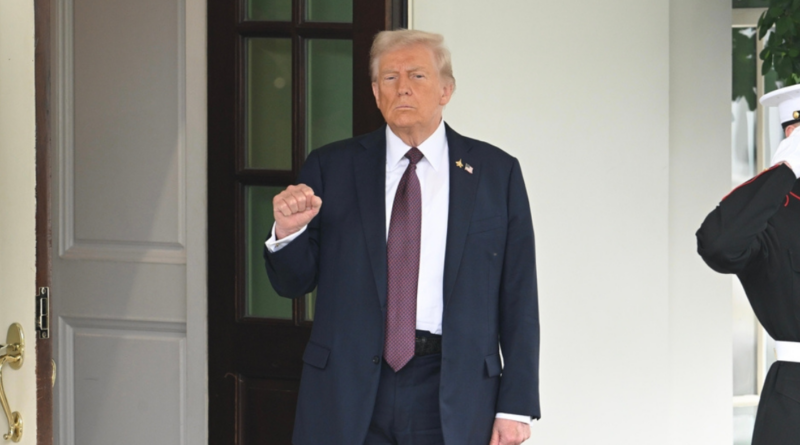
Heads of state regularly appear at major World Cup ceremonies. What made this appearance stand out, AP reported, was FIFA’s decision to create a new “FIFA Peace Prize” and award it to Trump.
The move came as Trump has publicly sought international recognition for his foreign policy, including the Nobel Peace Prize. Sports scholars cited by the AP described the moment as more than ceremonial.
Read also: The 50 Greatest Midfielders in Football History - Ranked
“I think sports is one fundamental example of Trump’s belief that he’s in charge of everything,” said David Niven, who teaches a “Sports and Politics” course at the University of Cincinnati.
FIFA’s decision prompted questions about its commitment to political neutrality questions that previous host countries, including Russia and Qatar, largely avoided by keeping political leaders at arm’s length from awards and symbolism.
Immigration policy meets global sport
Immigration enforcement has become one of the most immediate policy issues affecting upcoming events. The Trump administration has carried out more than 605,000 deportations since taking office, according to administration data cited by the AP.
With millions of international visitors expected, organizers and fans are watching closely. Louis Moore, a Michigan State University professor who studies sports and society, told the AP that stadiums will likely be full regardless but the atmosphere outside them matters.
Read also: Manchester City quietly prepare for Guardiola successer
“Fans, whenever you have a major soccer event, they’ll show up and support their team,” Moore said. He added that he hopes protections are negotiated if Immigration and Customs Enforcement agents are present at venues.
The administration has sent mixed messages. Officials have promoted a proposed “FIFA Pass” intended to streamline visa processing for ticket holders. At the same time, the White House has expanded travel bans and immigration restrictions affecting some participating countries.
Rules on gender eligibility shift
Trump’s policies on transgender participation in sports have also reshaped the landscape. Early in his term, he signed an executive order titled “Keeping Men Out of Women’s Sports,” directing federal agencies to enforce a strict interpretation of Title IX based on sex assigned at birth.
The NCAA moved quickly to comply. “President Trump’s order provides a clear, national standard,” NCAA President Charlie Baker said.
Read also: Shock ring twist revealed hours before Jake Paul vs Anthony Joshua as fans explode online
Months later, and without public announcement, the U.S. Olympic and Paralympic Committee adjusted its own policy. Olympic legal expert Jill Pilgrim told the AP the change was supported by “a well-reasoned set of arguments,” but she added, “I’d be pretty shocked if this doesn’t get challenged” in court.
Cooperation over confrontation
Rather than push back, many sports leaders have chosen accommodation. FIFA President Gianni Infantino praised Trump during the Peace Prize presentation, despite FIFA’s stated requirement of political neutrality.
U.S. Olympic officials also appeared with Trump at a White House ceremony where they presented him with medals from the 1984 Los Angeles Games. During the event, Trump signed an executive order creating a federal task force to coordinate Olympic-related security and visa processing roles the government would normally handle regardless.
Golf’s quiet reconciliation
Trump’s relationship with golf has also shifted. He attended the Ryder Cup this summer as a guest of the PGA of America, three years after the organization pulled a major championship from one of his courses following the Jan. 6, 2021, attack on the U.S. Capitol.
Read also: Shock MLS twist puts Lewandowski in the spotlight far from Barcelona
Trump had previously aligned himself with LIV Golf, the Saudi-backed league that fractured the sport. While a White House meeting earlier this year failed to resolve that divide, his Ryder Cup appearance marked a symbolic thaw. Players welcomed him while steering clear of politics.
College sports test the limits
College athletics may be harder for Trump to influence. A July executive order titled “Saving College Sports” called on federal agencies to clarify whether college athletes can be classified as employees and urged antitrust protections for the NCAA.
Both issues ultimately lie with Congress, where no agreement has emerged. Niven described the situation to the AP as resistant to simple fixes and therefore slow to change.
Still, Trump has left the door open. “Something ought to be done,” he said recently, warning that without action, colleges risk being “wiped out.”
Read also: Why Pep Guardiola passed on signing Cristiano Ronaldo at Man City
For now, sports leaders appear focused on keeping the games running smoothly, even as the line between politics and play continues to blur.
Source: Associated Press