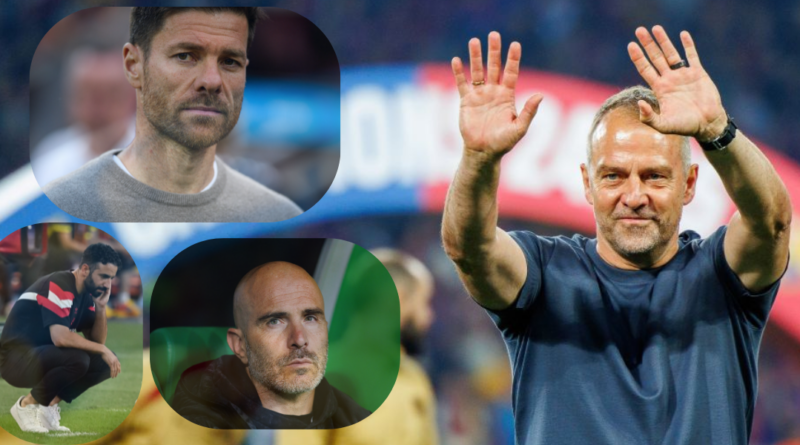
Why Chelsea, United and Madrid all pulled the trigger in January
A month that reset the balance
The first two weeks of January unfolded at unusual speed across the European game. Three managerial departures, all at clubs with global reach, reshaped the landscape before domestic seasons had reached their midpoint.
According to reporting from The Athletic and Sky Sports, the dismissals of Enzo Maresca, Ruben Amorim and Xabi Alonso were not driven by single results. Instead, each case reflected deeper institutional tensions where authority, alignment and trust broke down.
Taken together, the events pointed to a broader shift. The modern super club increasingly prioritizes internal coherence over continuity on the touchline.
Chelsea and the limits of independence
Chelsea confirmed Enzo Maresca’s dismissal on January 1, despite his role in delivering the UEFA Conference League and the FIFA Club World Cup the previous year. The club’s official statement spoke of the need to get the season back on track, with key objectives still in reach.
Read also: Neymar weighs new Brazil role
According to The Athletic, the decision followed a prolonged deterioration in relations between Maresca and the BlueCo ownership group, led by Todd Boehly and Behdad Eghbali. One source of friction was Maresca’s contact with Manchester City regarding a potential future role.
Sky Sports reported that while Maresca formally informed Chelsea of those discussions, senior figures viewed them as a signal that his commitment to the long term project was wavering.
Tensions also surfaced around player welfare. According to Sky Sports, Maresca frequently acted contrary to guidance from the club’s medical and performance departments, an approach that conflicted with ownership priorities around data driven load management.
The situation became public after a league win over Everton, when Maresca told reporters he had endured his worst 48 hours at the club. The Athletic later reported that the comments frustrated ownership, who felt internal disputes had been unnecessarily externalized.
Read also: Former Chelsea boss admired by Real Madrid in manager search
Chelsea’s appointment of Liam Rosenior from sister club Strasbourg reinforced the direction of travel. According to Sky Sports, Rosenior’s familiarity with the multi club model made him a natural fit for a system where the head coach operates within defined boundaries.
Manchester United and a line crossed in public
Manchester United followed on January 5, ending Ruben Amorim’s tenure after a 1 1 draw with Leeds United at Elland Road the previous evening.
On the pitch, United struggled to impose themselves. Off it, Amorim delivered a press conference that proved decisive. According to Sky Sports, he openly criticized recruitment and singled out the club’s internal structure, stating that every department needed to do its job.
He went further by rejecting the title under which he had been hired. “I’m going to be the manager of this team, not the coach,” Amorim said, a remark widely interpreted as a challenge to the INEOS led model.
Read also: US weighs cyber options as Trump warns World Cup nation
According to reporting from The Athletic, executives viewed the comments as a public rejection of the collaborative framework overseen by Omar Berrada and Jason Wilcox. Once authority was lost, Amorim’s results offered little protection. United’s league win rate during his tenure was among the lowest in the club’s Premier League history.
Darren Fletcher was appointed interim head coach, a move seen internally as a stabilizing step rather than a tactical reset.
Madrid measured against perfection
Real Madrid’s decision arrived on January 12, less than 24 hours after defeat to Barcelona in the Spanish Super Cup final in Jeddah.
According to Spanish media including Marca and AS, the pressure on Xabi Alonso had been building for months as Hansi Flick’s Barcelona set an unforgiving pace domestically. Barcelona lost only three league matches across 2025, a standard that left little margin for Madrid.
Read also: Real Madrid confirm split with Xabi Alonso
In the final, Barcelona controlled possession and tempo, leaving Madrid chasing the game. While the scoreline was narrow, Spanish outlets described the performance as one sided.
The situation deteriorated further after full time. According to reports cited by Marca, Alonso instructed his players to form a Guard of Honor for Barcelona. Kylian Mbappe openly objected, with others following suit. The moment reinforced internal concerns that Alonso no longer commanded full authority within the dressing room.
Florentino Perez moved quickly. Alonso was dismissed the following day, with Alvaro Arbeloa installed as interim head coach to restore calm rather than impose tactical change.
A closed circle at the top
In a development that underlined the insular nature of the elite managerial market, Real Madrid have since been linked with Enzo Maresca. According to journalist Simon Phillips, Madrid’s technical staff view his Chelsea exit as political rather than football related.
Read also: The real reason Ruben Amorim was sacked
Jurgen Klopp remains the long term aspiration. Spanish media report that Perez sees Klopp as the rare figure capable of confronting Flick’s Barcelona on equal footing, should he be tempted from his Red Bull role.
January’s upheaval carried a clear message. At the highest level, the head coach is no longer the central authority. Power now sits with ownership structures, data departments and long term corporate strategy. When alignment breaks, tenure ends quickly.
A Perspective on the "Flick Effect"
If we look closely at these three sackings, a clear pattern emerges that centers on the impossible standards set by Hansi Flick's Barcelona.
While Maresca and Amorim had their internal struggles, the climate of panic in European football is currently being dictated by the resurgence of Barça. When a rival team like Barcelona becomes hyper-dominant (96 points in a year), it shortens the patience of every other board in Europe. Real Madrid didn't just sack Alonso because they lost a cup final; they sacked him because Flick has psychologically broken them.
My stance is that Xabi Alonso is the primary victim of this new era. He is a brilliant tactician, but he walked into a buzzsaw. The "Flick Effect" creates a reality where you aren't just losing a match, you are being exposed. The fact that Madrid players allegedly mutinied against a Guard of Honor proves that Flick hasn't just beaten Madrid on the pitch, he has broken their pride. Until Madrid finds a manager who can look Flick in the eye without blinking, perhaps Klopp, this cycle of hiring and firing will continue.