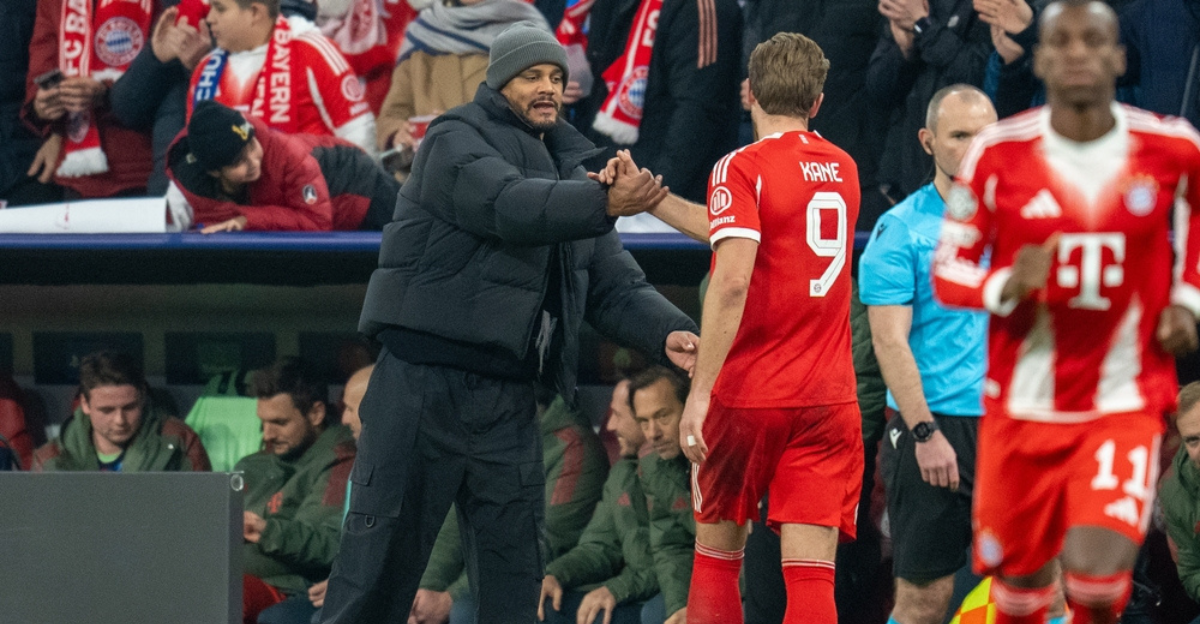
Bayern Munich’s Champions League journey came to a contentious end on Wednesday night, as a crucial penalty appeal was denied during their semi-final defeat against Paris Saint-Germain. The decision, which left Bayern players and staff visibly frustrated, hinged on a nuanced interpretation of the handball rule that has been under heavy scrutiny throughout this season’s competition.
The pivotal moment: Neves’s outstretched arm
With Vincent Kompany’s Bayern side trailing by a goal on the night and 6-4 on aggregate, the incident occurred at a critical juncture. Replays clearly showed PSG player Joao Neves with his arm stretched out to its full extent when the ball struck his hand inside the penalty area. Despite the seemingly clear contact and arm position, the referee waved play on, a call that ultimately contributed to Bayern’s exit.
Adding to Bayern’s grievances, another handball decision had gone against them just minutes earlier. However, that previous call was correctly ruled out as the ball had come off an opponent’s chest and shoulder before striking a Bayern player, a standard interpretation of the rules.
Unpacking the IFAB handball regulation
The controversial decision against Neves, however, was rooted in a specific, often overlooked, clause within the IFAB rules. According to an explanation reported by GiveMeSport, a handball offence is not committed under certain circumstances. The IFAB rule states:
Read also: Paris Saint-Germain cement "best in the world" status, set for Arsenal challenge
“A handball offence is not committed when a player is hit on the hand/arm by the ball which has been played by a teammate (unless the ball goes directly into the opponent’s goal or the player scores immediately afterwards, in which case a direct free-kick is awarded to the other team.)”
This particular phrasing suggests that if Neves’s teammate had played the ball that struck his outstretched arm, it would not be deemed an offence, despite the arm’s position. This interpretation, while technically correct by IFAB standards, sparked widespread debate given the high stakes of the Champions League semi-final.
The incident also drew comparisons to a “soft penalty” awarded to PSG in the first leg of the semi-finals, further highlighting the inconsistencies and complexities surrounding handball decisions this season. Bayern’s formidable front-three of Harry Kane, Luis Diaz, and Michael Olise were ultimately unable to overcome the deficit and the controversial call.
PSG, managed by Luis Enrique, will now advance to the Champions League final in Budapest at the end of the month. They will face Mikel Arteta’s Arsenal, who secured their spot after a 2-1 aggregate win over Atletico Madrid. PSG are the reigning champions and will be looking to retain the title they won last campaign. The final is anticipated to be a tactical battle, with Arsenal expected to employ “dark arts” rather than a “total football, gung-ho style” against the Parisian giants.
Read also: "He judged me too quickly", Casemiro addresses Ruben Amorim handling at Man Utd
Sources: www.givemesport.com
Read also: UK government eyes 2040s Olympics in major sports hosting push


