A warning over football’s future
Football needs more than minor rule changes if it is to keep the attention of modern audiences, according to Dariusz Tuzimek’s opinion piece for WP SportoweFakty.
Tuzimek argues that the game is approaching a difficult moment. In his view, football remains the world’s most popular sport, but it is being weakened by an overloaded calendar, conservative thinking and a reluctance to reward attacking risk.
His warning is blunt, if the sport continues to protect the old model, it may slowly lose ground to faster, more dynamic forms of entertainment.
A bigger World Cup, but not necessarily a better one
The 2026 World Cup is at the centre of the criticism. The tournament will feature 48 teams and 104 matches, with 32 countries advancing to the knockout stage.
Read also: Messi admitted he targeted one World Cup rival on purpose
For FIFA, the expanded format means more countries involved, more markets reached and more commercial opportunities. But Tuzimek questions whether it will improve the sporting spectacle.
He argues that the enlarged tournament risks producing too many predictable or forgettable matches, especially in the group stage. Instead of feeling like a festival of football from the first whistle, the opening phase could become a long prelude to the real tournament.
The concern is not simply that there will be more matches. It is that more football does not automatically mean better football.
Infantino’s commercial gamble
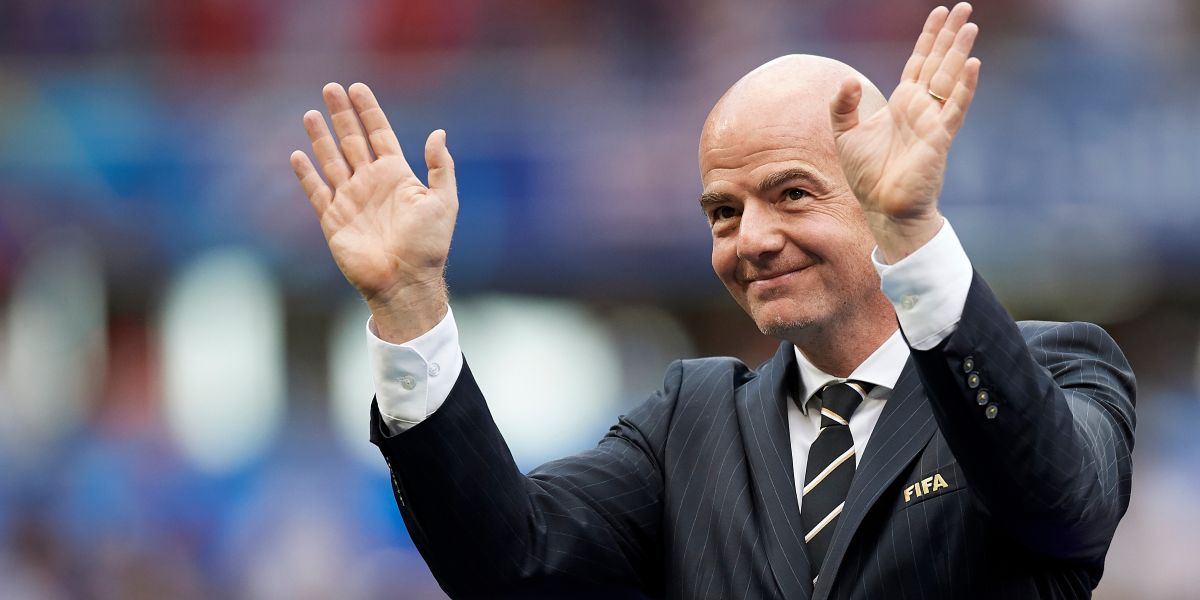
Tuzimek is also critical of FIFA’s direction under Gianni Infantino, suggesting that the governing body is too focused on expanding the product and selling it to new audiences.
Read also: Cristiano Ronaldo crisis forces Portugal chief into emergency action
That strategy is particularly visible in the United States, where football must compete with American football, basketball, baseball and ice hockey. Those sports offer frequent scoring, constant interruptions and a style of entertainment that fits more easily with television, clips and social media.
Football, by contrast, can still end 0-0 after 90 minutes. For many traditional supporters, that is part of the sport’s tension and beauty. For younger viewers, Tuzimek suggests, it may increasingly feel too slow.
Cosmetic changes are not enough
FIFA has introduced rule changes before the 2026 World Cup, including measures aimed at reducing time-wasting. Tuzimek sees those moves as useful but limited.
He believes the deeper problem lies in the way football rewards outcomes. A narrow 1-0 win is treated the same as a 5-4 victory, even though the two matches may offer very different levels of entertainment.
Read also: Harry Kane breaks silence on Man City verdict
In his view, the rules do too little to encourage attacking ambition. Teams that take risks, commit players forward and try to create spectacle receive no extra reward for doing so.
“People want goals, duels, wave after wave of attacks, dribbling and creative imagination,” he writes. “Not a wall in front of goal and a display of perfect defending.”
The case for rewarding risk
Tuzimek’s proposed solution is a more radical shift towards attacking football.
That could mean shorter matches, the introduction of pure playing time, or a new points system that gives greater value to ambitious, high-scoring wins. The central idea is that football should no longer treat defensive caution and attacking bravery as equally desirable.
Read also: Phil Taylor comes out of retirement for stunning darts return
Such changes would be controversial. They would challenge more than a century of tradition and would almost certainly face resistance from officials, coaches and supporters who see football’s simplicity as one of its strengths.
But Tuzimek argues that standing still may be the bigger risk. If football wants to compete with modern entertainment, it must give fans more reasons to watch from start to finish.
A sport under pressure to adapt
The debate is not about whether football is still popular. It clearly is. The question is whether its current format is strong enough to hold future generations.
For Tuzimek, the answer depends on whether football’s leaders are willing to change the game itself, not just its packaging.
Read also: ‘If you lie to me, I will leave’: Guardiola’s City warning takes on new weight
His conclusion is stark, if officials are not ready for a bold revolution, “football under the old rules will die a natural death.”
That may be an extreme warning, but it reflects a growing concern around the sport. Football has never been richer or more widely available. The danger is that, in trying to sell more of it, the people running the game may make it less compelling to watch.