FIFA is facing renewed questions over the independence of its internal watchdogs after fresh scrutiny of the payments made to the people responsible for overseeing the organisation’s leadership.
The chairpersons and senior figures in FIFA’s supervisory and disciplinary bodies receive substantial fees from the same organisation they are meant to monitor, according to Politiken journalist Jeppe Laursen Brock. The arrangement has sharpened concerns about whether FIFA’s control bodies can act with real independence when their pay depends on the institution they are tasked with scrutinising.
Fees paid by the body they oversee
The issue is not simply that committee leaders are paid. Independent bodies often compensate experts for their work. The concern is whether FIFA’s model gives those watchdogs enough distance from the people and structures they are supposed to hold accountable.
FIFA presents its internal bodies as part of a framework designed to ensure transparency, ethics and compliance. But critics argue that the system still leaves too much power concentrated inside the organisation, with too few truly external checks on the president and the senior leadership.
Read also: Cristiano Ronaldo's "angry texts" over Lineker's Messi backing, Ferdinand reveals
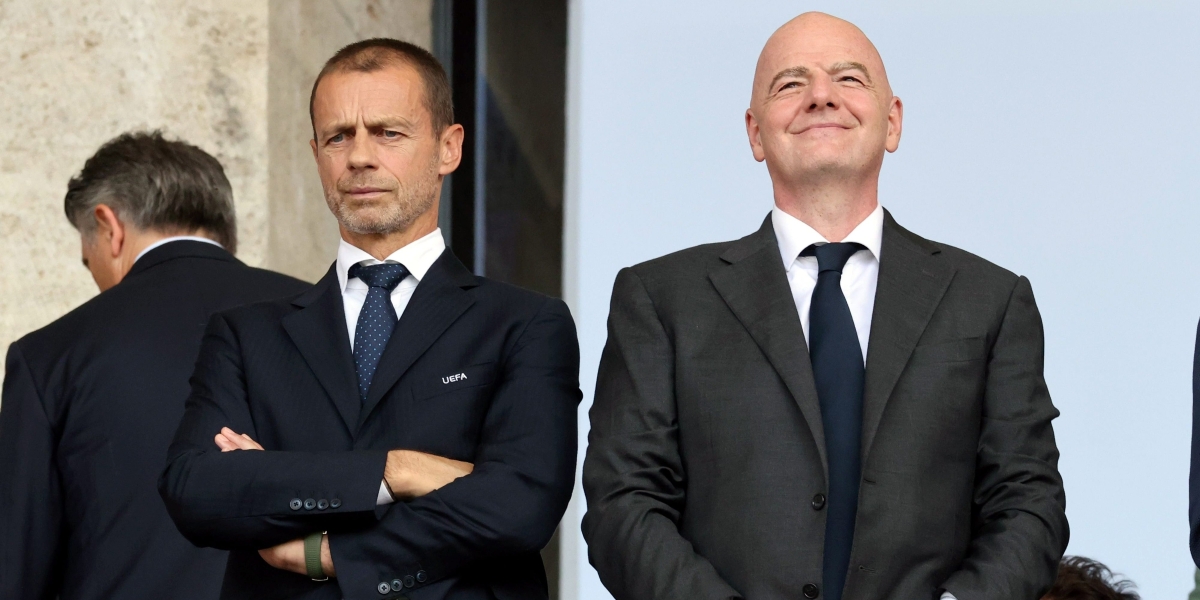
That concern is especially sensitive under Gianni Infantino, who has led FIFA since 2016. During his presidency, FIFA has expanded commercially and politically, while critics have accused the organisation of becoming increasingly centralised around its president.
Former watchdogs have warned of limited control
The debate is also shaped by FIFA’s recent history. Former officials in oversight roles have previously said it was difficult to exercise meaningful control from within the organisation.
One of the most prominent cases involved Miguel Maduro, the former chair of FIFA’s Governance Committee and independent Review Committee. He was unexpectedly removed in 2017, less than a year into what was expected to be a four-year term, after a period in which he had taken decisions that brought him into conflict with powerful figures in world football.
For critics, cases like that have become part of a broader argument: FIFA’s watchdogs may exist on paper, but their ability to challenge the top of the organisation remains open to question.
Read also: Serena Williams set for Wimbledon singles comeback
A wider governance problem
The controversy goes to the heart of FIFA’s credibility. After the corruption scandals of the Sepp Blatter era, the organisation promised stronger governance, greater transparency and more independent oversight.
Yet the latest questions over committee pay suggest that doubts about FIFA’s internal checks have not gone away. If the people responsible for oversight are financially tied to the organisation they supervise, critics say the public is entitled to ask how much independence they really have.
For FIFA, the challenge is no longer only to show that watchdogs exist. It is to prove that they can bite.
Read also: Messi makes World Cup history amid penalty woe and VAR debate
Read also: Tunisia humiliated in front of the cameras: A "huge fiasco"