Jude Bellingham’s equaliser in England’s World Cup quarter-final victory over Norway has been shortlisted for the tournament’s best-goal award.
The Real Madrid midfielder struck in the second minute of first-half stoppage time, cancelling out Andreas Schjelderup’s opener before scoring again in extra time to secure a 2–1 victory.
Bellingham’s first goal is among the contenders in FIFA’s combined vote for the best goals of the quarter-finals and semi-finals, according to the governing body.
However, the nomination has revived the debate over one of the tournament’s most unusual incidents.
Read also: Thierry Henry issues blunt warning over Liverpool’s £123m signing
The ball’s sudden drop raised suspicions
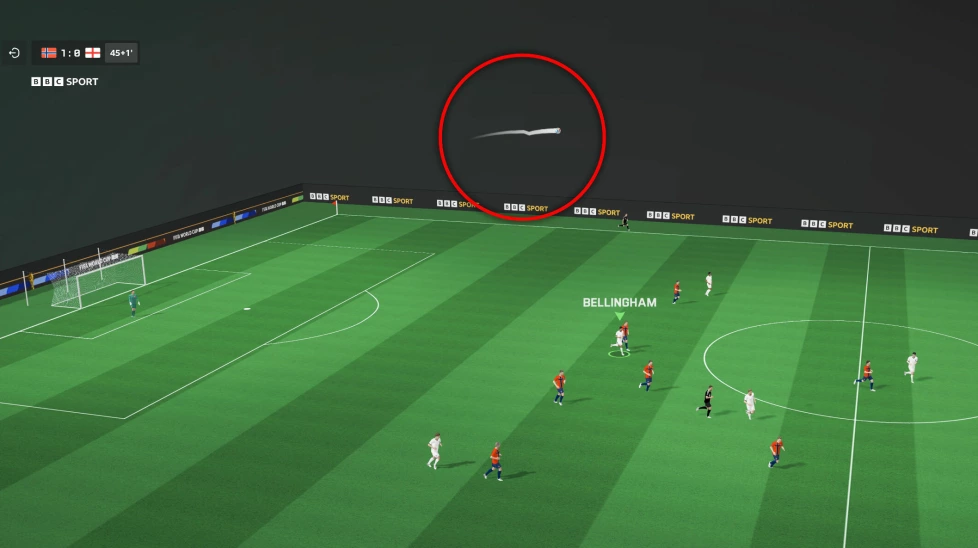
The controversy began with a long goal kick from Norway goalkeeper Ørjan Nyland. As the ball travelled high above the pitch, it suddenly dropped close to the touchline, allowing England to regain possession.
Elliot Anderson carried the ball forward before Anthony Gordon found Bellingham, who moved into the penalty area and placed a left-footed finish beyond Nyland.
Several members of the Norwegian bench immediately suspected that the ball had struck one of the cables supporting the spidercam above the pitch. Had contact been confirmed, play should have been stopped and restarted with a dropped ball.
Replays appeared to support Norway’s suspicions, with the flight of the ball changing sharply before it fell back to the ground.
Read also: Roy Keane goes nuclear on Man City after 114 guilty findings
Norway head coach Ståle Solbakken confronted referee Clément Turpin at half-time but was told that the officials had received no indication of outside interference.
“He said that he didn’t see it himself and that he didn’t get any message that it actually happened,” Solbakken said, as quoted by The Guardian.
“Since FIFA says that there was no touch, he can’t do anything about it. But the ball fell down straight in front of the bench, so it did. Everyone saw what happened. I think it’s pretty clear that it did. It was a strange thing.”
FIFA points to the ball’s ‘heartbeat’
FIFA rejected Norway’s claim after examining data collected by the sensor inside the official match ball.
Read also: Here is Foden’s Man City exit route
“Before England’s goal in minute 45+2 against Norway, the sensor in the Connected Ball showed no peak in the ‘heartbeat of the ball’ when in the air, and therefore no evidence that the ball touched the overhead wire and changed the movement of the ball,” FIFA said in a statement reported by ESPN.
The connected-ball technology records touches and sudden changes in movement. It had already played a controversial role earlier in the tournament when a slight touch was detected during Croatia’s defeat by Portugal, contributing to a late Croatian equaliser being ruled out for offside.
England manager Thomas Tuchel therefore trusted the available technology.
“I heard that, but there’s a chip in the ball and it can tell you if a hair can touch it, as you know from the Croatia-Portugal game,” he said.
Read also: Rodri breaks silence on Man City verdict with remarkable 2020 comparison
FIFA later reiterated that there had been no contact with the spidercam cable, with the ball’s signal remaining uninterrupted throughout its flight.
A memorable goal for more than one reason
The equaliser proved crucial to England’s comeback. Bellingham later struck again in the 93rd minute, giving the Three Lions a 2–1 victory after extra time, as described in FIFA’s official match report.
The shortlist place does not yet make Bellingham’s strike a finalist for the overall Goal of the Tournament award. Supporters are first voting for the best goal from the quarter-finals and semi-finals, with the round winner advancing to the final global vote after the World Cup final.
Whether remembered for Bellingham’s finish or the unexplained drop that preceded it, England’s equaliser has already secured its place among the tournament’s most debated moments.
Read also: The wheelchair champion beat the sub-two-hour man, and London Marathon has its 2027 schedule