FIFA’s proposal to place the commercial and operational side of its tournaments inside a partly investor-owned company has provoked an angry response across world football. The governing body argues that the plan could unlock billions of dollars for development projects, including stadiums, training centres and grassroots programmes. Its opponents believe the arrangement risks placing commercial returns too close to the decision-making surrounding football’s most valuable competitions.
What FIFA is actually proposing
According to FIFA’s official outline of the proposal, the new company would be called FIFA Forward Enterprise, or FFE. It would bring together broadcasting, sponsorship, licensing, ticketing and hospitality rights, as well as the operational delivery of FIFA tournaments. The company has been given an initial valuation of approximately $20 billion and would seek to raise up to $4.2 billion from outside investors.
Those investors would receive minority, non-controlling stakes of up to 20 per cent in FFE, rather than ownership in FIFA itself. FIFA says it would retain a controlling interest, hold a majority of the seats on the subsidiary’s board and maintain exclusive authority over competition formats, regulations and the international match calendar. The proposal would require support from a majority of FIFA’s 211 member associations, as well as approval from the FIFA Council.
The model therefore goes considerably further than a conventional sponsorship agreement, in which a company pays to associate its brand with a tournament. Investors would hold equity in a business responsible for managing and expanding FIFA’s commercial assets. However, the available proposal does not give them voting rights in the FIFA Congress, seats on the FIFA Council or formal authority over sporting regulations.
Read also: Europe considers World Cup boycott as FIFA investor battle explodes
UEFA says FIFA has crossed a line
According to an Associated Press report on the growing opposition, UEFA and several other football organisations have criticised both the substance of the plan and the way it was introduced. UEFA said that “the soul and governance of football are not assets to trade,” while arguing that major stakeholders had not been properly consulted. The European governing body also questioned the lack of transparency surrounding the potential investors and their future financial interests.
FIFA President Gianni Infantino has offered each member association access to an optional one-off payment of up to $20 million if the project moves forward. Associations have reportedly been given until September 19, 2026, to indicate whether they want to participate, with the additional funding due to become available from January 2027. FIFA describes the arrangement as voluntary, but critics argue that such a substantial financial offer could place considerable pressure on smaller associations.
The proposal would also increase FIFA Forward funding from the currently budgeted $8 million to $20 million per association for the 2027-2030 cycle. Further increases to $22 million and $24 million are planned for the following two four-year periods. FIFA says the broader package could raise total football development funding to more than $10 billion.
Blatter turns his fire on Infantino
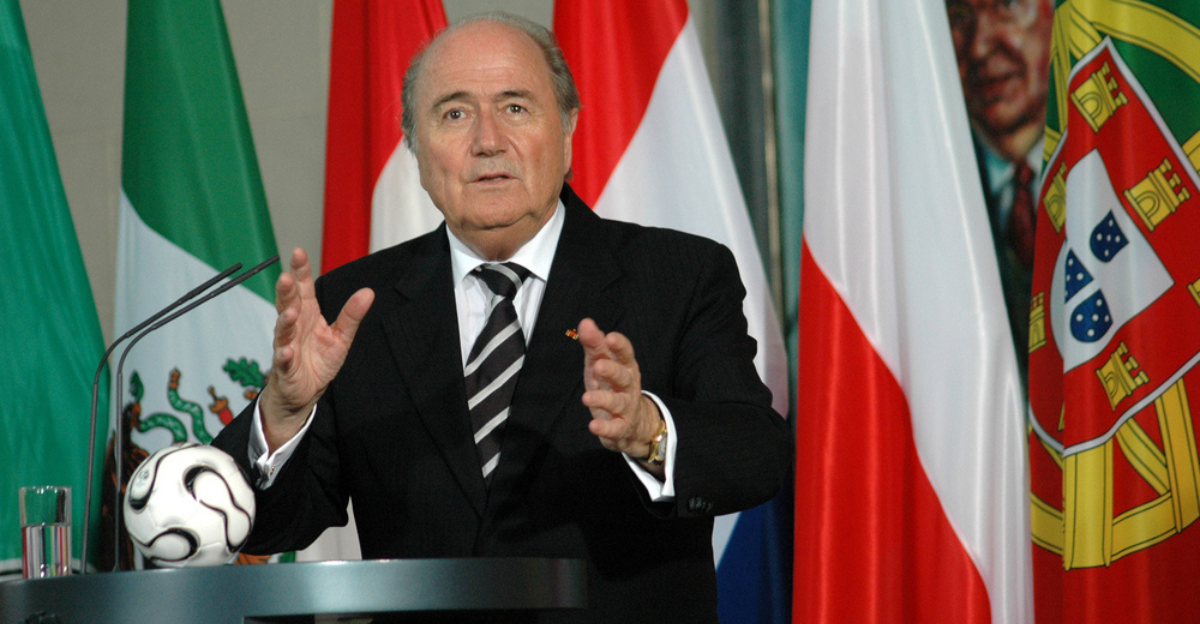
Former FIFA president Sepp Blatter has become one of the most prominent figures to condemn the proposal. As quoted by Reuters in a report published by Channel NewsAsia, Blatter said: “Football belongs to no individual and to no institution. It belongs to the people.” He argued that moving the World Cup into a profit-driven corporate structure would threaten the tournament’s identity and FIFA’s role as its guardian.
Read also: Fermín López reveals World Cup heartbreak: ‘I couldn’t watch Spain’
Blatter also directed criticism at Infantino’s close relationship with Donald Trump, who is the current president of the United States, not a former president. As described by TIME in its report on the investor plan, Blatter claimed that the relationship had acquired a financial dimension that was damaging football. He concluded his post on X with the warning: “No one has the right to sell our game.”
The political connection has attracted further attention because Joshua Kushner’s investment company, Thrive Eternal, has been linked with the proposed deal. Kushner is the brother of Jared Kushner, Trump’s son-in-law and a former senior White House adviser. FIFA has nevertheless maintained that any investors would be selected according to long-term commercial, strategic and governance criteria.
The real battle is over influence
The central dispute is not whether private investors would formally govern FIFA, because the published proposal states that they would not. Instead, the argument concerns whether investors seeking long-term returns could gradually influence how tournaments are marketed, priced, scheduled and expanded. FIFA insists that sporting and regulatory decisions would remain entirely within its existing governance structure.
Critics remain unconvinced that commercial and sporting priorities can be separated so easily when the same subsidiary would manage both tournament operations and the rights that generate FIFA’s income. They fear that pressure to increase the company’s value could encourage higher ticket prices, additional matches or further expansion of existing competitions. FIFA, by contrast, presents the plan as a way to convert the enormous commercial value of the World Cup into unprecedented funding for football development.
Read also: FIFA's private company plan draws fierce backlash from PM Burnham, UEFA, and fans
Until FIFA identifies the investors, publishes the complete governance arrangements and explains how their financial returns would be generated, those concerns are unlikely to disappear. The proposal may formally preserve FIFA’s control, but it would still give private capital a direct stake in the business built around the World Cup. That distinction will sit at the heart of one of the most consequential governance debates in modern football.
Read also: Enzo Maresca's immediate challenge: Retaining Rodri amidst Real Madrid's pursuit