China’s latest sports plan contains an unremarkable bureaucratic label with considerable political weight: “633.” Officials say the project will reorganize elite sport around six established strengths, three foundational disciplines and three struggling ball sports that must be revitalized. Football belongs to the final category, returning one of Xi Jinping’s most public ambitions to the national agenda after China missed another World Cup.
A trillion-dollar target, not a trillion-dollar cheque
China wants the total value of its sports industry to exceed seven trillion yuan, approximately $1.04 trillion, by 2030, according to the Chinese government’s account of a State Council Information Office briefing. The figure represents a target for the size of the industry, rather than a promise of direct government spending. The five-year plan was approved by the State Council in July and covers the period from 2026 to 2030.
According to an earlier outline published by the Chinese government, China’s sports industry generated 3.8421 trillion yuan in total output in 2024. Reaching seven trillion yuan would therefore require growth of approximately 82 per cent from that level. Beijing also wants regular exercise participation to reach around 40 per cent of the population and plans to increase the amount of sports space available per person.
Why the ‘633’ project matters
Under the new model, China will move from what officials called a “prioritized breakthrough” strategy to one based on “comprehensive development.” Six traditionally successful sports, including diving and gymnastics, will retain their importance, while athletics, swimming and water sports form the three foundational disciplines. Basketball, volleyball and football make up the final three sports selected for revival.
Read also: Javier Tebas breaks silence on what should happen to Man City next
The structure represents a subtle admission that China’s Olympic system cannot solve every sporting problem. Centralized training programmes have produced generations of champions in individual disciplines, but football depends on thousands of clubs, qualified coaches and competitive matches at local level. The plan therefore calls for businesses, universities and social organizations to be given a greater role in training and competition.
Xi’s three wishes remain unfulfilled
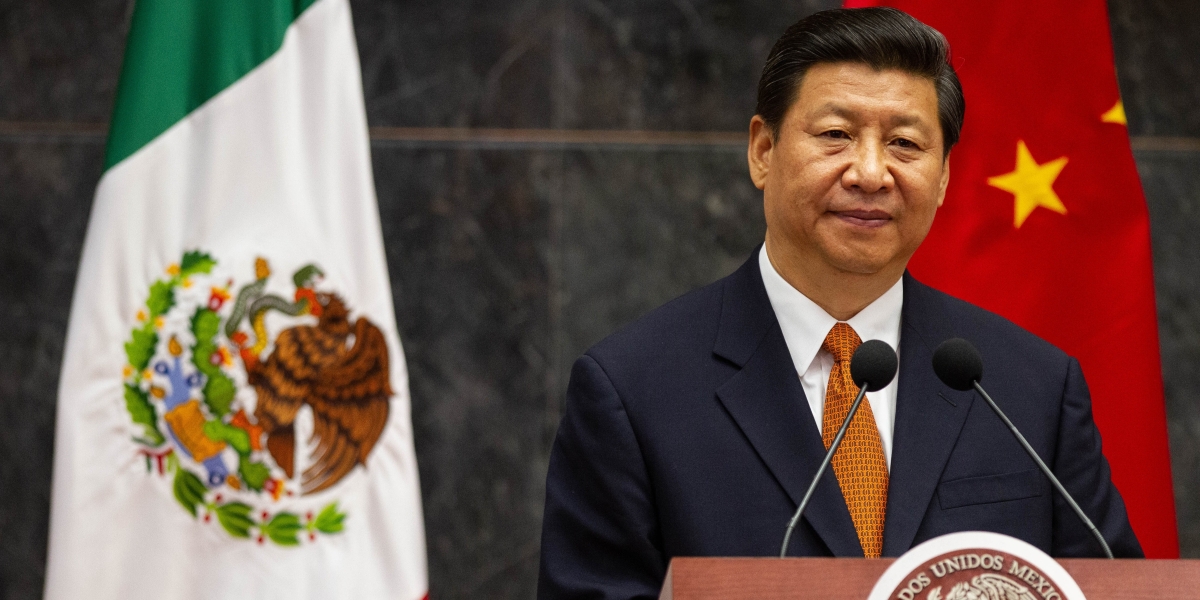
Xi’s relationship with football predates his presidency. In 2011, while serving as vice-president, he expressed three wishes for Chinese football: to qualify for a World Cup, to host the tournament and eventually to win it, as described by Beijing correspondent Harold Thibault in Le Monde. A 50-point reform programme followed in 2015, accompanied by new academies, expensive foreign players and heavy investment from Chinese companies.
The results have fallen far short of those ambitions. China’s only men’s World Cup appearance came in 2002, when the team lost all three matches, failed to score and conceded nine goals. Even the expansion of the 2026 tournament from 32 to 48 teams was not enough, with defeat against Indonesia in June 2025 ending China’s qualification hopes.
Corruption remains part of the crisis
The latest strategy is not limited to coaching and facilities. Chinese authorities have launched a “Year of Deepening Governance,” promising to root out corruption, confront “toxic fan culture” and create a more tightly regulated sports system. The inclusion of those issues shows that Beijing views football’s problems as institutional and cultural, rather than purely technical.
Read also: Messi admitted he targeted one World Cup rival on purpose
The scale of the clean-up has already been significant. Seventy-three football officials received lifetime bans over offences involving illegal betting, match-fixing and salary regulations, while former national-team coach Li Tie was sentenced to 20 years in prison for corruption. Nine of the 16 Chinese Super League clubs also began the 2026 season with points deductions.
The World Cup price reveals the gap
China’s absence from the World Cup has also carried a commercial cost. FIFA agreed a broadcasting deal with China Media Group covering four men’s and women’s tournaments through 2031, while Chinese media valued the rights to the 2026 edition at $60 million, far below FIFA’s reported initial demand of $300 million, according to an Associated Press report. China’s failure to qualify and the time difference between Beijing and the North American host cities weakened FIFA’s negotiating position.
The contrast is difficult to ignore. Chinese companies such as Lenovo, Mengniu and Hisense remained prominent World Cup partners, demonstrating the country’s commercial importance to FIFA. On the pitch, however, the world’s second-largest economy was once again reduced to watching from home.
A grassroots movement offers hope
There are signs that Chinese football is developing beyond government programmes and professional clubs. The Jiangsu Football City League attracted 2.43 million spectators across 85 matches in 2025 and generated more than 2.2 billion online views, according to a report by Xinhua sportswriter He Leijing. Similar amateur competitions are connecting football with local identity, tourism and consumer spending.
Read also: Cristiano Ronaldo crisis forces Portugal chief into emergency action
That movement may be more important than another expensive attempt to engineer success from the top. China plans to construct or upgrade more than 5,000 small fitness facilities by 2030, but pitches alone will not produce a competitive national team. Players need regular matches, experienced coaches and a credible route from schools and community clubs into professional football.
Xi’s three football wishes remain distant, and the “633” project does not provide a quick solution. China could reach its seven-trillion-yuan industry target while its men’s team continues to miss major tournaments. The real measure of the plan will be whether football finally becomes something China develops from the ground up, rather than another national objective imposed from above.